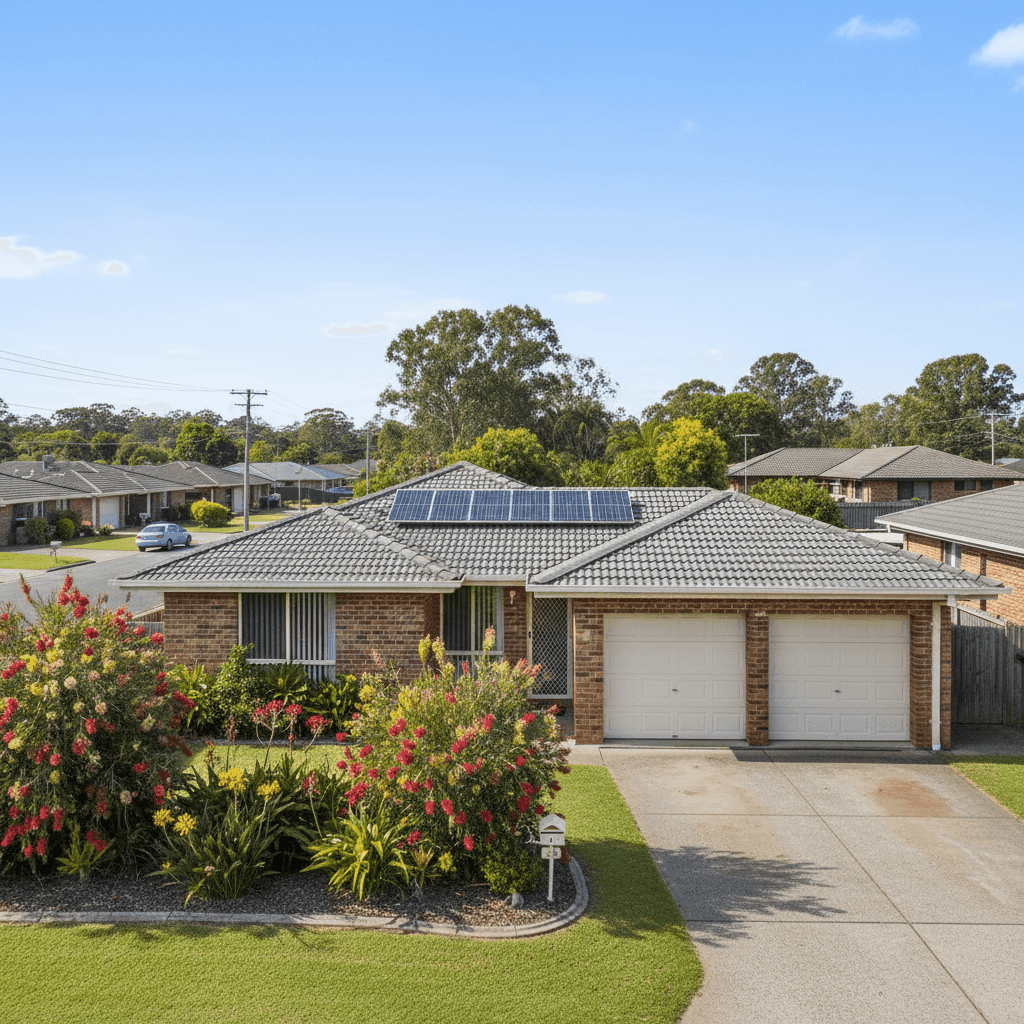
If you own a free standing home in Regents Park, QLD 4118, you're probably curious about what a fair home insurance premium looks like — and whether you're paying too much. This article breaks down a real home and contents insurance quote for a three-bedroom, two-bathroom brick veneer home in the suburb, comparing it against local, state, and national benchmarks to help you understand what's driving the price.
---
Is This Quote Fair?
The annual premium for this property came in at $1,600 per year (or $159/month), covering both building (sum insured: $625,000) and contents ($50,000). Our pricing model rates this as CHEAP — below average for the area.
To put that in perspective, the suburb average for Regents Park sits at $2,437/year, and the median is $2,319/year based on 114 quotes collected in the area. This quote lands well below the 25th percentile of $1,681/year, meaning it's cheaper than at least 75% of comparable quotes in the suburb. That's a strong result.
It's worth noting the excess structure: a $3,000 building excess and $1,000 contents excess are on the higher side, which is a common trade-off when securing a lower premium. Higher excesses mean you'll pay more out of pocket if you ever need to make a claim, so it's important to weigh the upfront savings against that potential cost.
---
How Regents Park Compares
Home insurance pricing in Queensland is notoriously variable, and the state-level figures reflect that starkly. Here's how this quote stacks up across different benchmarks:
| Benchmark | Annual Premium |
|---|---|
| This Quote | $1,600 |
| Regents Park Suburb Average | $2,437 |
| Regents Park Suburb Median | $2,319 |
| Logan LGA Average | $4,617 |
| QLD State Average | $9,129 |
| QLD State Median | $3,903 |
| National Average | $5,347 |
| National Median | $2,764 |
The gap between this quote and the broader Queensland figures is striking. The QLD state average of $9,129/year is heavily skewed by high-risk coastal and cyclone-prone regions in Far North Queensland, where premiums can be extraordinarily expensive. Regents Park, sitting in the Logan corridor of South East Queensland, benefits from its inland location and relatively lower natural hazard exposure.
Even compared to the national average of $5,347/year, this quote looks very competitive. The Logan LGA average of $4,617/year is also notably higher than this quote, suggesting the property's specific characteristics are working in the homeowner's favour.
You can explore more detailed pricing data for the suburb at the Regents Park insurance stats page.
---
Property Features That Affect Your Premium
Several characteristics of this home contribute to its favourable pricing. Here's what matters most:
Construction Materials
Brick veneer walls and a tiled roof are generally well-regarded by insurers. Brick veneer offers solid fire and weather resistance, while tiles are durable and less susceptible to wind damage than corrugated iron in non-cyclone zones. Both materials tend to attract lower premiums compared to timber weatherboard or Colorbond alternatives in storm-prone areas.
Slab Foundation
A concrete slab foundation is standard for homes built in South East Queensland during the 1990s and is considered low-risk by most insurers. Unlike homes on stumps or piers, slab homes have fewer entry points for pests and are generally more structurally stable.
Build Year: 1995
Homes built in the mid-1990s fall into a middle ground for insurers — they're not old enough to carry the risk of aging infrastructure (like pre-1980s electrical wiring), but they're also not brand new. A 1995 build in Queensland would have been constructed under building codes that incorporated improved cyclone and storm standards introduced after Cyclone Tracy, which is a positive factor.
Solar Panels
This property has solar panels, which can add a small amount to the insured value of the building (since they're a fixed installation). However, modern insurers are well-versed in covering solar systems, and their presence here doesn't appear to have significantly inflated the premium.
No Pool, No Cyclone Risk Zone
The absence of a swimming pool removes a common liability and maintenance concern that can push premiums up. Additionally, Regents Park sits outside designated cyclone risk zones, which is a major advantage in Queensland — cyclone-prone postcodes in the north can see premiums many times higher than what's quoted here.
Sum Insured: $625,000
The building sum insured of $625,000 for a 139 sqm home in Regents Park is on the higher side of market replacement costs for the area, but not unreasonable given current construction costs. Ensuring your sum insured accurately reflects rebuild costs (not just market value) is critical to avoiding underinsurance.
---
Tips for Homeowners in Regents Park
1. Review Your Sum Insured Annually
Construction costs have risen sharply across Australia in recent years. A sum insured that was accurate two years ago may no longer cover a full rebuild today. Use a building cost calculator or speak with a local builder to sense-check your figure each year at renewal.
2. Consider Whether Your Excess Suits Your Situation
This quote carries a $3,000 building excess — a deliberate lever to reduce the annual premium. If you have the savings to absorb that cost in a claim scenario, this trade-off makes sense. If not, it may be worth requesting a lower excess option and comparing the premium difference.
3. Don't Overlook Contents Coverage
At $50,000, the contents cover here is relatively modest. Take a room-by-room inventory of your belongings — furniture, appliances, clothing, electronics, and valuables — to make sure this figure genuinely reflects what you own. Underinsuring contents is a common mistake that only becomes apparent after a loss.
4. Compare at Renewal, Not Just at Purchase
Insurance loyalty rarely pays. Insurers frequently offer their best rates to new customers, meaning your premium can creep up year after year without a corresponding improvement in cover. Set a reminder to compare quotes on CoverClub at least 30 days before your renewal date so you have time to switch if a better deal is available.
---
Get a Quote for Your Regents Park Home
Whether you're buying a new policy or reviewing your existing one, comparing quotes is the single most effective way to make sure you're not overpaying. CoverClub makes it easy to see how your premium stacks up against what others in your suburb are paying — and to find a better deal if one exists. Start your comparison today and see what your home could be insured for.