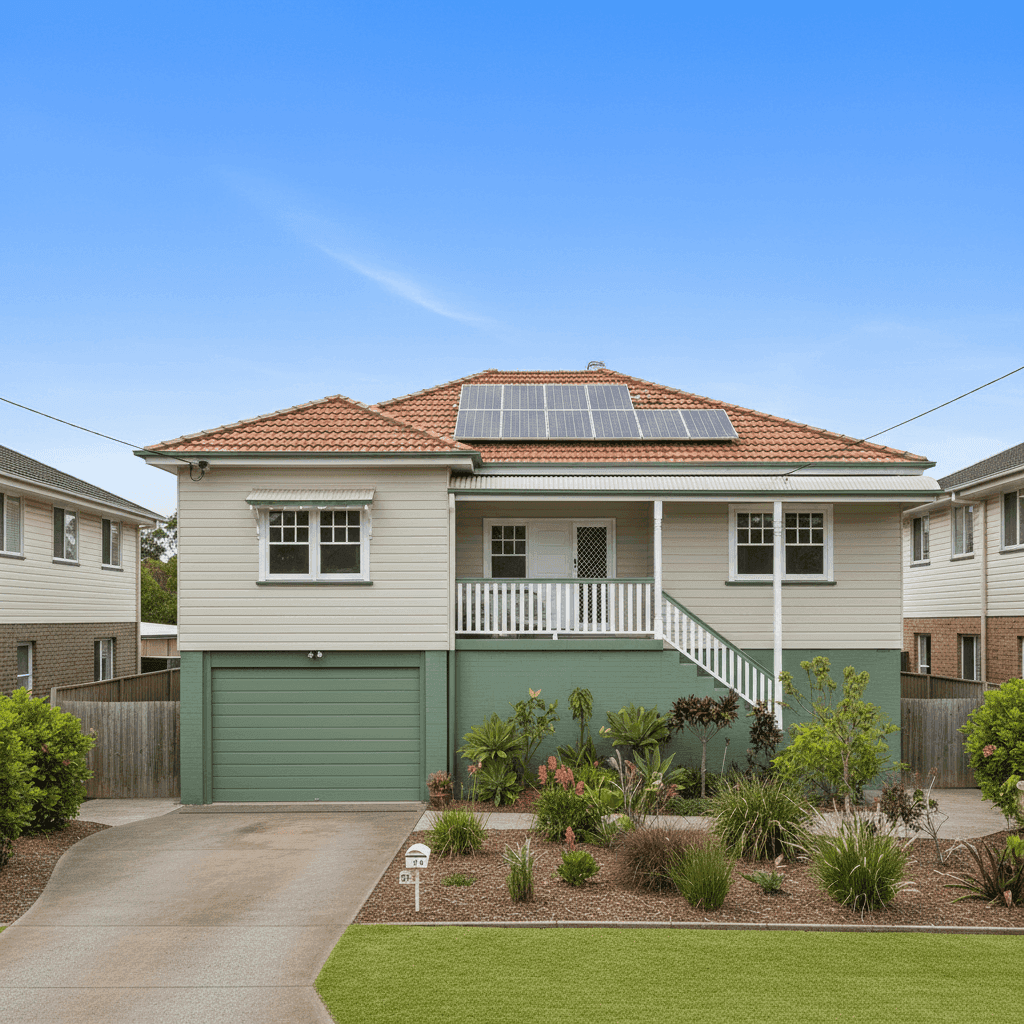
If you own a four-bedroom free standing home in Regents Park, QLD 4118, you're probably wondering whether what you're paying for home insurance is reasonable — or whether you're leaving money on the table. This article breaks down a real home and contents insurance quote for a property in this south-west Brisbane suburb, compares it against local, state, and national benchmarks, and offers practical advice to help you make a more informed decision at renewal time.
---
Is This Quote Fair?
The quote in question comes to $2,658 per year (or $255 per month) for combined home and contents cover, with a building sum insured of $700,000 and contents valued at $150,000. Both the building and contents excess sit at $1,000.
Our rating for this quote is FAIR — Around Average.
That assessment is backed by data. Based on 114 quotes collected for the Regents Park area, the suburb average premium sits at $2,437 per year, with a median of $2,319. At $2,658, this quote lands above the median but comfortably within the suburb's interquartile range — the 25th percentile is $1,681 and the 75th is $2,881. In other words, roughly half of comparable properties in the suburb are paying between those two figures, and this quote falls squarely in that band.
So while you're not getting the cheapest deal on the street, you're also not being stung. The "fair" rating is an honest one: this is a reasonable premium for the cover provided, but there's still room to explore whether a better price exists elsewhere.
---
How Regents Park Compares
To put the $2,658 figure in broader context, it helps to zoom out and look at Queensland-wide and national insurance data.
| Benchmark | Average Premium | Median Premium |
|---|---|---|
| Regents Park (4118) | $2,437 | $2,319 |
| Logan LGA | $4,617 | — |
| Queensland | $9,129 | $3,903 |
| National | $5,347 | $2,764 |
A few things stand out here. Queensland's average premium of $9,129 is extraordinarily high compared to the national average of $5,347 — a reflection of the state's exposure to extreme weather events, particularly cyclones, flooding, and severe storms in higher-risk regions. However, the median tells a more nuanced story: at $3,903 for QLD and $2,764 nationally, many Queensland homeowners are paying far less than the averages suggest, because a smaller number of very high-risk properties (think Far North Queensland coastal homes) pull the average up significantly.
Regents Park benefits from sitting in the south-west Brisbane corridor, away from the most cyclone-prone and flood-affected parts of the state. The suburb's median of $2,319 is actually below the national median, which is a positive sign for local homeowners. The quote analysed here, at $2,658, is modestly above both the suburb and national medians — but still well below the Logan LGA average of $4,617, suggesting the specific property's risk profile is being assessed relatively favourably.
---
Property Features That Affect Your Premium
Understanding what drives your premium can help you have a more informed conversation with your insurer — or shop around more effectively. Here's how the key characteristics of this property factor in:
Weatherboard timber walls are one of the more significant rating factors for this home. Timber-framed and clad homes, particularly those built in 1985, are generally considered higher risk than brick veneer or double-brick construction. They can be more susceptible to fire spread and may require more costly repairs. Insurers typically charge a higher premium for weatherboard homes compared to masonry equivalents.
Tiled roof is a neutral-to-positive factor. Terracotta and concrete tiles are durable and perform well in most weather conditions. They're less susceptible to wind damage than corrugated iron or Colorbond in many scenarios, though they can crack under significant hail impact.
Slab foundation is generally viewed favourably by insurers. Slab-on-ground construction reduces the risk of subsidence and pest-related structural damage compared to raised timber floors.
Solar panels add modest value to the sum insured and can slightly influence premiums — both because they increase the replacement cost of the home and because they introduce a small additional risk (electrical faults, storm damage). Ensuring your solar system is correctly included in your building sum insured is important.
Ducted climate control is another feature that increases the replacement cost of the home. Ducted systems are expensive to replace and should be factored into your building sum insured to avoid underinsurance.
No pool removes one risk factor that insurers sometimes weigh up — particularly around liability.
The property's 1985 construction year is worth noting. Homes of this era may have older wiring, plumbing, and roofing materials, which some insurers price in. If you've undertaken significant renovations or upgrades since then, it's worth letting your insurer know, as this can sometimes work in your favour.
---
Tips for Homeowners in Regents Park
1. Review your building sum insured carefully. With a 214 sqm home featuring ducted air conditioning, solar panels, and tiled flooring, the cost to rebuild from scratch could easily reach or exceed $700,000 depending on current construction costs. Underinsurance is a serious risk — if your sum insured is too low, you may not receive a full payout in the event of a total loss. Consider using a building cost calculator or speaking to a quantity surveyor.
2. Shop around at renewal — don't auto-renew. The data shows a wide spread of premiums in Regents Park, from $1,681 at the 25th percentile to $2,881 at the 75th. That's a $1,200 annual difference between the cheapest and more expensive quartiles. Comparing quotes before your renewal date is one of the simplest ways to save.
3. Consider your excess level. Both building and contents excesses are set at $1,000. Increasing your excess — say, to $2,000 — can meaningfully reduce your annual premium. Just make sure you could comfortably cover that excess amount out of pocket if you needed to make a claim.
4. Keep records of your contents. With $150,000 in contents cover, it's worth maintaining an up-to-date home inventory — photos, receipts, and serial numbers for high-value items. This makes claims faster and reduces the risk of disputes. Store your records somewhere off-site or in the cloud.
---
Compare Your Home Insurance with CoverClub
Whether you're renewing soon or just want to know if you're getting a fair deal, CoverClub makes it easy to benchmark your premium against real data from your suburb and beyond. Get a home insurance quote today and see how your current cover stacks up — it only takes a few minutes and could save you hundreds.