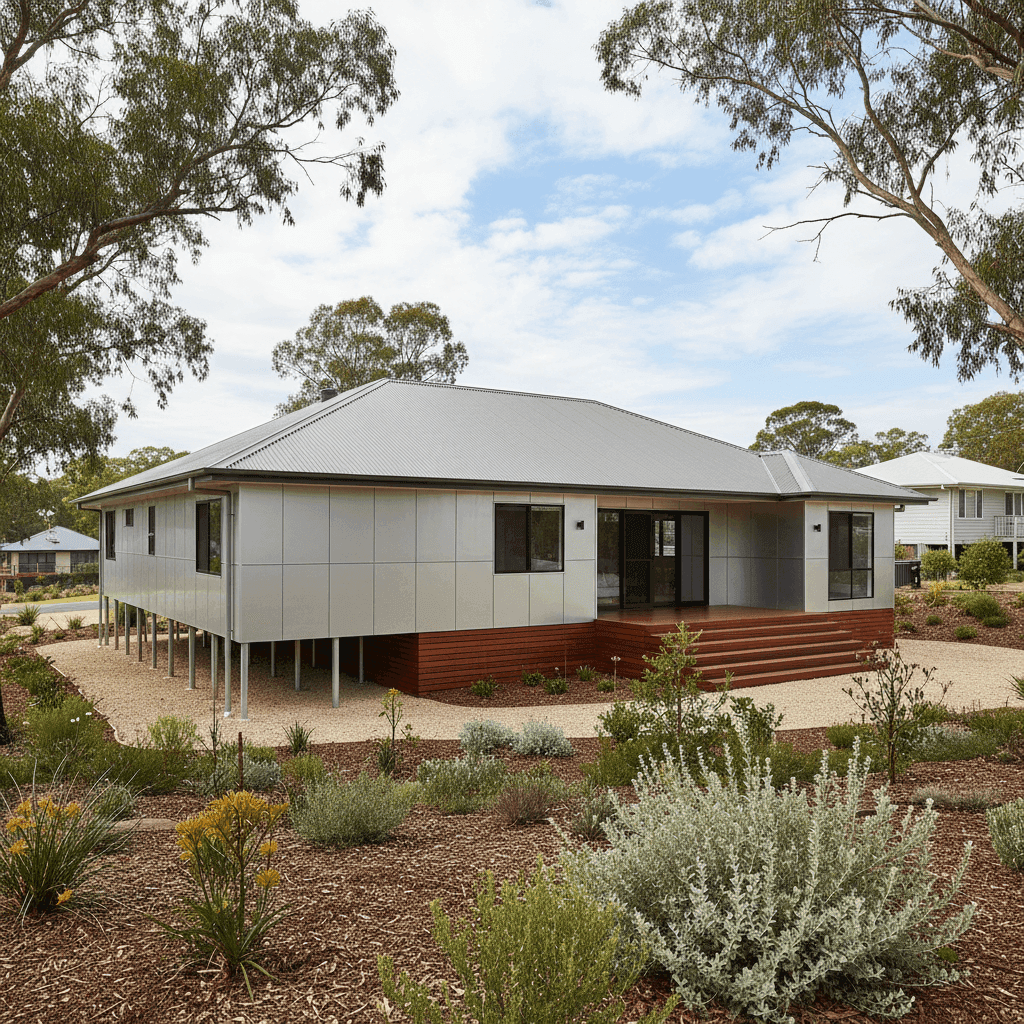
If you own a large free standing home in Repton, NSW 2454, you already know this part of the Mid North Coast is a beautiful — if sometimes unpredictable — place to live. What you might not know is exactly how your home insurance premium stacks up against your neighbours, the rest of New South Wales, and the broader national market. In this article, we break down a real home and contents insurance quote for a seven-bedroom property in Repton, explore the factors driving the cost, and share some practical tips to help you get better value.
---
Is This Quote Fair?
The quote in question comes in at $6,729 per year (or $662/month) for a combined home and contents policy, covering a building sum insured of $1,000,000 and contents valued at $50,000. The building excess is $3,000 and the contents excess $1,000.
Our price rating for this quote is Expensive — Above Average.
To put that in context, the suburb average premium for Repton sits at $4,283 per year, with a median of $4,174. This quote is roughly 57% above the suburb average and well above the 75th percentile of $5,136 — meaning it's more expensive than at least three-quarters of comparable quotes in the area.
That said, it's worth noting the property is a substantial one: 406 square metres across seven bedrooms and three bathrooms, with a $1,000,000 building sum insured. Size and rebuild value are among the biggest drivers of premium cost, so some premium loading is expected. Still, there may be room to shop around.
---
How Repton Compares
Understanding your premium means looking beyond just your postcode. Here's how Repton sits within the broader insurance landscape:
| Benchmark | Average Premium | Median Premium |
|---|---|---|
| Repton (2454) | $4,283/yr | $4,174/yr |
| Nambucca Valley LGA | $5,445/yr | — |
| New South Wales | $3,801/yr | $3,410/yr |
| National | $2,965/yr | $2,716/yr |
A few things stand out here. First, Repton premiums are already noticeably higher than the NSW average ($4,283 vs $3,801), and significantly above the national average of $2,965. This reflects the elevated risk profile of coastal and near-coastal areas in regional NSW — think flood plains, storm activity, and the general exposure that comes with living near waterways and the Pacific coastline.
Second, the Nambucca Valley LGA average of $5,445 is actually higher than the Repton suburb average, suggesting some properties within the broader council area attract even steeper premiums. Repton itself may benefit from slightly lower-risk microclimates or building stock compared to other parts of the LGA.
You can explore the full breakdown for NSW home insurance statistics or compare against national averages to see where your own property sits.
---
Property Features That Affect Your Premium
Several characteristics of this particular property have a meaningful influence on what insurers charge. Here's what's at play:
Size and Sum Insured
At 406 square metres with seven bedrooms and three bathrooms, this is a large home. A $1,000,000 building sum insured is substantial, and insurers price accordingly — a larger rebuild cost means a larger potential claim.
Aluminium Cladding and Colorbond Roof
The external walls are aluminium and the roof is steel/Colorbond. Colorbond roofing is generally viewed favourably by insurers — it's durable, fire-resistant, and performs well in high-wind and storm events. Aluminium cladding is similarly low-maintenance and resilient, which can work in your favour at assessment time.
Stump Foundation (Elevated Less Than 1m)
The home sits on stumps and is elevated by less than one metre. This style of construction — common in coastal and semi-rural NSW — offers some protection against minor flooding and moisture, but insurers may still apply loadings depending on local flood mapping data. It's worth checking whether your property falls within a designated flood zone on the Repton suburb stats page.
Timber and Laminate Flooring
Timber and laminate flooring can be more costly to repair or replace after a water damage event compared to tiles, which may factor slightly into contents and building assessments.
Standard Fittings
With standard fittings throughout, there's no premium loading for high-end fixtures or bespoke finishes — a modest saving compared to properties with premium or luxury fitouts.
No Pool, Solar, or Ducted Climate Control
The absence of a pool, solar panels, and ducted air conditioning simplifies the risk profile. Each of these features can add complexity (and cost) to a claim, so their absence is a minor positive from an underwriting perspective.
Regional Coastal Location
Repton's location in the Nambucca Valley places it in a region that can experience significant rainfall, storm surges, and the occasional severe weather event. Insurers factor in postcode-level risk data, and coastal NSW postcodes consistently attract higher base premiums than inland or metropolitan areas.
---
Tips for Homeowners in Repton
1. Review Your Sum Insured Carefully
A $1,000,000 building sum insured is significant. Make sure this figure reflects the actual cost to rebuild your home — not its market value. Overinsuring can inflate your premium unnecessarily, while underinsuring leaves you exposed. Consider getting a professional building valuation every few years.
2. Shop Around and Compare Multiple Quotes
With a premium rated as expensive relative to the suburb average, this is a clear signal to compare. Different insurers weight risk factors differently, and a quote from one provider can vary dramatically from another for the same property. Use CoverClub's free quote comparison tool to see multiple options side by side.
3. Check Your Flood Zone Status
Given the stump foundation and regional location, it's worth verifying your property's flood classification. If you've been incorrectly mapped into a higher flood risk category, you may be able to dispute this with your insurer and reduce your premium. Council flood maps and the National Flood Information Portal are good starting points.
4. Consider Adjusting Your Excess
This policy carries a $3,000 building excess — already on the higher end. Increasing your excess further is one lever you can pull to reduce your annual premium, provided you're comfortable covering that amount out of pocket in the event of a claim. Just make sure the savings justify the trade-off.
---
Ready to Find a Better Deal?
Whether this quote is the right fit or you're simply curious about what else is available, comparing your options is always worthwhile. At CoverClub, we make it easy to see how your home insurance premium stacks up and find competitive quotes tailored to your property. Get a free quote today and see if you can do better than the suburb average.