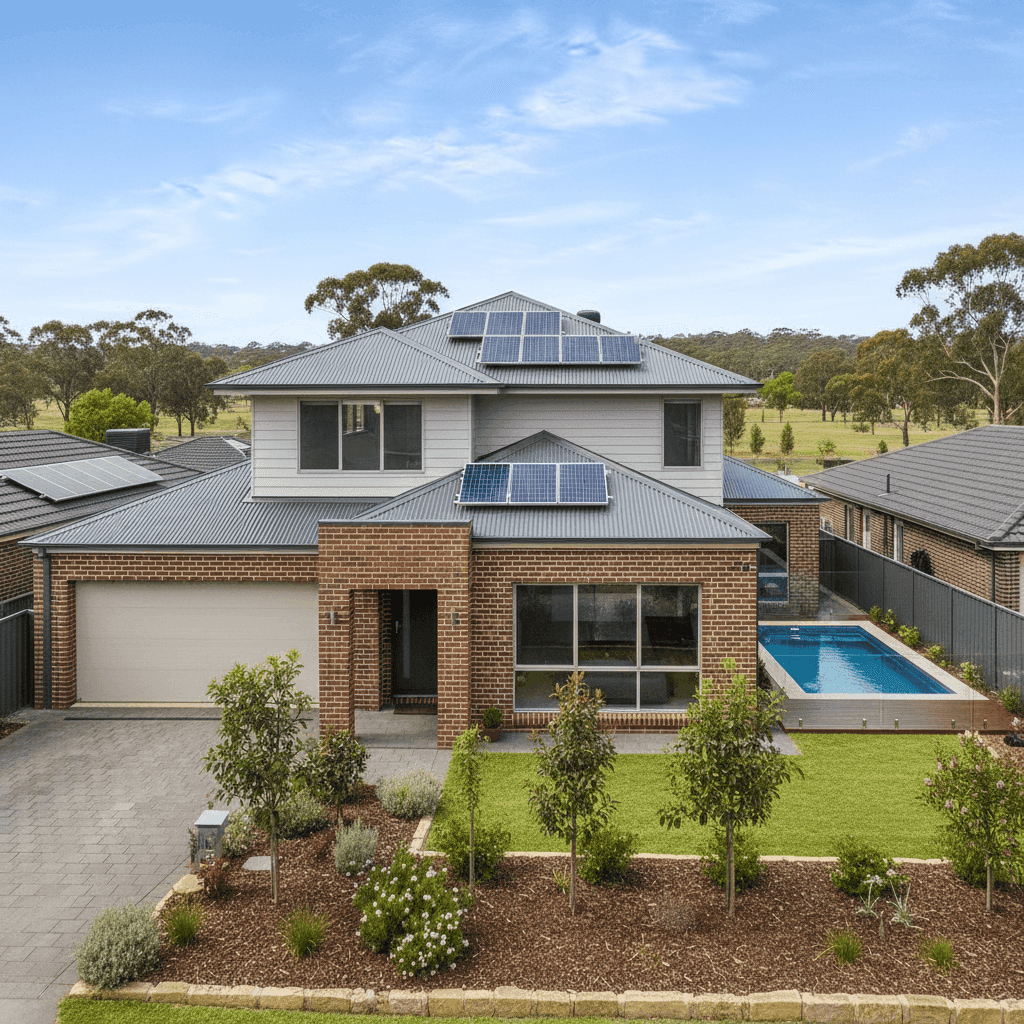
If you own a four-bedroom free standing home in Research, VIC 3095, you already know this leafy suburb in Melbourne's north-east is a desirable place to live. But desirable suburbs come with real estate values — and insurance premiums — that reflect that. This article breaks down a recent home and contents insurance quote for a brick veneer property in Research, compares it against local, state, and national benchmarks, and offers practical tips to help you get better value on your cover.
---
Is This Quote Fair?
The quote in question comes in at $5,183 per year (or $524/month) for combined home and contents cover, with a building sum insured of $1,097,000 and contents valued at $249,000. The building excess is $2,500 and the contents excess is $500.
Our price rating for this quote is FAIR — Around Average.
That assessment holds up when you look at the data. The suburb average premium for Research sits at $5,497/year, meaning this quote is actually tracking slightly below the local average — a modest but meaningful saving. Against the suburb median of $4,113/year, the quote is higher, which is expected given the elevated sum insured for both building and contents. A $1,097,000 building replacement value is a substantial figure, and it naturally pushes the premium above what a lower-insured property would attract.
In short: for the level of cover being purchased, this quote represents reasonable value. It's not a bargain, but it's not excessive either.
---
How Research Compares
To put this quote in proper context, it helps to zoom out and look at the broader pricing landscape. You can explore the full data on our Research suburb stats page.
| Benchmark | Premium |
|---|---|
| This quote | $5,183/yr |
| Research suburb average | $5,497/yr |
| Research suburb median | $4,113/yr |
| Research 25th percentile | $3,477/yr |
| Research 75th percentile | $7,833/yr |
| LGA (Banyule) average | $2,085/yr |
| VIC state average | $3,000/yr |
| VIC state median | $2,718/yr |
| National average | $5,347/yr |
| National median | $2,764/yr |
A few things stand out here. First, Research premiums are considerably higher than the Victorian state average of $3,000/year and the state median of $2,718/year. You can see how VIC compares to other states on our state stats page. This isn't surprising — Research is an established, higher-value suburb where property replacement costs are well above the state norm.
Second, this quote sits very close to the national average of $5,347/year, which is notable. It suggests that while Research is an expensive suburb by Victorian standards, its insurance costs are broadly in line with what Australians across the country pay for comparable homes. For the full national picture, visit our national home insurance stats page.
The wide gap between the 25th percentile ($3,477) and the 75th percentile ($7,833) in Research also tells an important story: premiums in this suburb vary enormously depending on property size, construction, features, and the insurer chosen. There is real money to be saved by shopping around.
---
Property Features That Affect Your Premium
Several characteristics of this property directly influence what insurers charge. Understanding them can help you make sense of your own quote.
Brick veneer construction and Colorbond roof Brick veneer walls are generally viewed favourably by insurers — they're durable, fire-resistant, and common across Melbourne's established suburbs. The steel Colorbond roof is similarly well-regarded for its longevity and resistance to weather events. Together, these materials tend to attract more competitive premiums than, say, weatherboard or older terracotta tile roofing.
Slab foundation and tiled flooring A concrete slab foundation is standard for homes of this era and is considered low-risk by most insurers. Tiled flooring throughout is another positive signal — tiles are durable, easy to replace, and less susceptible to water damage than carpet or hardwood.
1985 construction year Homes built in the mid-1980s are well past the higher-risk "new build" phase but are also old enough that some insurers factor in the potential for ageing infrastructure — plumbing, wiring, and roofing materials. At 214 sqm, this is a substantial home, and the building sum insured of $1,097,000 reflects the true cost of rebuilding to modern standards in a premium Melbourne suburb.
Pool, solar panels, and ducted climate control These three features each add to the sum insured and the overall risk profile. A swimming pool introduces liability considerations and increases the cost of full replacement. Solar panels — increasingly common on Melbourne homes — add value to the building but also complexity in the event of a claim. Ducted climate control is a significant fixture that needs to be covered under the building policy. All three are legitimate reasons for a higher premium, and all three should be explicitly confirmed as covered in your policy documents.
---
Tips for Homeowners in Research
1. Review your building sum insured annually Construction costs in Melbourne's north-east have risen sharply in recent years. The $1,097,000 sum insured on this quote may be appropriate today, but it's worth checking against a current building cost calculator each year to avoid being underinsured — or over-paying for more cover than you need.
2. Consider a higher excess to reduce your premium The building excess on this quote is $2,500. If you have the financial buffer to absorb a larger out-of-pocket cost in the event of a claim, opting for a higher excess (say, $5,000) can meaningfully reduce your annual premium. This strategy works best for homeowners who are unlikely to make small or frequent claims.
3. Bundle your home and contents — but still compare This quote covers both home and contents together, which typically attracts a discount over purchasing separate policies. That said, not all insurers price bundled cover the same way. It's worth getting individual quotes for building-only and contents-only cover to confirm the bundle is genuinely saving you money.
4. Don't overlook the pool and solar panel inclusions Before renewing any policy, confirm in writing that your swimming pool and solar panel system are explicitly covered — including the panels themselves, the inverter, and associated wiring. Some standard policies treat these as optional extras. Given the replacement cost of a quality solar system and pool equipment, gaps in cover here can be costly.
---
Compare Your Options with CoverClub
Whether you're renewing your current policy or shopping for cover for the first time, it pays to compare. The data shows that premiums in Research vary by thousands of dollars depending on the insurer and the property — and a quote that's "around average" might still have room to improve. Get a home insurance quote through CoverClub and see how your options stack up side by side.