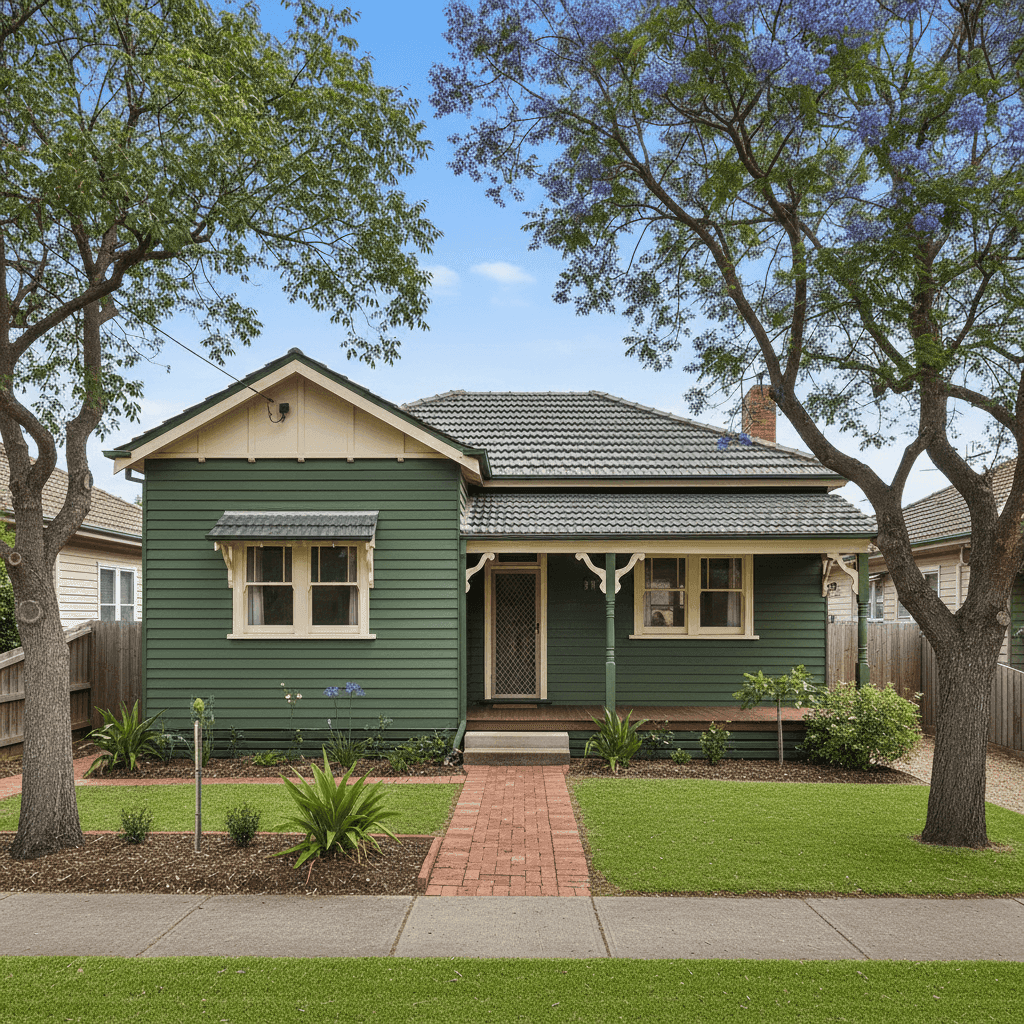
Reservoir is one of Melbourne's most established northern suburbs, known for its character-filled streetscapes and a healthy mix of period homes and modern renovations. If you own a free standing home here — particularly one of the many weatherboard properties built in the early to mid-20th century — understanding what you should be paying for building insurance is well worth your time. This article breaks down a real building-only insurance quote for a 3-bedroom, 1-bathroom home in Reservoir (postcode 3073) and puts it in context against local, state, and national benchmarks.
---
Is This Quote Fair?
The short answer: yes, and then some. This quote comes in at $1,058 per year (or roughly $110 per month), and it earns a CHEAP price rating — meaning it sits meaningfully below what most Reservoir homeowners are paying for comparable cover.
To put that in perspective, the suburb average premium across 65 quotes collected in Reservoir sits at $1,520 per year, with a median of $1,448. That means this quote is approximately $462 below the local average — a saving of around 30%. Even compared to the suburb's 25th percentile (the cheapest quarter of quotes), which sits at $1,152 per year, this quote still comes in lower.
For a building sum insured of $540,000 — which is a reasonable figure for rebuilding a 160 sqm home in metropolitan Melbourne — that's genuinely competitive pricing. Of course, the $3,000 building excess is on the higher side and is worth factoring in when comparing policies. A higher excess typically reduces your premium, so part of the savings here may reflect that trade-off.
---
How Reservoir Compares to the Rest of Victoria and Australia
One of the most striking things about this quote is how well Reservoir stacks up against broader benchmarks. Check out the numbers:
| Benchmark | Average Premium | Median Premium |
|---|---|---|
| Reservoir (3073) | $1,520/yr | $1,448/yr |
| Darebin LGA | $1,622/yr | — |
| Victoria | $3,000/yr | $2,718/yr |
| National | $5,347/yr | $2,764/yr |
Reservoir homeowners are paying, on average, less than half what the typical Victorian homeowner pays — and a fraction of the national average. The national average is heavily skewed by high-risk regions such as Far North Queensland (cyclone), coastal New South Wales (flood and storm), and parts of Western Australia, which drives that figure up considerably.
Even within the Darebin local government area, Reservoir sits slightly below the LGA average of $1,622 per year, suggesting it's one of the more affordably insured pockets within the council boundary.
You can explore more local data on the Reservoir suburb insurance stats page, compare it against the Victorian state overview, or see where it lands on the national insurance landscape.
---
Property Features That Affect Your Premium
Every home is different, and insurers assess a range of property characteristics when calculating your premium. Here's how the features of this particular home are likely influencing its price:
Weatherboard Timber Construction
Weatherboard homes are among the most common dwelling types in inner-north Melbourne, but they carry a higher fire risk than brick veneer or double-brick homes. Timber walls are more susceptible to ignition and can result in a total loss more readily. Insurers typically price this risk into premiums — so it's notable that this quote remains competitive despite the weatherboard construction.
Tiled Roof
Terracotta or concrete tile roofs are generally viewed favourably by insurers. They're durable, fire-resistant, and less prone to storm damage than corrugated iron or older Colorbond. This likely contributes positively to the premium outcome here.
Stump Foundation
Homes on stumps (also called pier and beam foundations) are common in older Melbourne suburbs. While they offer good ventilation and are easier to access for maintenance, they can be susceptible to movement over time — particularly in areas with reactive clay soils, which are widespread across Melbourne's north. Insurers may factor in the age and condition of stumps when assessing risk.
Age of Construction (1930)
At nearly 100 years old, this home sits firmly in the "heritage era" of Melbourne housing stock. Older homes can be more expensive to repair or rebuild due to the cost of matching period materials and details. However, if the home has been well-maintained or partially renovated, this risk is mitigated.
Ducted Climate Control
The presence of a ducted heating or cooling system adds to the replacement value of the home and is reflected in the sum insured. It's a feature that can incrementally increase premiums, though its impact is generally modest.
No Pool, No Solar
The absence of a swimming pool and solar panels simplifies the risk profile. Pools add liability exposure and maintenance complexity, while solar panels — particularly older systems — can introduce fire risk. Neither applies here, which keeps things straightforward.
---
Tips for Homeowners in Reservoir
Whether you're reviewing your current policy or shopping around for the first time, here are a few practical steps worth taking:
1. Review Your Sum Insured Annually
Building costs in Melbourne have risen significantly over the past few years due to labour shortages and materials inflation. A sum insured of $540,000 may be appropriate today, but it's worth revisiting each year to ensure you're not underinsured. Use a building cost calculator or speak with a quantity surveyor if you're unsure.
2. Understand Your Excess Trade-Off
This quote carries a $3,000 building excess. While a higher excess lowers your premium, it means you'll need to cover more out of pocket when making a claim. Consider whether that level of excess is comfortable given your financial buffer — and compare quotes with lower excess options to understand the premium difference.
3. Consider Getting a Pest and Stump Inspection
For homes built on stumps — especially those dating back to the 1930s — the condition of the foundation is critical. Termite damage and timber rot can go undetected for years. An inspection not only protects your home structurally but may also be relevant if you ever need to make a claim related to structural damage.
4. Don't Auto-Renew Without Comparing
The fact that this quote is rated CHEAP relative to the suburb average is a reminder that there's significant variation in what insurers charge for the same property. Loyalty doesn't always pay — insurers often reserve their best rates for new customers. Make it a habit to compare at renewal time.
---
Ready to Compare Your Own Quote?
Whether you're a long-time Reservoir resident or have recently purchased in the area, it pays to know what the market looks like. CoverClub makes it easy to benchmark your current premium against real quotes from across the suburb, the state, and the country.
Get a quote and compare home insurance options today — it takes just a few minutes and could save you hundreds of dollars a year.