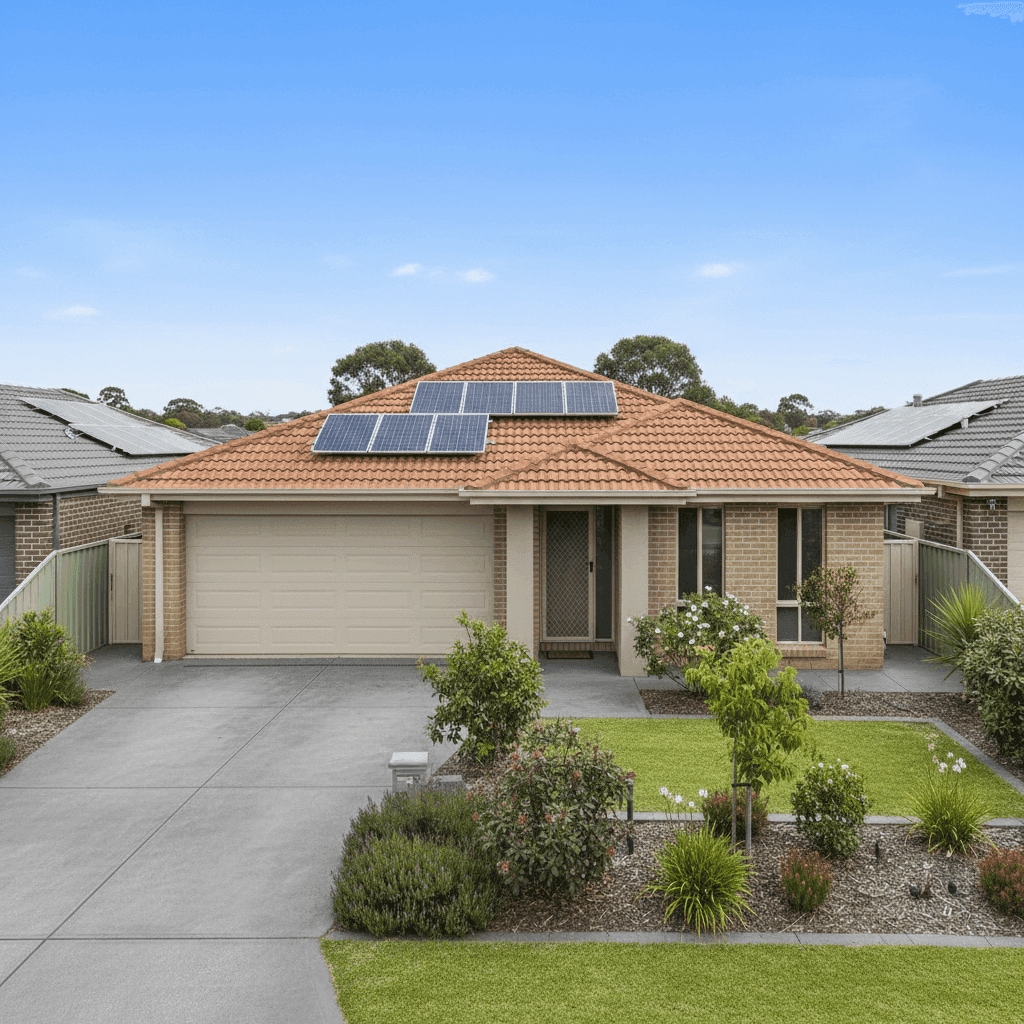
Reservoir is a well-established suburb in Melbourne's north, sitting within the City of Darebin about 11 kilometres from the CBD. It's a popular choice for families and first-home buyers drawn to its leafy streets, solid housing stock, and strong community feel. This article takes a close look at a home and contents insurance quote for a three-bedroom, two-bathroom free-standing home in Reservoir — and whether the premium on offer represents fair value.
---
Is This Quote Fair?
The quote in question comes in at $2,228 per year (or $214 per month) for combined home and contents cover, with a building sum insured of $900,000 and contents valued at $50,000. Both the building and contents excesses are set at $1,000.
Based on our pricing data, this quote is rated Expensive — above average for the area. Compared to the suburb average of $1,520 per year and the median of $1,448 per year across 65 quotes in Reservoir, this premium sits noticeably higher than what most local homeowners are paying. In fact, it's above the 75th percentile for the suburb ($1,742/yr), meaning fewer than one in four Reservoir homeowners in our dataset are paying this much.
That said, context matters. The building sum insured of $900,000 is on the higher end, which will naturally push premiums up. The property also features solar panels and ducted climate control — both of which add to the insurable value of the home and can influence the final premium.
---
How Reservoir Compares
Understanding where a quote sits relative to broader benchmarks helps put the number in perspective.
| Benchmark | Premium |
|---|---|
| This quote | $2,228/yr |
| Reservoir suburb average | $1,520/yr |
| Reservoir suburb median | $1,448/yr |
| Darebin LGA average | $1,622/yr |
| Victoria state average | $3,000/yr |
| Victoria state median | $2,718/yr |
| National average | $5,347/yr |
| National median | $2,764/yr |
When you zoom out to a state-wide view of Victoria, this quote is actually below both the state average and median — a reassuring sign that Reservoir remains a relatively affordable suburb to insure compared to many other parts of the state. And looking at the national picture, the quote is well under the national average of $5,347 per year, which is heavily influenced by high-risk regions like Far North Queensland and coastal flood-prone areas.
So while this premium is on the expensive side locally, it's far from unusual when viewed through a broader lens. Homeowners in Reservoir are, on the whole, paying significantly less than the Victorian and national averages — a reflection of the suburb's relatively low natural hazard risk profile.
---
Property Features That Affect Your Premium
Several characteristics of this particular property are worth examining, as they each play a role in determining the final premium.
Brick Veneer Construction Brick veneer walls are among the most common external wall types across Melbourne's middle-ring suburbs, and insurers generally view them favourably. Brick veneer offers good fire resistance and structural durability, which can help moderate premiums compared to timber-framed or clad homes.
Tiled Roof Terracotta or concrete tiles are a standard roofing choice for homes of this era and are considered a relatively low-risk roofing material. Tiles are durable, fire-resistant, and widely understood by insurers — all factors that work in the homeowner's favour at renewal time.
Stump Foundation The home sits on stumps, which is common for properties built in Melbourne during the mid-20th century. Stumped foundations can be more susceptible to movement and subsidence over time, particularly in areas with reactive clay soils. This can be a factor insurers consider when pricing building cover, and it's worth ensuring your policy includes adequate cover for gradual movement or foundation-related damage.
Construction Year: 1985 At roughly 40 years old, this home sits in a bracket where insurers may apply slightly higher premiums to account for ageing building components — particularly plumbing, electrical wiring, and roofing materials. Keeping maintenance records and ensuring the home is well-maintained can help when negotiating at renewal.
Solar Panels The presence of rooftop solar adds to the replacement cost of the home and is a factor in the building sum insured. It's important to confirm that your policy explicitly covers solar panels — both for damage to the panels themselves and for any liability arising from installation or malfunction.
Ducted Climate Control Ducted heating and cooling systems represent a significant fixed asset within the home. These systems can be costly to repair or replace, and their inclusion in the building sum insured is appropriate. Homeowners should check whether their policy covers mechanical breakdown or only accidental damage.
214 sqm Building Footprint At 214 square metres, this is a comfortably sized family home. The $900,000 building sum insured works out to roughly $4,200 per square metre — broadly in line with current construction costs in metropolitan Melbourne, though it's always worth getting a professional rebuild cost estimate to ensure you're neither over- nor under-insured.
---
Tips for Homeowners in Reservoir
1. Review your sum insured annually Construction costs in Melbourne have risen significantly in recent years. If your building sum insured hasn't been updated to reflect current rebuild costs, you could be underinsured — meaning you'd have to cover the shortfall yourself in the event of a total loss. Use a qualified quantity surveyor or an online calculator to verify your figure each year.
2. Check your solar panel coverage Not all policies automatically include rooftop solar systems under building cover. Review your Product Disclosure Statement (PDS) carefully to confirm your panels are covered for storm damage, hail, and accidental breakage — and that the inverter is included.
3. Shop around at renewal Our data shows a wide spread of premiums across Reservoir, with the cheapest 25% of quotes sitting around $1,152 per year and the most expensive 25% above $1,742 per year. That's a significant range, and loyalty doesn't always pay — insurers frequently offer better rates to new customers. Comparing quotes before your renewal date is one of the simplest ways to reduce your premium.
4. Consider your excess strategically Both the building and contents excesses on this policy are set at $1,000. Opting for a higher excess — say $2,000 — can meaningfully reduce your annual premium. If you have the savings to cover a larger out-of-pocket cost in the event of a claim, this trade-off is often worth considering.
---
Compare Home Insurance Quotes in Reservoir
Whether you're reviewing an existing policy or shopping for the first time, comparing multiple quotes is the most effective way to make sure you're getting the right cover at a fair price. At CoverClub, you can enter your property details and see how your premium stacks up against real quotes from across Reservoir and beyond. It takes just a few minutes — and the savings can be substantial.