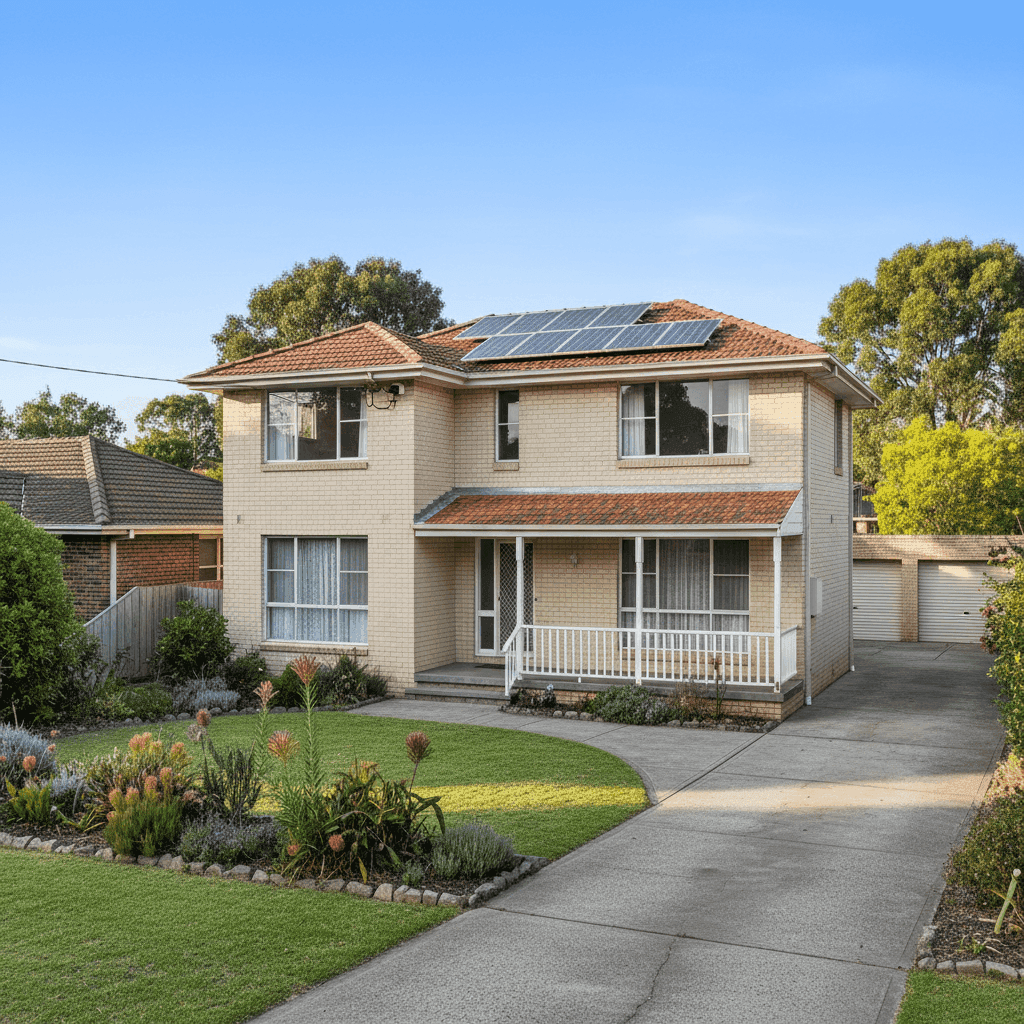
If you own a free standing home in Reservoir, VIC 3073, you're in one of Melbourne's most established northern suburbs — a pocket of the city known for its solid brick homes, tree-lined streets, and a community that's been growing steadily for decades. Like most Australian homeowners, keeping a lid on insurance costs while maintaining solid cover is a constant balancing act. This article breaks down a real home and contents insurance quote for a three-bedroom property in Reservoir, comparing it against local, state, and national benchmarks so you can judge whether you're getting a fair deal.
---
Is This Quote Fair?
The quote in question comes in at $1,048 per year (or roughly $97 per month), covering both building and contents for a 3-bedroom, 1-bathroom free standing home. The building is insured for $466,000, with contents covered to $50,000. The building excess sits at $2,000, and the contents excess at $1,000.
Our pricing analysis rates this quote as FAIR — around average for the area. That's a meaningful finding. It doesn't mean this is the cheapest quote available, but it does suggest the premium is broadly in line with what comparable Reservoir homeowners are paying — neither a standout bargain nor a cause for concern.
To put it in context: the suburb average premium is $1,365 per year, and the suburb median is $1,372 per year, based on 75 quotes collected for the Reservoir area. At $1,048, this quote sits below both the average and the median, which is a positive sign. It also falls between the 25th percentile ($991/yr) and the 75th percentile ($1,751/yr), placing it comfortably in the lower half of the local pricing range.
In short — this homeowner appears to be paying less than most of their neighbours for comparable cover, which is a solid outcome.
---
How Reservoir Compares
Zooming out from the suburb level paints an even more encouraging picture. You can explore the full data on the Reservoir suburb stats page.
| Benchmark | Average Premium | Median Premium |
|---|---|---|
| Reservoir (suburb) | $1,365/yr | $1,372/yr |
| Darebin LGA | $1,685/yr | — |
| Victoria (state) | $2,921/yr | $2,694/yr |
| National | $2,965/yr | $2,716/yr |
The gap between Reservoir and the broader Victorian and national figures is striking. The Victorian state average sits at $2,921 per year — more than double what Reservoir homeowners typically pay. Nationally, the picture is similar, with the national average at $2,965 per year.
Much of this disparity comes down to risk geography. Victoria's state average is heavily influenced by high-risk areas — bushfire-prone regions, flood-affected zones, and coastal properties that attract significantly higher premiums. Reservoir, sitting well within Melbourne's urban footprint, benefits from lower exposure to these catastrophic weather events.
Even within the City of Darebin LGA, Reservoir appears to attract more competitive premiums. The LGA average of $1,685 per year is noticeably higher than Reservoir's suburb average, which may reflect variation across neighbouring suburbs with different risk profiles.
---
Property Features That Affect Your Premium
Several characteristics of this particular property work in the homeowner's favour when it comes to pricing.
Double brick construction is one of the most insurer-friendly wall types available. It offers excellent structural integrity, strong fire resistance, and solid protection against storm damage — all factors that reduce the likelihood of a major claim. Homes built with double brick typically attract lower premiums than those with timber or lightweight cladding.
Tiled roofing is similarly well-regarded by insurers. Terracotta or concrete tiles are durable, fire-resistant, and long-lasting, which reduces risk compared to older corrugated iron or asbestos-cement roofs that were common in mid-century homes.
Built in 1985, this home sits in a sweet spot for insurers — old enough to have proven structural longevity, but modern enough to have been built under more rigorous building codes than pre-war properties. The stump foundation is worth noting; while common in Melbourne's older suburbs, stumps can require periodic maintenance and inspection, which is something to keep on top of.
Solar panels are present on this property. While they add value and reduce energy costs, they do add a layer of complexity to building insurance — panels need to be adequately covered under the building sum insured, and homeowners should confirm with their insurer that the panels are explicitly included in the policy.
Ducted climate control is another feature that adds to the replacement value of the home. Systems like these can cost tens of thousands of dollars to replace, so it's worth ensuring the building sum insured of $466,000 accounts for this — along with all other fixed fixtures and fittings.
The absence of a swimming pool removes one common source of liability and maintenance-related claims, which can have a modest positive effect on premiums.
---
Tips for Homeowners in Reservoir
1. Review your building sum insured regularly Construction costs have risen sharply in recent years. A sum insured of $466,000 for a 139 sqm home may be adequate today, but it's worth reassessing annually. Underinsurance is one of the most common — and costly — mistakes homeowners make. Use a building cost calculator or speak to a quantity surveyor if you're unsure.
2. Confirm your solar panels are covered Not all policies automatically include rooftop solar systems under building cover. Check your Product Disclosure Statement (PDS) to confirm your panels, inverter, and associated wiring are explicitly covered, and that the sum insured reflects their replacement cost.
3. Shop around at renewal time Even though this quote is rated as fair, the spread between the 25th percentile ($991/yr) and the 75th percentile ($1,751/yr) in Reservoir shows there's meaningful variation in the market. Loyalty doesn't always pay — comparing quotes at renewal could uncover a better deal without sacrificing cover quality.
4. Keep up with stump maintenance Homes on stump foundations can develop issues over time, including subsidence or timber decay, that may affect your ability to make a claim if the damage is deemed the result of gradual deterioration rather than a sudden event. Annual inspections by a licensed builder can help you stay ahead of any issues and keep your cover valid.
---
Ready to Compare?
Whether you're reviewing your current policy or shopping for the first time, comparing quotes is the smartest way to make sure you're not overpaying. Get a home insurance quote at CoverClub and see how your premium stacks up against the suburb, state, and national benchmarks — in minutes, not hours.