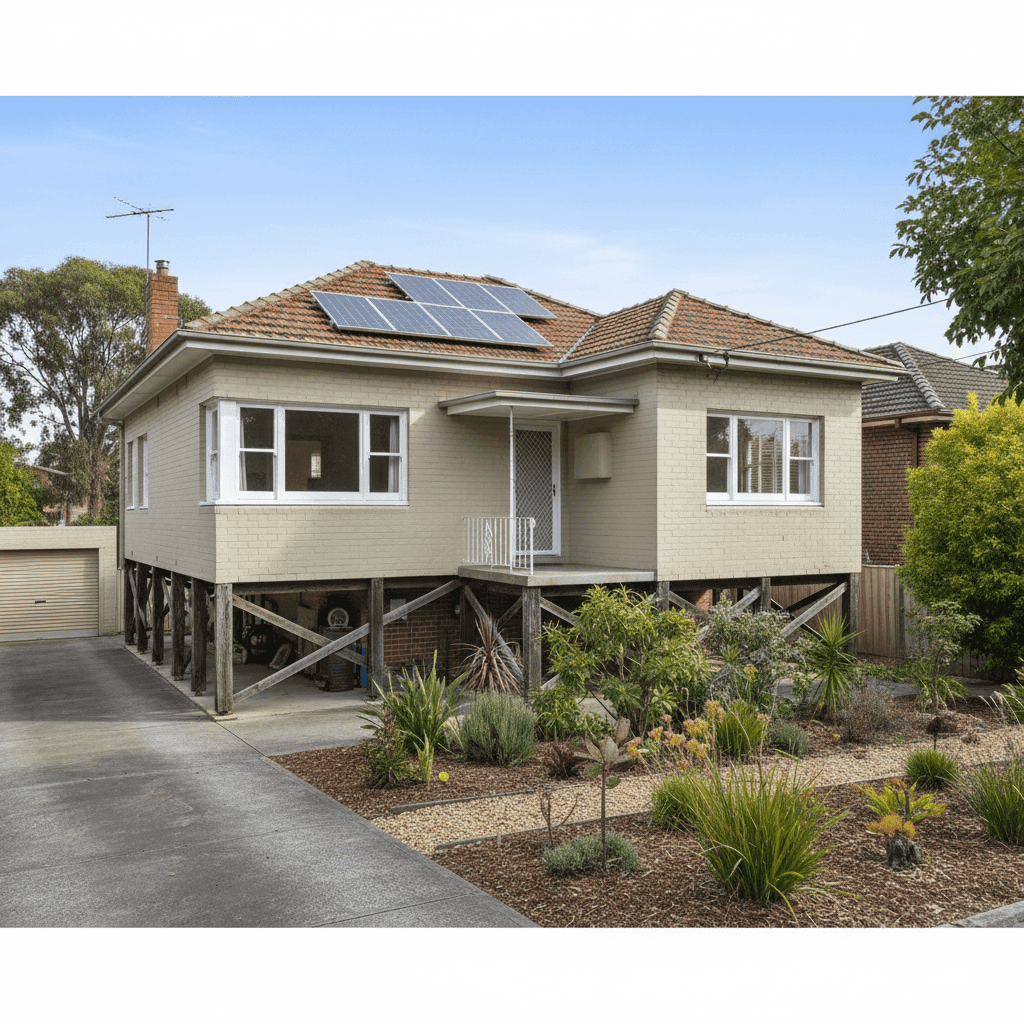
If you own a free standing home in Reservoir, VIC 3073, you've probably wondered whether you're paying a fair price for home insurance — or quietly overpaying year after year. This article breaks down a real home and contents insurance quote for a four-bedroom property in the suburb, compares it against local, state, and national benchmarks, and offers practical advice to help you get the best value cover.
---
Is This Quote Fair?
The annual premium for this quote comes in at $1,593 per year (or $153 per month), covering both building (insured at $468,000) and contents (valued at $50,000), each with a $1,000 excess.
Our price rating for this quote is FAIR — Around Average.
Based on 65 quotes collected for Reservoir (3073), the suburb average sits at $1,520/yr and the median at $1,448/yr. This quote lands about 4.8% above the suburb average and roughly 10% above the median — which places it comfortably within the normal range, though not at the cheaper end of the market.
The 25th percentile for the suburb is $1,152/yr, meaning a quarter of comparable properties are paying notably less. The 75th percentile is $1,742/yr, so this quote is well within the middle of the pack. Homeowners paying close to the 75th percentile mark may have more complex risk profiles, larger homes, or higher sums insured — so context always matters.
In short: this isn't a bargain, but it's not an overpriced outlier either. There's still room to potentially sharpen the premium with a few targeted adjustments.
---
How Reservoir Compares to the Rest of Victoria and Australia
One of the most striking takeaways from this data is just how well Reservoir performs compared to broader benchmarks.
| Benchmark | Average Premium | Median Premium |
|---|---|---|
| Reservoir (3073) | $1,520/yr | $1,448/yr |
| LGA: Darebin | $1,622/yr | — |
| Victoria | $3,000/yr | $2,718/yr |
| National | $5,347/yr | $2,764/yr |
Reservoir homeowners are paying roughly half the Victorian state average and a fraction of the national average. The Victorian state average of $3,000/yr reflects the significant premium burden carried by higher-risk areas — coastal zones, flood plains, and bushfire-prone regions — which push the statewide figure upward considerably.
The national average of $5,347/yr is heavily influenced by northern Queensland and other cyclone-prone or flood-affected regions, where premiums can be eye-watering. By comparison, inner-northern Melbourne suburbs like Reservoir represent a relatively low-risk, affordable pocket of the Australian insurance landscape.
Even within the Darebin LGA, Reservoir's average of $1,520/yr comes in slightly below the broader LGA average of $1,622/yr — a modest but meaningful difference.
---
Property Features That Affect Your Premium
Several characteristics of this particular property play a role in shaping its risk profile and, by extension, the premium.
Double Brick Walls and Tiled Roof
Double brick construction is generally viewed favourably by insurers. It's durable, fire-resistant, and less susceptible to storm damage than timber-framed or clad alternatives. Combined with a tiled roof — another robust and low-maintenance material — this home presents a solid structural profile that likely contributes to a more competitive premium.
Stump Foundation and Elevated Position
This home sits on stumps and is elevated by at least one metre. While elevation can help in minor flooding events by keeping the floor level above shallow water, stump foundations do introduce some additional considerations — they can be vulnerable to subsidence, white ant (termite) damage, and may require periodic inspection and replacement. Insurers factor this in, particularly for homes built in the mid-1980s when stump materials and construction standards varied.
Built in 1985
At roughly 40 years old, this home falls into a bracket where insurers start to pay closer attention to building condition. Older homes can carry higher risk due to ageing plumbing, electrical wiring, and roofing. Keeping up with maintenance and being able to demonstrate good upkeep can make a difference at renewal time.
Solar Panels
The presence of solar panels adds a modest layer of complexity to the risk profile. Panels represent an additional asset that needs to be covered under the building sum insured, and there's a small risk of fire or damage associated with inverters and wiring. That said, solar is now so commonplace that most insurers price it in without significant penalty.
Ducted Climate Control
Ducted heating and cooling systems are a standard feature in many Melbourne homes and generally don't raise major red flags for insurers. However, they do add to the replacement value of the home, so it's worth ensuring your building sum insured accounts for the cost of reinstalling a ducted system if the property were to be rebuilt.
Tile Flooring
Tile flooring is a durable, low-maintenance option that tends to fare well in insurance assessments. It's resistant to water damage and doesn't carry the same replacement cost as hardwood or engineered timber floors.
---
Tips for Homeowners in Reservoir
1. Review Your Building Sum Insured Annually
Construction costs in Melbourne have risen significantly in recent years. A sum insured of $468,000 for 139 sqm works out to roughly $3,370 per square metre — which is within a reasonable range for a standard double brick home, but worth validating against current builder rates in your area. Being underinsured at claim time can be a costly mistake.
2. Consider Increasing Your Excess to Lower Your Premium
With both building and contents excesses set at $1,000, there may be room to push these higher if you're comfortable self-insuring smaller claims. Many insurers offer meaningfully lower premiums in exchange for a $2,000 or $2,500 excess — particularly if you have an emergency fund to cover it.
3. Get Your Stumps Inspected
If you haven't had your stump foundation professionally assessed recently, it's worth doing — especially given the age of the property. Some insurers may ask about foundation condition, and proactive maintenance can prevent a much larger claim down the track. Documenting recent inspections can also work in your favour when negotiating with insurers.
4. Compare Quotes at Renewal
Even a "fair" premium can be improved upon. The 25th percentile for Reservoir sits at $1,152/yr — a potential saving of over $440/yr compared to this quote. Shopping around at renewal, rather than auto-renewing, is one of the simplest ways to ensure you're not drifting toward the more expensive end of the market over time.
---
Ready to See What You Could Pay?
Whether you're reviewing an existing policy or shopping for the first time, comparing quotes is the smartest move you can make. CoverClub makes it easy to see real quotes for your specific property in Reservoir and benchmark them against what your neighbours are paying.