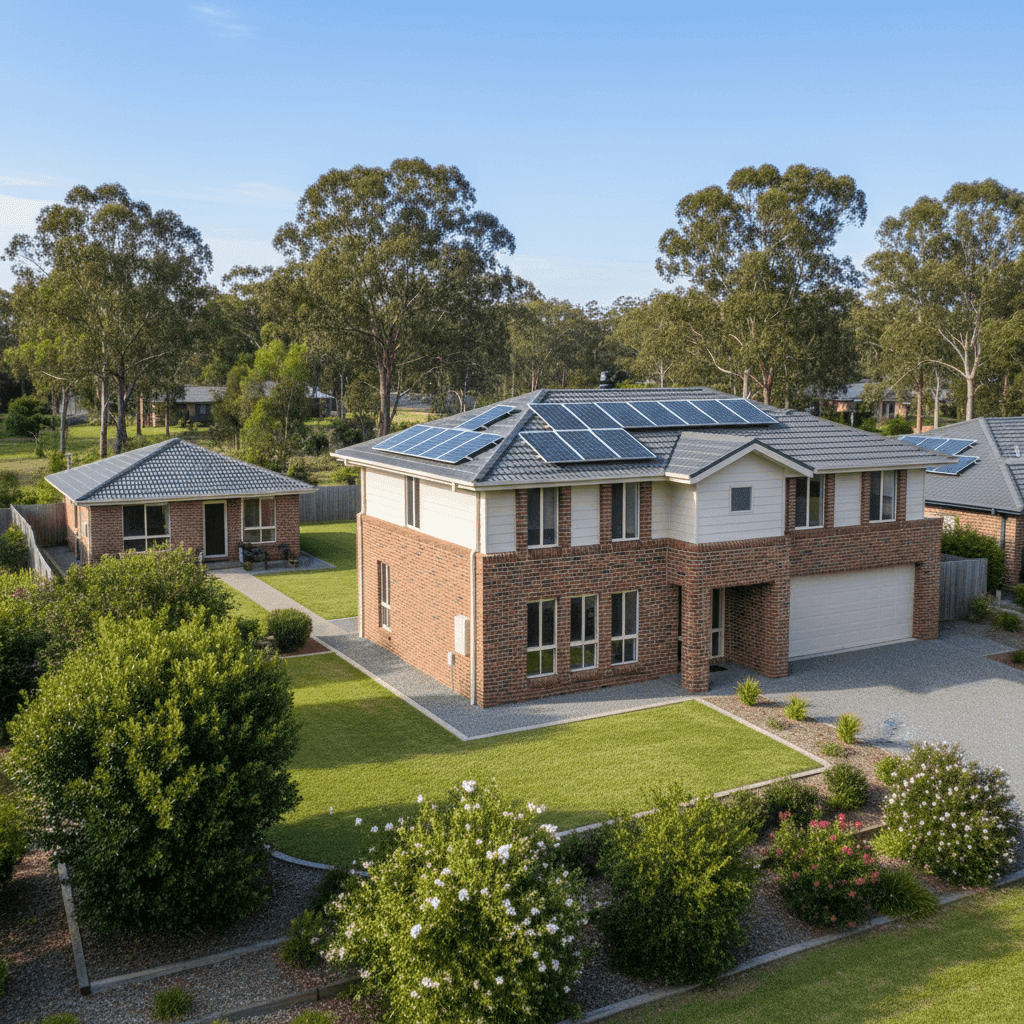
If you own a free standing home in Richmond Hill, NSW 2480, you've probably wondered whether you're paying a fair price for your home and contents insurance. Tucked in the Northern Rivers region of New South Wales, Richmond Hill is a relaxed, semi-rural suburb where property sizes tend to be generous — and insurance premiums can vary quite a bit depending on your home's characteristics. This article breaks down a real quote for a six-bedroom, four-bathroom brick veneer home in the area, comparing it against local, state, and national benchmarks to help you understand what's fair — and where you might save.
---
Is This Quote Fair?
The quote in question comes in at $2,845 per year (or around $285/month) for combined home and contents cover, with a building sum insured of $750,000 and contents valued at $75,000. The building excess is set at $4,000, while the contents excess sits at $1,000.
Our price rating for this quote is FAIR — around average.
That assessment holds up when you look at the numbers. The suburb average premium in Richmond Hill sits at $2,935/year, and the median is $2,896/year — both slightly above this quote. That means this homeowner is paying a touch less than the typical Richmond Hill policyholder, which is a reasonable outcome.
It's worth noting that the excess structure plays a role here. A higher building excess of $4,000 will generally reduce the annual premium, so if you were to lower that excess, you'd likely see the premium climb. Whether that trade-off suits your financial situation is a personal decision — but it's worth modelling both scenarios before you commit.
---
How Richmond Hill Compares
To put this quote in proper context, here's how Richmond Hill stacks up against broader benchmarks:
| Benchmark | Average Premium | Median Premium |
|---|---|---|
| Richmond Hill (suburb) | $2,935/yr | $2,896/yr |
| NSW (state) | $3,801/yr | $3,410/yr |
| National | $2,965/yr | $2,716/yr |
| This quote | $2,845/yr | — |
A few things stand out here. First, NSW homeowners pay significantly more than the national average — about 28% more on a mean basis. This reflects the state's exposure to a range of natural hazards, from bushfires in regional areas to flooding and storm events along the coast and hinterland.
Second, this particular quote sits below the NSW state average by nearly $1,000/year, which is a meaningful saving. It also tracks closely with the national average, suggesting the premium is competitive on a broad scale.
One figure that deserves attention is the LGA (Ballina) average of $23,241/year. That number is dramatically higher than the suburb-level data and likely reflects a small number of high-value or high-risk properties skewing the LGA average — it's not representative of what most Richmond Hill homeowners should expect to pay. For a more relevant comparison, the suburb-level data (based on 26 quotes) is a much better guide.
You can explore detailed premium data for this postcode at the Richmond Hill insurance statistics page, or compare against NSW state-wide figures and national benchmarks.
---
Property Features That Affect Your Premium
Every home is unique, and insurers assess a range of property characteristics when calculating your premium. Here's how the features of this particular home are likely influencing the quote:
Brick veneer construction and tiled roof are generally viewed favourably by insurers. Brick veneer offers solid fire resistance and structural durability, while tiled roofs are considered more resilient than corrugated iron or Colorbond in many risk scenarios. Together, these features typically attract lower premiums compared to timber-framed or metal-roofed homes.
Slab foundation is another positive signal for insurers. Slab-on-ground construction tends to be more stable and less susceptible to subsidence or pest damage than older stumped or pier foundations — particularly relevant for a home built in 1977.
Timber and laminate flooring can influence contents cover assessments, particularly around water damage claims. While not a major premium driver on its own, it's worth ensuring your contents policy adequately covers floor coverings.
Solar panels are an increasingly common feature and are generally covered under building insurance, though it's worth confirming this with your insurer. Some policies treat solar systems as standard fixtures; others may require a specific endorsement or have sub-limits on their replacement value.
The granny flat is a significant consideration. Secondary dwellings can add meaningful value to a property, and if the granny flat is not explicitly included in your building sum insured, you could be underinsured. Make sure your $750,000 building cover accounts for the full replacement cost of both the main dwelling and the secondary structure.
Six bedrooms and four bathrooms across 214 sqm suggests a well-appointed, larger-than-average home. Larger homes carry higher replacement costs, which is reflected in the $750,000 sum insured. It's always worth getting a professional building valuation to ensure this figure is accurate — underinsurance is one of the most common and costly mistakes homeowners make.
---
Tips for Homeowners in Richmond Hill
1. Review your building sum insured regularly Construction costs have risen sharply in recent years across regional NSW. A sum insured that was adequate two or three years ago may no longer cover the full cost of rebuilding your home — especially with a granny flat on the property. Consider engaging a quantity surveyor or using an online calculator to validate your coverage amount.
2. Understand your excess trade-off A $4,000 building excess is on the higher end of the scale. While it reduces your annual premium, it means you'll need to cover a significant amount out of pocket before your insurer steps in. If a claim of, say, $5,000–$8,000 arose, you'd be largely covering it yourself. Review whether this excess level genuinely suits your cash flow and risk appetite.
3. Confirm solar panel coverage With solar panels installed, check your policy documents carefully. Confirm whether the system is covered for accidental damage, storm damage, and electrical faults — and whether the replacement value included in your sum insured is realistic given current panel and installation costs.
4. Compare quotes annually Insurance premiums can shift significantly from year to year, and loyalty doesn't always pay. With 26 quotes sampled in the Richmond Hill area, there's clearly a range of pricing in the market. Shopping around at renewal time — even if you ultimately stay with your current insurer — is one of the simplest ways to ensure you're not overpaying.
---
Ready to Compare?
Whether you're renewing your existing policy or shopping for the first time, it pays to see what the market has to offer. Get a home insurance quote at CoverClub and compare options tailored to your property in Richmond Hill. A few minutes of comparison could save you hundreds of dollars a year — without sacrificing the cover you need.