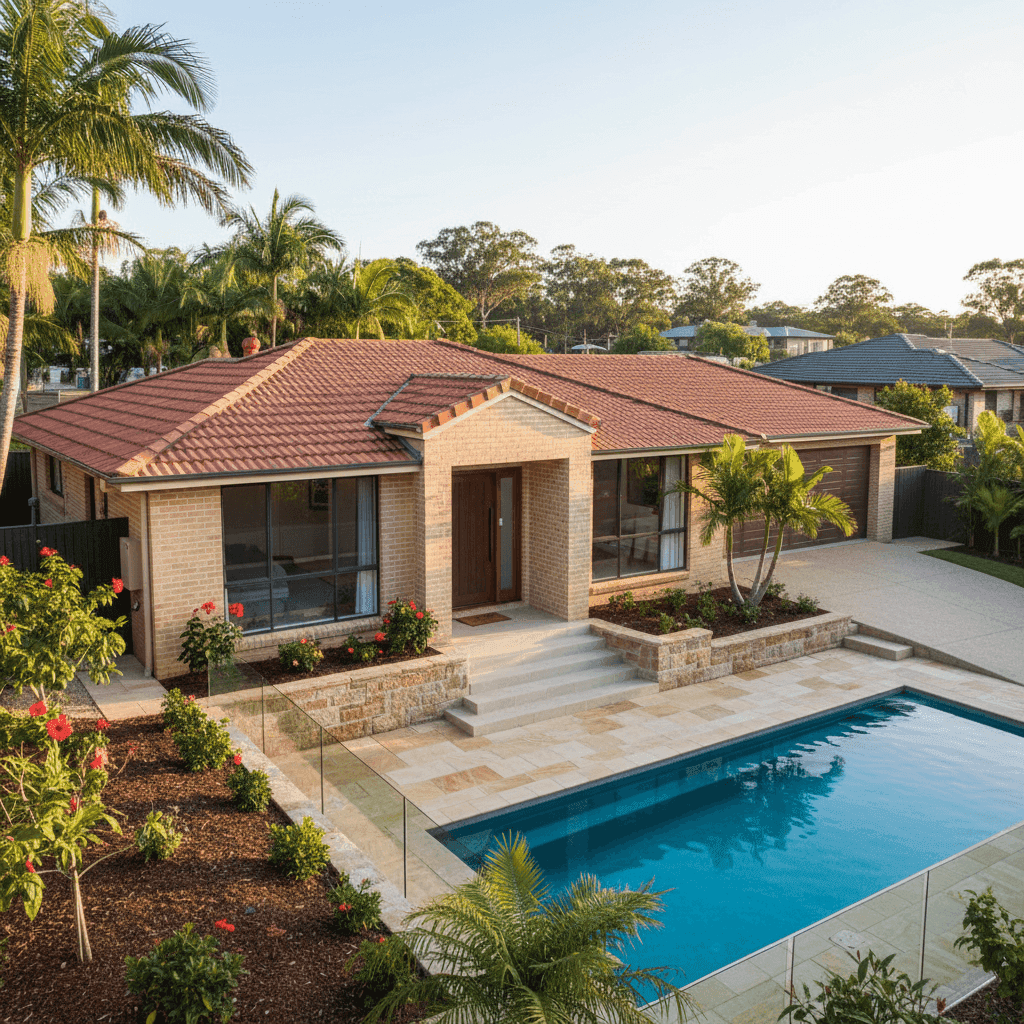
If you own a freestanding home in Richmond Hill, NSW 2480, you're probably curious whether your home insurance premium stacks up against what your neighbours are paying — or whether you could be getting a better deal. This article breaks down a real home and contents insurance quote for a three-bedroom, double brick property in Richmond Hill, compares it against local, state, and national benchmarks, and offers practical tips to help you manage your cover costs.
---
Is This Quote Fair?
The quote in question comes in at $3,137 per year (or $312 per month) for combined home and contents cover, with a building sum insured of $746,000 and contents valued at $50,000. The building excess is $2,500 and the contents excess is $500.
Our price rating for this quote is FAIR — around average. That assessment is backed up by the data: the suburb average premium in Richmond Hill sits at $2,935/yr and the median is $2,896/yr, meaning this quote is modestly above the midpoint but well within the typical range for the area. The suburb's 75th percentile is $3,323/yr, so this premium is still below what the pricier quarter of local quotes look like.
In short, you're not being gouged — but there's also room to shop around and potentially land a more competitive price.
---
How Richmond Hill Compares
To put this quote in proper context, it helps to look at the broader pricing landscape. Here's how Richmond Hill sits relative to NSW as a whole and the national picture:
| Benchmark | Average Premium | Median Premium |
|---|---|---|
| Richmond Hill (suburb) | $2,935/yr | $2,896/yr |
| NSW (state) | $3,801/yr | $3,410/yr |
| National | $2,965/yr | $2,716/yr |
| Ballina LGA | $5,486/yr | — |
A few things stand out here. First, Richmond Hill premiums are notably lower than the NSW state average — by roughly $866/yr on a mean basis. This is a meaningful difference, and suggests that Richmond Hill, despite being in a coastal-adjacent region, doesn't attract the same elevated risk loadings that push premiums sky-high in other parts of the state.
Second, and perhaps most striking, is the Ballina LGA average of $5,486/yr. Richmond Hill sits within the Ballina local government area, yet its suburb-level premiums are dramatically lower than the broader LGA average. This likely reflects micro-level risk differentiation — insurers assess flood, storm, and bushfire exposure at a granular level, and Richmond Hill's specific geography appears to attract more favourable ratings than some other pockets of the Ballina LGA.
Finally, this quote is broadly in line with the national average of $2,965/yr, sitting just $172 above it — a relatively minor difference when you factor in the above-average fittings quality and the inclusion of a pool (more on that below).
For a deeper look at local pricing trends, visit the Richmond Hill suburb stats page.
---
Property Features That Affect Your Premium
Several characteristics of this property influence where the premium lands. Understanding them can help you have more informed conversations with insurers.
Double Brick Construction
Double brick external walls are generally viewed favourably by insurers. They offer strong resistance to fire, wind, and general wear — all factors that reduce the likelihood of a major claim. Compared to timber-framed or clad homes, double brick properties often attract lower building premiums, all else being equal.
Tiled Roof
A tiled roof is another tick in the right column. Tiles are durable, fire-resistant, and have a long lifespan when maintained properly. They're less susceptible to storm damage than some alternative roofing materials, which can translate to more competitive premiums in storm-prone areas.
Slab Foundation & Tiled Flooring
A concrete slab foundation is a standard, stable base that doesn't introduce the elevated moisture or pest risks associated with suspended timber floors. Combined with tiled internal flooring, this property has a relatively low-maintenance profile from an insurer's perspective.
Above-Average Fittings Quality
This is a significant driver of the building sum insured. Above-average fittings — think quality kitchen cabinetry, stone benchtops, premium bathroom fixtures — cost more to repair or replace, which is reflected in the $746,000 building sum insured. It's important that your sum insured accurately reflects rebuild costs, including these higher-spec finishes.
Swimming Pool
A pool adds value to a property but also introduces liability considerations and increases the overall replacement cost. Insurers factor in the cost of pool infrastructure when assessing building cover, so it's worth ensuring your sum insured accounts for this.
Ducted Climate Control
Ducted air conditioning systems are expensive to install and repair. Their inclusion in the building sum insured is appropriate and contributes to the higher-than-entry-level coverage amount.
Slight Elevation
The property is elevated by less than one metre. While this won't dramatically shift the premium, even modest elevation can offer some protection against surface water ingress during heavy rainfall events — a relevant consideration in northern NSW.
---
Tips for Homeowners in Richmond Hill
1. Review your building sum insured annually Construction costs have risen sharply in recent years. A sum insured that was accurate two or three years ago may now fall short of what it would actually cost to rebuild your home to the same standard. Use an independent building cost calculator or speak with a quantity surveyor to validate your figure — underinsurance can be a costly mistake at claim time.
2. Consider raising your excess to reduce your premium The building excess on this policy is $2,500. If you have a solid emergency fund and are comfortable absorbing a higher out-of-pocket cost in the event of a claim, asking for a higher excess option could bring your annual premium down meaningfully.
3. Bundle home and contents — but still compare This quote covers both building and contents, which often comes with a discount compared to holding separate policies. That said, not all bundled deals are equal — it's worth running the numbers on a few providers to make sure the combined price is genuinely competitive.
4. Check your flood and storm cover carefully Northern NSW has experienced significant flood and storm events in recent years. Make sure your policy explicitly covers flood (not just storm damage), and understand any sub-limits or exclusions that may apply. Some policies treat flood and storm as separate events with different conditions.
---
Compare Your Options with CoverClub
Whether you're reviewing an existing policy or shopping for the first time, comparing quotes is the best way to ensure you're getting fair value. CoverClub makes it easy to see how your premium stacks up and find competitive options for your specific property. Get a home insurance quote today and take the guesswork out of protecting one of your most valuable assets.