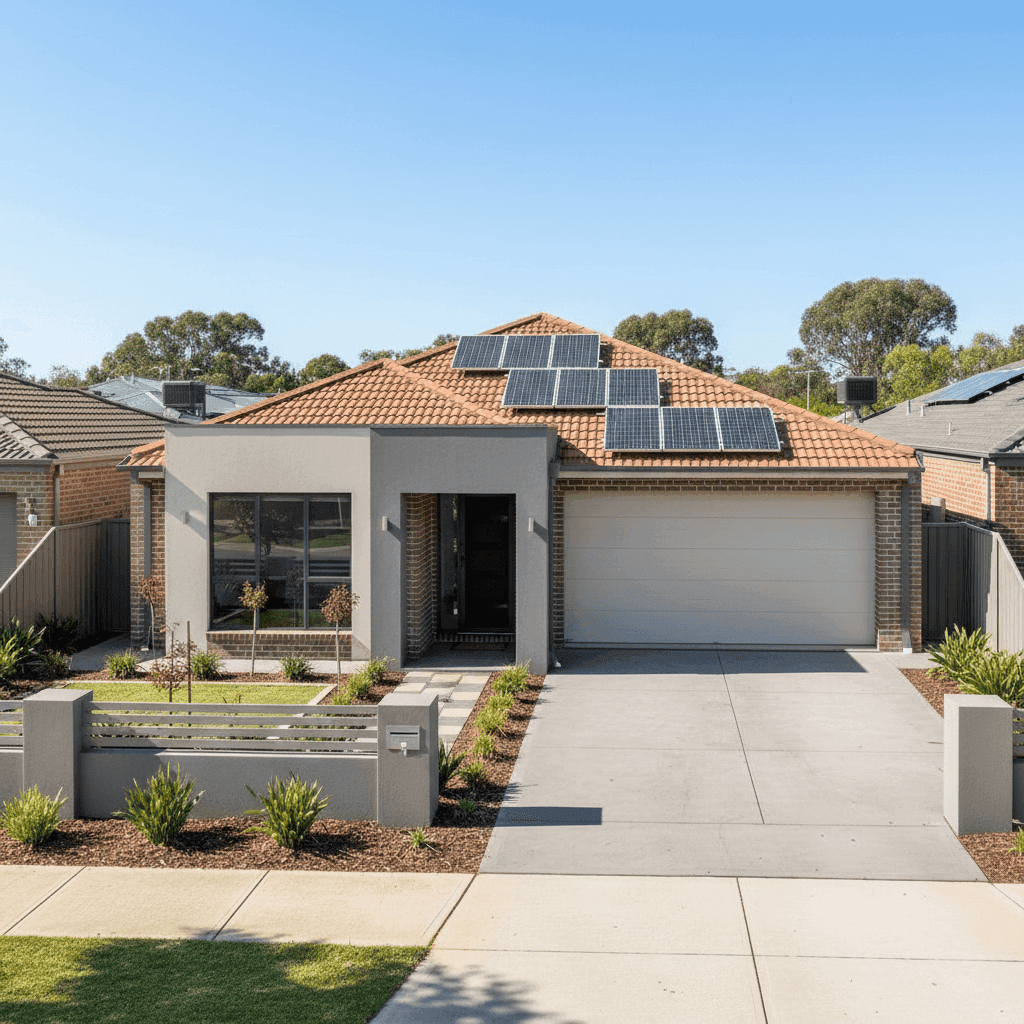
If you own a free standing home in Richmond, SA 5033, you're probably curious whether your building insurance premium is competitive — or whether you're quietly overpaying. This article breaks down a real building-only insurance quote for a three-bedroom, two-bathroom brick veneer home in Richmond, comparing it against local, state, and national benchmarks to help you make a more informed decision.
---
Is This Quote Fair?
The quote in question comes in at $2,040 per year (or $199/month) for building-only cover on a free standing home with a sum insured of $600,000 and a building excess of $2,000.
Our price rating for this quote is FAIR — Around Average, and the numbers back that up. The suburb median for Richmond sits at $2,029 per year, meaning this premium is almost exactly in line with what most local homeowners are paying. It also falls comfortably within the suburb's interquartile range of $1,955 to $2,400 per year, which represents the middle 50% of quotes in the area.
In other words, this isn't a standout bargain — but it's not an overpriced outlier either. For a well-constructed 2011-built home with standard fittings, this is a reasonable premium that reflects the property's risk profile accurately. That said, "fair" doesn't mean you can't do better. There's still meaningful room to find savings by comparing insurers, as we'll explore below.
---
How Richmond Compares
Understanding your premium in context is key to knowing whether to act. Here's how this $2,040 quote stacks up across different benchmarks:
| Benchmark | Premium |
|---|---|
| This Quote | $2,040/yr |
| Richmond Suburb Average | $2,146/yr |
| Richmond Suburb Median | $2,029/yr |
| SA State Average | $2,433/yr |
| SA State Median | $1,679/yr |
| National Average | $5,347/yr |
| National Median | $2,764/yr |
| West Torrens LGA Average | $1,992/yr |
A few things stand out here. First, this quote beats the SA state average of $2,433/yr by nearly $400 — a meaningful difference for a typical household budget. Compared to the national average of $5,347/yr, Richmond homeowners are in a very favourable position, paying less than half what many Australians fork out for equivalent cover.
It's worth noting that the SA state median of $1,679/yr is notably lower than the state average, suggesting the state-wide figures are pulled upward by high-risk or high-value properties. The same dynamic applies nationally. Richmond, as an established suburban area in Adelaide's inner-west, benefits from relatively stable risk conditions compared to coastal, bushfire-prone, or cyclone-affected regions elsewhere in the country.
The West Torrens LGA average of $1,992/yr is slightly below this quote, which is a useful local reference point. If you're keen to explore Richmond-specific insurance statistics in more detail, CoverClub's suburb stats page has you covered.
---
Property Features That Affect Your Premium
Every home is different, and insurers weigh up a range of property characteristics when calculating your premium. Here's how this particular home's features play into the pricing:
Brick Veneer Walls & Tiled Roof Brick veneer construction with a tiled roof is one of the most common — and insurer-friendly — combinations in South Australia. Both materials are considered durable and fire-resistant, which generally keeps premiums lower compared to weatherboard or steel-sheet alternatives.
Slab Foundation A concrete slab foundation is standard for homes built in the 2000s and beyond. It's generally viewed favourably by insurers as it reduces the risk of subsidence-related claims, particularly in areas with reactive clay soils — something worth keeping in mind in parts of metropolitan Adelaide.
Built in 2011 Newer homes tend to attract lower premiums because they're built to more recent Australian Standards, with improved structural integrity and compliance with contemporary building codes. A 2011 build sits in a sweet spot — modern enough to be low-risk, but with a known construction history.
Solar Panels This property has rooftop solar panels, which can add a modest amount to the sum insured and therefore the premium. It's important to ensure your policy explicitly covers solar panels as part of the building, including damage from storms or falling debris. Not all standard policies include this automatically — always check the Product Disclosure Statement (PDS).
Ducted Climate Control Ducted air conditioning systems are a fixed building feature and should be covered under building insurance. Their inclusion can nudge the replacement cost — and therefore the sum insured — slightly upward, which is reflected in the premium.
No Pool, Standard Fittings The absence of a pool removes one common source of liability and maintenance-related claims. Combined with standard-quality fittings, this keeps the overall risk profile straightforward and the premium reasonable.
---
Tips for Homeowners in Richmond
Whether you're reviewing an existing policy or shopping for the first time, here are four practical steps to help you get the most from your building insurance.
- Review your sum insured regularly. With construction costs rising across Australia, the cost to rebuild your home may have increased significantly since you last updated your policy. A $600,000 sum insured may be appropriate today, but it's worth recalculating using a building cost estimator every year or two to avoid being underinsured.
- Check your solar panels are explicitly covered. As mentioned above, rooftop solar is a significant asset. Confirm with your insurer that panels are included in your building cover — and for what types of events (e.g., storm damage, accidental breakage, fire).
- Consider your excess strategically. This quote carries a $2,000 building excess. A higher excess typically reduces your annual premium, but make sure it's an amount you could comfortably pay out of pocket in the event of a claim. If $2,000 feels like a stretch, a lower excess with a slightly higher premium might offer better peace of mind.
- Compare quotes at least annually. Insurance loyalty doesn't always pay off. Insurers frequently adjust their pricing models, and new entrants to the market can offer competitive rates. Even if your current premium is rated "fair," running a fresh comparison at renewal time takes only a few minutes and could save you hundreds of dollars.
---
Ready to Compare?
A "fair" rating is a solid starting point, but there's no reason to settle for average when better value might be just a few clicks away. Get a building insurance quote at CoverClub and see how multiple insurers price your Richmond home side by side — it's free, fast, and could make a real difference to what you pay this year.