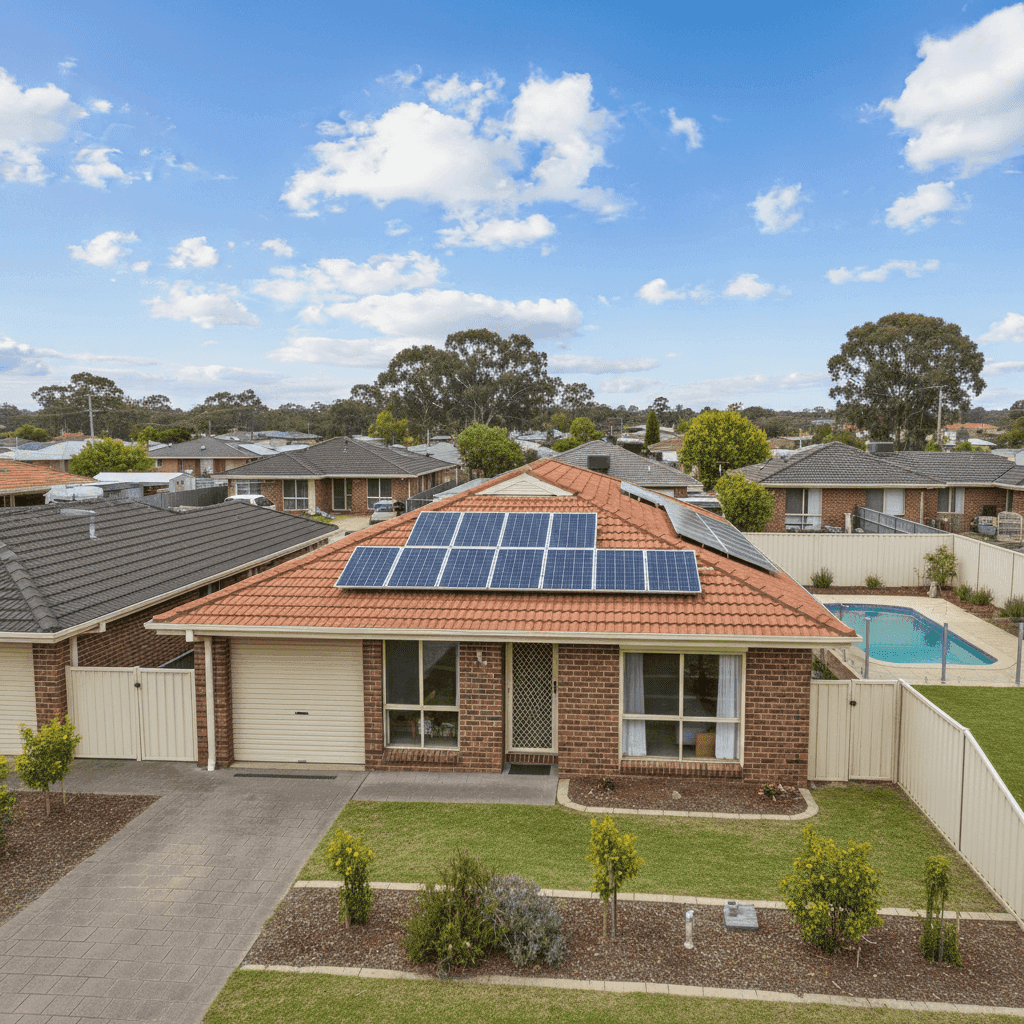
Ridgehaven is a quiet, established suburb nestled in the foothills of north-eastern Adelaide, sitting within the City of Tea Tree Gully council area. Known for its leafy streets and family-friendly feel, it's a suburb where brick veneer homes from the 1970s are a common sight — and this quote is a textbook example. The property in question is a four-bedroom, one-bathroom semi detached home built in 1974, featuring brick veneer walls, a tiled roof, and a slab foundation. With a pool, solar panels, and ducted climate control also on the list, there's a fair bit for insurers to consider when pricing up a policy.
This article breaks down a Home and Contents insurance quote of $1,216 per year (or $120/month) for this property, with a building sum insured of $293,000 and contents valued at $200,000. Both the building and contents excess are set at $1,000. Let's dig into whether that price stacks up.
---
Is This Quote Fair?
The short answer: yes, broadly speaking — but with some nuance worth understanding.
This quote has been rated Fair (Around Average), meaning it sits comfortably within the typical range for the area without being a standout bargain or an obvious overpayment. For homeowners in Ridgehaven, that's actually a reasonably encouraging sign — particularly given the level of cover on offer.
At $1,216 per year, this premium sits above the suburb average of $1,029 and the suburb median of $1,051, but well within the interquartile range. The 25th percentile for Ridgehaven sits at $791/yr, while the 75th percentile reaches $1,399/yr — meaning this quote lands in the upper-middle band of what locals are paying. Given the added features of this property (more on those shortly), that positioning makes sense.
It's also worth noting that the quote covers both building and contents, which is an important distinction. Policies that bundle both types of cover will naturally sit higher than a standalone building-only quote, so comparing like-for-like is essential when shopping around.
---
How Ridgehaven Compares
To put this quote in proper context, it helps to zoom out and look at the broader picture. Here's how Ridgehaven stacks up against South Australian averages and national benchmarks:
| Benchmark | Average Premium | Median Premium |
|---|---|---|
| Ridgehaven (SA 5097) | $1,029/yr | $1,051/yr |
| Tea Tree Gully LGA | $1,440/yr | — |
| South Australia | $2,433/yr | $1,679/yr |
| National | $5,347/yr | $2,764/yr |
The figures speak for themselves. Ridgehaven is a genuinely affordable suburb when it comes to home insurance. The suburb average of $1,029/yr is dramatically lower than both the South Australian average ($2,433) and the national average ($5,347). Even compared to the broader Tea Tree Gully LGA average of $1,440/yr, Ridgehaven comes in well under.
This is largely because Ridgehaven doesn't face many of the high-risk factors that drive premiums sky-high elsewhere in Australia — there's no cyclone risk, no significant flood history for most of the suburb, and the area is not in a bushfire-prone zone that would attract heavy loadings. For homeowners here, that translates to real savings year after year.
It's worth noting that the national average is heavily skewed by high-risk regions — coastal Queensland, cyclone zones in northern WA and the NT, and flood-prone areas across NSW and Victoria. Ridgehaven sits in a far more benign risk environment by comparison.
---
Property Features That Affect Your Premium
Several characteristics of this property will directly influence how insurers price the risk. Here's what's likely at play:
Brick Veneer Walls & Tiled Roof Brick veneer is one of the most common — and insurer-friendly — wall types in South Australia. It's durable, fire-resistant, and well understood by underwriters. Combined with a tiled roof, this property sits in a construction category that typically attracts standard (rather than loaded) premiums. That's a positive for the homeowner.
1974 Construction Homes built in the early 1970s are now over 50 years old, which can be a double-edged sword. On one hand, they've proven their structural resilience. On the other, older homes may have aging electrical wiring, plumbing, and roofing materials that increase the likelihood of a claim. Insurers factor this in, and it can nudge premiums upward compared to newer builds.
Slab Foundation & Timber/Laminate Flooring A concrete slab foundation is generally viewed favourably — it's stable and less susceptible to subsidence than some alternatives. Timber and laminate flooring, however, can be more costly to replace than tiles, which may influence the contents and internal fitout component of the building sum insured.
Swimming Pool A pool adds both value and risk to a property. From an insurance perspective, it increases the potential for liability claims and can contribute to the overall replacement cost of the home. It's a feature that insurers will note, and it's one reason this quote sits above the suburb median.
Solar Panels Rooftop solar is increasingly common across Adelaide's suburbs, and insurers are becoming more experienced at pricing it. Solar panels are typically covered under building insurance, but they do add to the replacement cost — so ensuring the building sum insured is adequate to cover them is important.
Ducted Climate Control Ducted air conditioning is a significant fixed asset and forms part of the building sum insured. At standard fittings quality, it's priced accordingly, but homeowners should confirm their policy explicitly covers this system in the event of storm or fire damage.
---
Tips for Homeowners in Ridgehaven
1. Review your building sum insured regularly At $293,000, the building sum insured needs to reflect the full cost of rebuilding — not the market value of the home. With construction costs rising across South Australia, it's worth getting a professional building valuation every couple of years to avoid being underinsured. The pool, solar panels, and ducted system all need to be factored in.
2. Bundle building and contents for convenience, but compare separately too A combined Home and Contents policy like this one can offer convenience and sometimes a discount. However, it's worth getting separate quotes for building-only and contents-only cover to ensure you're not overpaying for bundled cover you don't fully need.
3. Consider your excess carefully Both the building and contents excess are set at $1,000 here. Opting for a higher excess can reduce your annual premium, which may be worthwhile if you have a solid emergency fund and are unlikely to make small claims. Conversely, a lower excess provides more protection if an unexpected event occurs.
4. Don't overlook contents valuation $200,000 in contents cover is substantial — and it should be. Many homeowners underestimate the replacement value of their belongings. Take the time to itemise your possessions, including electronics, furniture, appliances, and any high-value items like jewellery or artwork, to make sure you're adequately covered.
---
Compare Quotes and Find a Better Deal
Whether this quote is the right fit depends on your individual circumstances, risk appetite, and what other insurers are offering for the same level of cover. The good news is that Ridgehaven is a low-risk suburb with competitive premiums — which means there's a reasonable chance you can find strong cover at a fair price.
Get a home insurance quote at CoverClub and see how different insurers price your property. With access to multiple quotes in one place, you can make a genuinely informed decision rather than simply accepting the first number that lands in your inbox.