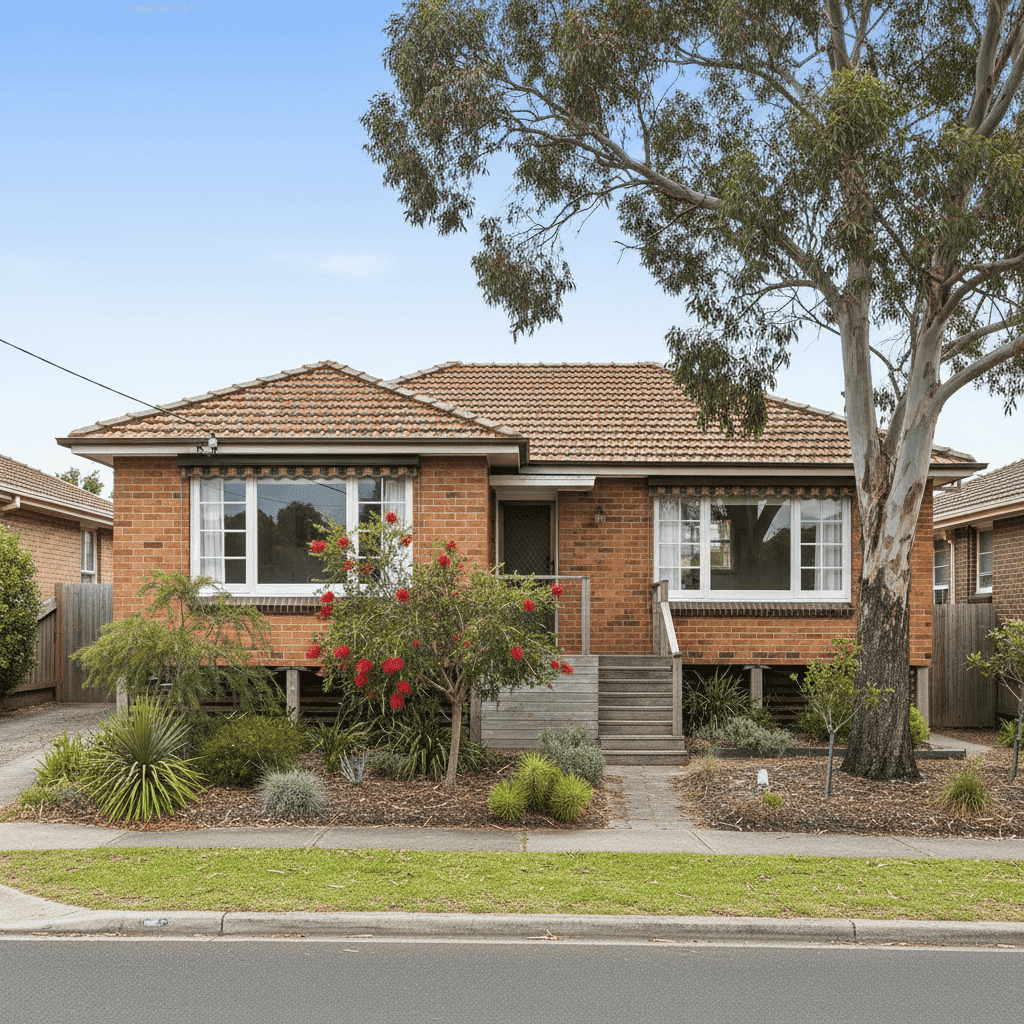
Ringwood North is one of Melbourne's leafier eastern suburbs — a family-friendly pocket of Manningham known for its established streetscapes, quality schools, and a solid mix of post-war and mid-century homes. If you own a free standing home here, you're sitting in a property market that insurers take seriously. This article breaks down a real home and contents insurance quote for a 4-bedroom, 2-bathroom brick veneer home in Ringwood North (postcode 3134), and helps you understand whether the price stacks up.
---
Is This Quote Fair?
The quote in question comes in at $2,429 per year (or $233/month) for combined home and contents cover, with a building sum insured of $917,000 and contents valued at $94,500. Both the building and contents excess are set at $1,000.
Our price rating for this quote is Expensive — Above Average.
To put that in context: the suburb average for Ringwood North sits at $2,155/year, with a median of $1,912/year. This quote lands roughly $274 above the suburb average and a notable $517 above the median. It also sits above the 75th percentile for the suburb ($2,344/year), meaning it's pricier than roughly three-quarters of comparable quotes in the area.
That said, "expensive" is relative. The sum insured here is $917,000 for the building — which is a substantial rebuild cost for a 214 sqm home, even accounting for current construction prices in Victoria. Higher insured values naturally push premiums upward, so some of the gap between this quote and the suburb median may simply reflect the level of cover chosen rather than the insurer charging a premium for the risk profile alone.
The bottom line? This quote is on the higher end for Ringwood North, and it's worth shopping around.
---
How Ringwood North Compares
Understanding where your suburb sits in the broader insurance landscape is useful context when evaluating any quote.
| Benchmark | Annual Premium |
|---|---|
| This quote | $2,429 |
| Ringwood North suburb average | $2,155 |
| Ringwood North suburb median | $1,912 |
| Ringwood North 25th percentile | $1,650 |
| Ringwood North 75th percentile | $2,344 |
| LGA (Manningham) average | $2,021 |
| VIC state average | $3,000 |
| VIC state median | $2,718 |
| National average | $5,347 |
| National median | $2,764 |
(Based on 45 quotes sampled for the Ringwood North area.)
One of the more encouraging takeaways here is that Ringwood North homeowners generally pay well below the Victorian state average of $3,000/year, and significantly below the national average of $5,347/year. The national figure is heavily skewed by high-risk regions — particularly cyclone-prone areas in Queensland and Western Australia — so it's not always a meaningful comparison for Melbourne suburbanites.
What is meaningful is the comparison to the VIC state median of $2,718/year. This quote, at $2,429, actually sits below that figure — which reframes the "expensive" rating somewhat. Relative to Ringwood North's own suburb benchmarks, it's above average. Relative to Victoria as a whole, it's actually modest.
You can explore national home insurance benchmarks to see how different states and regions compare across Australia.
---
Property Features That Affect Your Premium
Several characteristics of this property will be influencing the premium — some in your favour, some less so.
Brick veneer construction is generally viewed positively by insurers. It's durable, fire-resistant, and widely used across Melbourne's eastern suburbs. Compared to weatherboard or timber-clad homes, brick veneer typically attracts lower premiums due to its resilience.
Tiled roof is another tick in the right column. Terracotta or concrete tiles are considered a robust roofing material, performing well in storms and lasting decades with basic maintenance. Insurers tend to price tile roofs more favourably than corrugated iron or older materials.
Stump foundations are worth noting. Homes on stumps (also called pier foundations) are elevated off the ground, which can reduce flood and moisture-related risks in some scenarios. However, stumps — particularly older timber ones in homes built around 1979 — can deteriorate over time and may require periodic inspection or replacement. If your stumps haven't been assessed recently, it's worth doing so, as structural issues can affect both your home's safety and your insurance position.
Construction year: 1979. This home is over 45 years old. Older homes can attract slightly higher premiums because ageing wiring, plumbing, and structural components may increase the likelihood of a claim. On the flip side, a well-maintained 1970s brick veneer home in Melbourne's east is generally considered a solid, low-risk property type.
Ducted climate control adds to the contents and fixtures value, and is likely contributing to the overall sum insured. Ducted systems are expensive to repair or replace, and insurers factor this into their calculations.
No pool, no solar panels, no cyclone risk zone. These are all factors that simplify the risk profile. Pools add liability exposure, solar panels increase the complexity of roof-related claims, and cyclone zones carry significant weather risk. Ringwood North has none of these concerns.
---
Tips for Homeowners in Ringwood North
1. Review your sum insured carefully. At $917,000, the building sum insured is substantial. Make sure this figure reflects the actual cost to rebuild your home (not its market value). Overinsuring can unnecessarily inflate your premium, while underinsuring leaves you exposed. Use a building cost calculator or speak to a quantity surveyor if you're unsure.
2. Get at least three quotes before renewing. This quote sits above the suburb's 75th percentile. That's a signal to shop around. Premiums for the same property can vary by hundreds of dollars between insurers, and comparing quotes through CoverClub takes just a few minutes.
3. Have your stumps inspected. For a 1979 home on stump foundations, a periodic inspection by a licensed building inspector is sensible housekeeping. Some insurers may ask about the condition of stumps, and proactive maintenance can prevent costly claims down the track.
4. Ask about discounts for bundling and security. Many insurers offer discounts when you hold both home and contents policies with them (which this quote already does), as well as for homes with monitored alarm systems, deadlocks, or other security features. If you've recently upgraded your home security, make sure your insurer knows.
---
Ready to Compare?
Whether this quote is the right fit depends on your specific circumstances — but the data suggests there may be better value available in the market. CoverClub makes it easy to compare home and contents insurance quotes for your Ringwood North property in one place.
Get a quote today at CoverClub and see how your premium stacks up against the suburb, state, and national benchmarks. You can also explore detailed Ringwood North insurance statistics to better understand what your neighbours are paying.