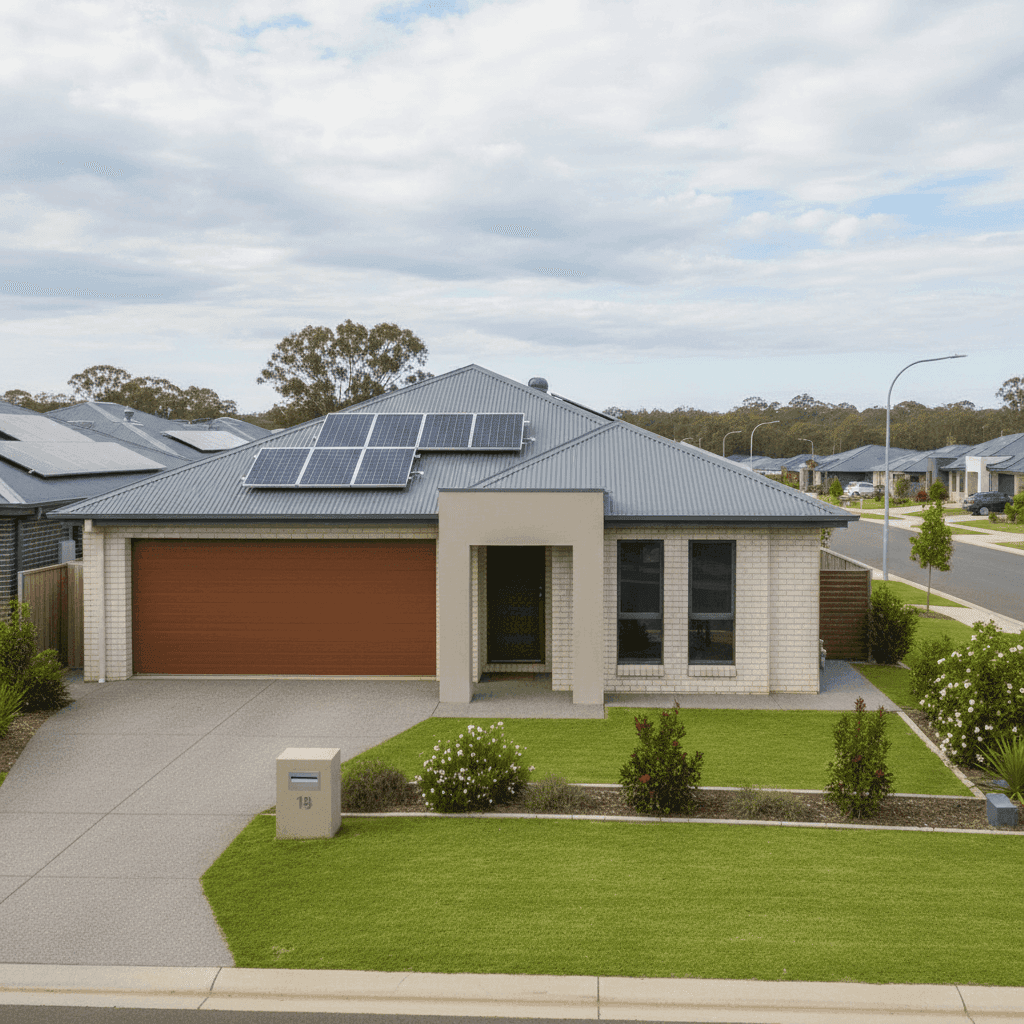
If you own a free standing home in Ripley, QLD 4306, you're part of one of South East Queensland's fastest-growing residential corridors. Ripley sits within the Ipswich region, attracting families drawn by newer builds, affordable land releases, and solid infrastructure investment. But with growth comes complexity — and home insurance premiums in this part of Queensland can vary significantly depending on your property's features and the insurer you choose.
This article breaks down a real home and contents insurance quote for a four-bedroom, two-bathroom free standing home in Ripley, comparing it against local, state, and national benchmarks to help you understand whether you're getting a fair deal.
---
Is This Quote Fair?
The quote in question comes in at $5,224 per year (or $476/month), covering both building (sum insured: $855,000) and contents ($50,000). Our price rating for this quote is Expensive — Above Average.
To put that in perspective: the suburb average for Ripley sits at just $2,361/year, with a median of $2,230/year. That means this quote is more than double the typical premium paid by homeowners in the same postcode. Even at the 75th percentile — meaning 75% of Ripley quotes are cheaper — the figure is only $2,835/year, still well below the $5,224 quoted here.
So what's driving the price up? A combination of factors is likely at play: the relatively high building sum insured of $855,000 for a 214 sqm home, above-average fittings quality, and the inclusion of features like solar panels and ducted climate control — all of which add replacement cost and therefore premium weight. That said, a gap this wide between the quoted premium and the suburb median warrants a closer look, and it's worth shopping around before accepting this figure.
---
How Ripley Compares
Understanding your premium in isolation only tells part of the story. Here's how Ripley stacks up against broader benchmarks:
| Benchmark | Average Premium | Median Premium |
|---|---|---|
| Ripley (QLD 4306) | $2,361/yr | $2,230/yr |
| Queensland (State) | $9,129/yr | $3,903/yr |
| National | $5,347/yr | $2,764/yr |
| Scenic Rim LGA | $8,744/yr | — |
A few things stand out here. Queensland's state average of $9,129/year is dramatically higher than the state median of $3,903 — a sign that a relatively small number of high-risk or high-value properties are pulling the average up considerably. Cyclone-prone coastal and far north Queensland properties, for instance, can attract premiums well into the tens of thousands.
Ripley, by contrast, is not a cyclone risk area, which is a meaningful advantage. The suburb's average of $2,361/year is well below both the Queensland state average and the national average of $5,347/year, reflecting the relatively lower natural hazard exposure in this part of the Ipswich hinterland.
The Scenic Rim LGA average of $8,744/year is notably elevated — likely influenced by rural and semi-rural properties with greater bushfire or flood exposure — but Ripley's postcode sits in a more suburban context that typically attracts more competitive pricing.
Based on 77 quotes sampled in the suburb, the data paints a clear picture: the $5,224 quote here is an outlier on the expensive end for this area.
---
Property Features That Affect Your Premium
Several characteristics of this property are worth examining in the context of insurance pricing:
Brick Veneer Walls & Colorbond Roof This is a modern construction combination that insurers generally view favourably. Brick veneer offers solid fire and impact resistance, while steel/Colorbond roofing is durable and performs well in high-wind events. Compared to older materials like weatherboard or terracotta tiles, this combination typically attracts more competitive premiums.
Slab Foundation A concrete slab is the standard foundation type for new builds in Queensland and is generally considered low-risk by insurers. It avoids the moisture and pest vulnerabilities associated with older suspended timber floors.
Constructed in 2021 A relatively new home means fewer maintenance concerns, up-to-date building standards, and modern wiring and plumbing — all factors that reduce the likelihood of a claim and can work in your favour when negotiating premiums.
Solar Panels While solar panels are increasingly common, they do add to the cost of rebuilding a home and need to be factored into your sum insured. Some insurers include solar panels under building cover automatically; others may treat them as an optional extra. It's worth confirming your policy's position on this.
Ducted Climate Control Ducted air conditioning is a significant fixed asset and contributes to the overall rebuild cost. Ensuring your building sum insured accounts for this — as the $855,000 figure here appears to — is important for avoiding underinsurance.
Above-Average Fittings Higher-quality fixtures, finishes, and fittings mean higher replacement costs in the event of a claim. This is one of the more significant drivers of a premium above the suburb median, and it's a legitimate cost consideration rather than an insurer overcharging.
Timber/Laminate Flooring Timber and laminate floors can be costly to replace after water damage events. This is worth noting both for your building cover and for understanding how claims in this category are handled by your insurer.
---
Tips for Homeowners in Ripley
1. Review your sum insured carefully At $855,000 for a 214 sqm home with above-average fittings, the building sum insured here is on the higher side. Use a building cost calculator (many insurers offer these) to verify whether this figure reflects realistic rebuild costs in your area — not the market value of the land. Overinsuring drives up premiums unnecessarily, while underinsuring can leave you exposed.
2. Compare at least three quotes Given that this premium is more than double the suburb median, it's a strong signal to shop around. Different insurers price risk very differently, and the same property can attract wildly varying quotes. Use CoverClub's quote comparison tool to see multiple options side by side.
3. Consider a higher building excess The building excess on this quote is $5,000 — already relatively high. In some cases, opting for a higher voluntary excess can meaningfully reduce your annual premium. Just ensure you could comfortably cover that excess out of pocket if you needed to make a claim.
4. Check what's included for solar and climate systems With solar panels and ducted climate control on the property, confirm explicitly with your insurer that both are covered under your building policy and that the sum insured reflects their replacement cost. Don't assume — ask for written confirmation.
---
Compare Your Options with CoverClub
Whether you're reviewing an existing policy or shopping for cover for the first time, comparing quotes is the single most effective way to make sure you're not overpaying. CoverClub makes it easy to see how your premium stacks up against real data from your suburb and beyond.
Get a home insurance quote today and find out if there's a better deal available for your Ripley home.