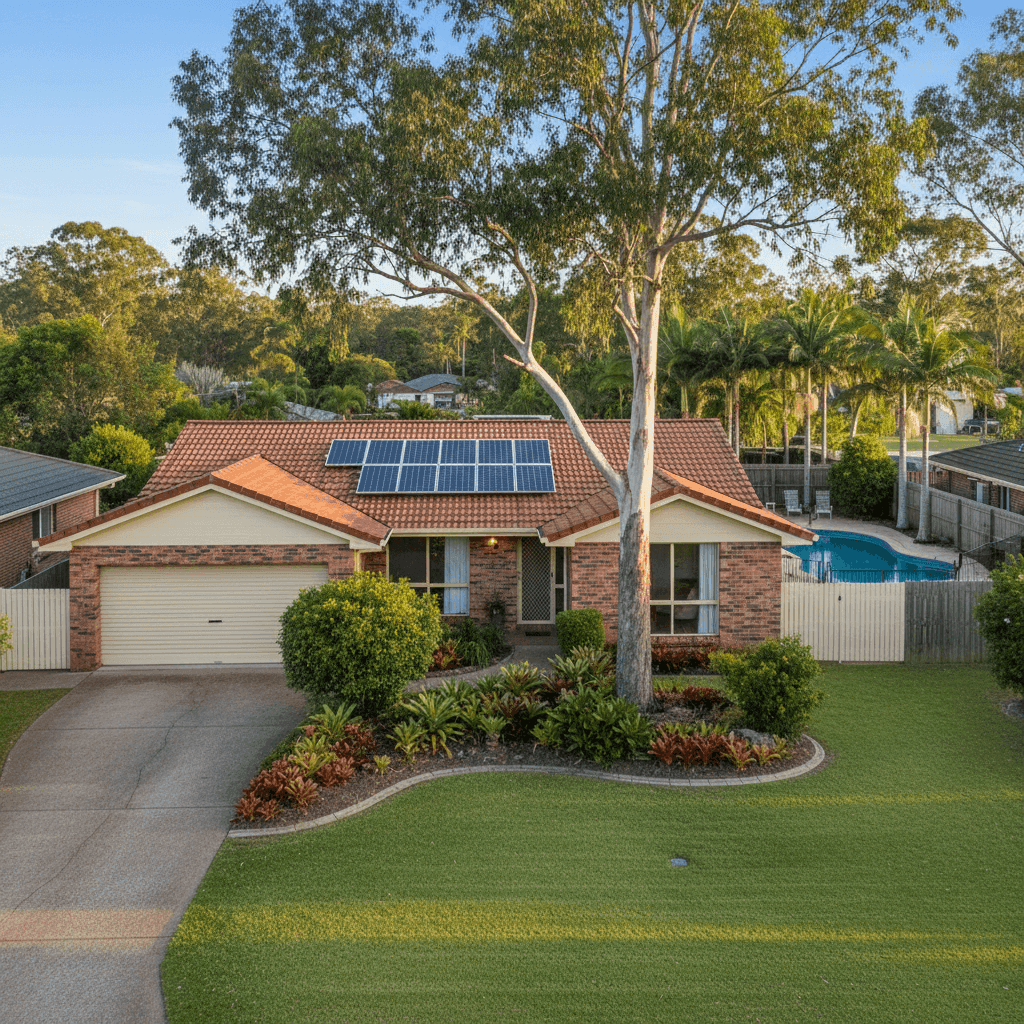
Riverhills is a quiet, leafy suburb in Brisbane's western corridor, popular with families drawn to its generous block sizes, established streetscapes, and proximity to Centenary State Forest. For owners of free standing homes in the area, understanding what drives home insurance costs — and whether a quoted premium represents genuine value — can make a real difference to the household budget.
This article breaks down a real home and contents insurance quote for a four-bedroom, two-bathroom free standing home in Riverhills (QLD 4074), and puts the numbers in context against suburb, state, and national benchmarks.
---
Is This Quote Fair?
The annual premium for this property came in at $1,684 per year (or roughly $175 per month), covering a building sum insured of $650,000 and contents valued at $110,000. The building excess is set at $3,000 and the contents excess at $1,000.
Our pricing engine has rated this quote as Fair — Around Average, which is a solid result for a property of this size and specification. To put it in perspective:
- The suburb average for Riverhills is $2,598/yr, meaning this quote sits $914 below average
- The suburb median is $2,273/yr — this quote is still $589 under that midpoint
- Only the bottom quarter of quotes in the suburb (the 25th percentile) come in at $1,653/yr or below, so this premium is just above the cheapest tier of the local market
In short, while it's not the cheapest quote available, it's meaningfully below what most Riverhills homeowners are paying. For a property with a pool, solar panels, and a $650,000 building sum insured, landing close to the suburb's lower quartile is a genuinely competitive outcome.
---
How Riverhills Compares
To fully appreciate this quote, it helps to zoom out and look at the broader insurance landscape.
| Benchmark | Average Premium | Median Premium |
|---|---|---|
| Riverhills (4074) | $2,598/yr | $2,273/yr |
| Queensland | $9,129/yr | $3,903/yr |
| National | $5,347/yr | $2,764/yr |
| LGA (Brisbane) | $16,277/yr | — |
A few things stand out here. Queensland's average premium of $9,129 is dramatically higher than its median of $3,903 — a clear sign that a relatively small number of high-risk properties (think cyclone-exposed coastal and far-north Queensland homes) are pulling the state average upward significantly. Riverhills, sitting comfortably in Brisbane's western suburbs without cyclone risk, benefits from a far more moderate risk profile.
Similarly, the Brisbane LGA average of $16,277 may raise eyebrows, but this figure is heavily skewed by flood-prone and high-value inner-city properties. Riverhills is not immune to Brisbane's weather events, but it doesn't carry the same premium loading as many other parts of the city.
Compared to the national median of $2,764, this quote of $1,684 is sitting well below the Australian midpoint — a strong result by any measure.
---
Property Features That Affect Your Premium
Several characteristics of this property influence how insurers assess and price the risk.
Brick Veneer Construction Brick veneer walls are generally viewed favourably by insurers. They offer solid fire resistance and structural durability compared to lightweight cladding materials, which can translate to more competitive premiums.
Tiled Roof Concrete or terracotta tiles are among the more resilient roofing materials available. They hold up well in storms and hail events — relevant in southeast Queensland — and tend to attract lower premiums than corrugated iron or Colorbond in some insurer models, though this can vary.
Slab Foundation A concrete slab foundation is standard for homes of this era in Queensland and is generally considered a low-risk foundation type. It doesn't carry the same concerns as older timber stumps, which can be prone to subsidence or termite damage.
Swimming Pool Pools add to the replacement cost of the property and may introduce some liability considerations, which can nudge premiums upward. Ensuring the pool is included in your building sum insured calculation is essential to avoid being underinsured.
Solar Panels Solar panel systems are typically covered under building insurance, but it's worth confirming with your insurer that the panels, inverter, and associated wiring are explicitly included. As solar systems age, replacement costs can be substantial, and coverage terms vary between policies.
Construction Year: 1990 A home built in 1990 is well past its initial warranty period but is generally considered structurally sound if well maintained. Insurers may factor in the age of plumbing, electrical systems, and roofing when pricing risk, so keeping maintenance records can be helpful if you ever need to make a claim.
No Cyclone Risk Unlike many parts of Queensland, Riverhills is not classified as a cyclone risk area. This is a meaningful factor — cyclone premiums in northern Queensland can be eye-watering, and being outside that zone keeps costs considerably more manageable.
---
Tips for Homeowners in Riverhills
1. Review Your Building Sum Insured Regularly Construction costs have risen sharply in recent years. A sum insured of $650,000 may have been accurate when the policy was first set up, but it's worth recalculating annually using a building cost estimator to ensure you wouldn't be left short in a total loss scenario. Underinsurance is one of the most common — and costly — mistakes homeowners make.
2. Check That Your Solar and Pool Are Properly Covered Both features add real value to the property and come with their own replacement costs. Confirm with your insurer that solar panels (including the inverter) and pool equipment are explicitly included in your building cover, and that the sums reflect current replacement values.
3. Consider Your Excess Strategically This policy carries a $3,000 building excess and a $1,000 contents excess. Higher excesses generally reduce your premium, but they also mean more out-of-pocket cost at claim time. Think about what you could realistically afford to cover yourself in the event of a claim, and adjust accordingly.
4. Compare at Renewal, Not Just at Inception Insurance premiums can shift significantly at renewal — sometimes without any change to your property or claims history. Making it a habit to compare quotes each year (rather than simply auto-renewing) is one of the most effective ways to keep your costs in check. Even a "Fair" rating today could become "Expensive" if your insurer applies a steep renewal increase.
---
Ready to Compare?
Whether you're a first-time buyer in Riverhills or a long-term homeowner wondering if you're overpaying, comparing quotes is the fastest way to find out where you stand. Get a home insurance quote at CoverClub and see how your premium stacks up against real data from your suburb and beyond.