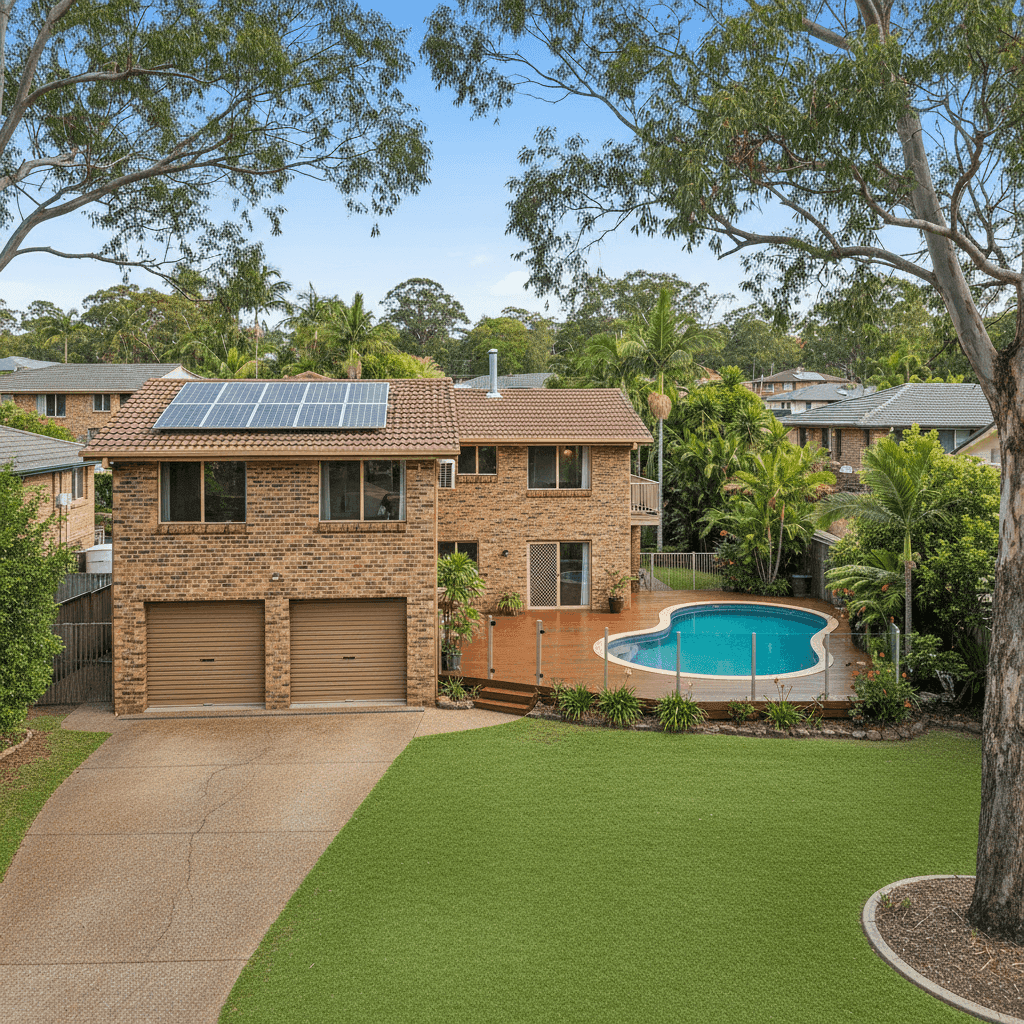
If you own a free standing home in Riverhills, QLD 4074, you've probably wondered whether you're paying a fair price for home insurance — or leaving money on the table. This article breaks down a real home and contents insurance quote for a four-bedroom, two-bathroom brick veneer property in Riverhills, comparing it against suburb, state, and national benchmarks to help you make a more informed decision.
---
Is This Quote Fair?
The annual premium for this property came in at $2,316 per year (or $227 per month), covering both building (sum insured: $643,000) and contents ($50,000), each with a $1,000 excess.
Our pricing analysis rates this quote as FAIR — Around Average. That's actually a reasonable outcome when you dig into the numbers. The quote sits just above the suburb median of $2,273/yr, meaning roughly half of comparable Riverhills properties are paying less, and half are paying more. It's well below the suburb average of $2,598/yr, which suggests it hasn't been skewed upward by high-risk outliers in the area.
In plain terms: this isn't a bargain, but it's not overpriced either. The homeowner is paying close to the going rate for this type of property in this suburb — which, in the current insurance climate, is worth acknowledging.
---
How Riverhills Compares
To put this quote in proper context, it helps to zoom out and look at the broader picture. You can explore the full data on the Riverhills insurance stats page, the Queensland stats page, or the national insurance stats page.
| Benchmark | Average Premium | Median Premium |
|---|---|---|
| Riverhills (4074) | $2,598/yr | $2,273/yr |
| Queensland | $9,129/yr | $3,903/yr |
| National | $5,347/yr | $2,764/yr |
| Brisbane LGA | $16,277/yr | — |
A few things stand out here:
- Riverhills is well below the Queensland average. The state average of $9,129/yr is heavily influenced by Far North Queensland and coastal cyclone-prone areas, where premiums can be extraordinary. Riverhills, sitting in Brisbane's western suburbs, benefits from not being classified as a cyclone risk area.
- The national average ($5,347/yr) is more than double this quote. Again, this reflects the outsized premiums paid in disaster-exposed regions across Australia.
- The Brisbane LGA average of $16,277/yr looks alarming, but this figure is pulled significantly upward by flood-prone and high-value inner-city suburbs. Riverhills sits in a more moderate risk band within the LGA.
- The suburb's 25th–75th percentile range is $1,653–$2,884/yr. This quote at $2,316/yr falls comfortably within that middle band, reinforcing the "fair" rating.
It's worth noting that the suburb sample size of 14 quotes is relatively small, so averages can shift as more data comes in. That said, the current data paints a consistent picture of Riverhills as a moderately priced suburb for home insurance.
---
Property Features That Affect Your Premium
Several characteristics of this particular property have a meaningful influence on the premium — some working in the homeowner's favour, others adding complexity.
Brick Veneer Construction Brick veneer walls are generally well-regarded by insurers. They offer solid fire resistance and durability compared to timber or weatherboard, which can translate to more competitive premiums. It's not the gold standard of full-brick, but it's a strong middle ground.
Tiled Roof Terracotta or concrete tiles are considered a durable, low-maintenance roofing material by most insurers. They hold up well in storms (outside of cyclone zones) and have a long lifespan, both of which are viewed favourably at underwriting.
Slab Foundation A concrete slab foundation is standard for properties of this era and is generally considered stable and low-risk, particularly in non-flood-prone areas. It avoids the subfloor vulnerabilities associated with older timber-stumped homes.
Construction Year: 1977 At nearly 50 years old, this home sits in a bracket that insurers watch carefully. Ageing electrical wiring, plumbing, and roofing can increase the likelihood of a claim. However, many homes of this era have been progressively updated, and the brick veneer construction has held up well over the decades.
Swimming Pool A pool adds to the replacement cost of the property and introduces additional liability considerations. It's a factor that nudges premiums upward, though the impact is typically modest for a standard residential pool.
Solar Panels Solar systems represent a significant asset that needs to be covered — both the panels themselves and the inverter. Insurers treat these as part of the building sum insured, so it's important to ensure the $643,000 building cover adequately accounts for the system's replacement value.
Ducted Climate Control Ducted air conditioning is another fixed asset factored into the building sum insured. Systems of this type can cost $10,000–$25,000+ to replace, so ensuring adequate building cover is essential.
Standard Fittings Standard-quality fittings (as opposed to premium or high-end) keep the replacement cost estimate more predictable and can help avoid over-insurance, which is a common issue in older homes that have been partially renovated.
---
Tips for Homeowners in Riverhills
1. Check Your Building Sum Insured Carefully At $643,000 for a 214 sqm home built in 1977, the sum insured needs to reflect full rebuild costs — not market value. Factor in the pool, solar panels, ducted air conditioning, and any renovations. Under-insurance is a significant risk; if you claim and your sum insured is too low, you may not receive enough to fully rebuild.
2. Review Your Excess Strategy Both the building and contents excesses are set at $1,000. Opting for a higher excess (say, $1,500 or $2,000) can meaningfully reduce your annual premium. If you have a solid emergency fund and are unlikely to make small claims, this trade-off is often worth considering.
3. Get Multiple Quotes Annually Insurance loyalty rarely pays off. Insurers frequently offer better rates to new customers, meaning your premium can creep up quietly at renewal. Shopping around each year — or using a comparison platform — is one of the simplest ways to keep costs in check.
4. Maintain Your Home to Reduce Risk Given the property's age, staying on top of maintenance — particularly the roof, gutters, plumbing, and electrical systems — can reduce the likelihood of a claim and may help you negotiate better terms at renewal. Some insurers also offer discounts for homes with security systems or smoke alarms installed.
---
Compare Your Own Quote
Whether you're reviewing an existing policy or shopping for the first time, it pays to see what else is out there. CoverClub makes it easy to compare home and contents insurance quotes across multiple providers in minutes. Get a quote today and find out whether you're paying a fair price — or whether there's a better deal waiting for you.