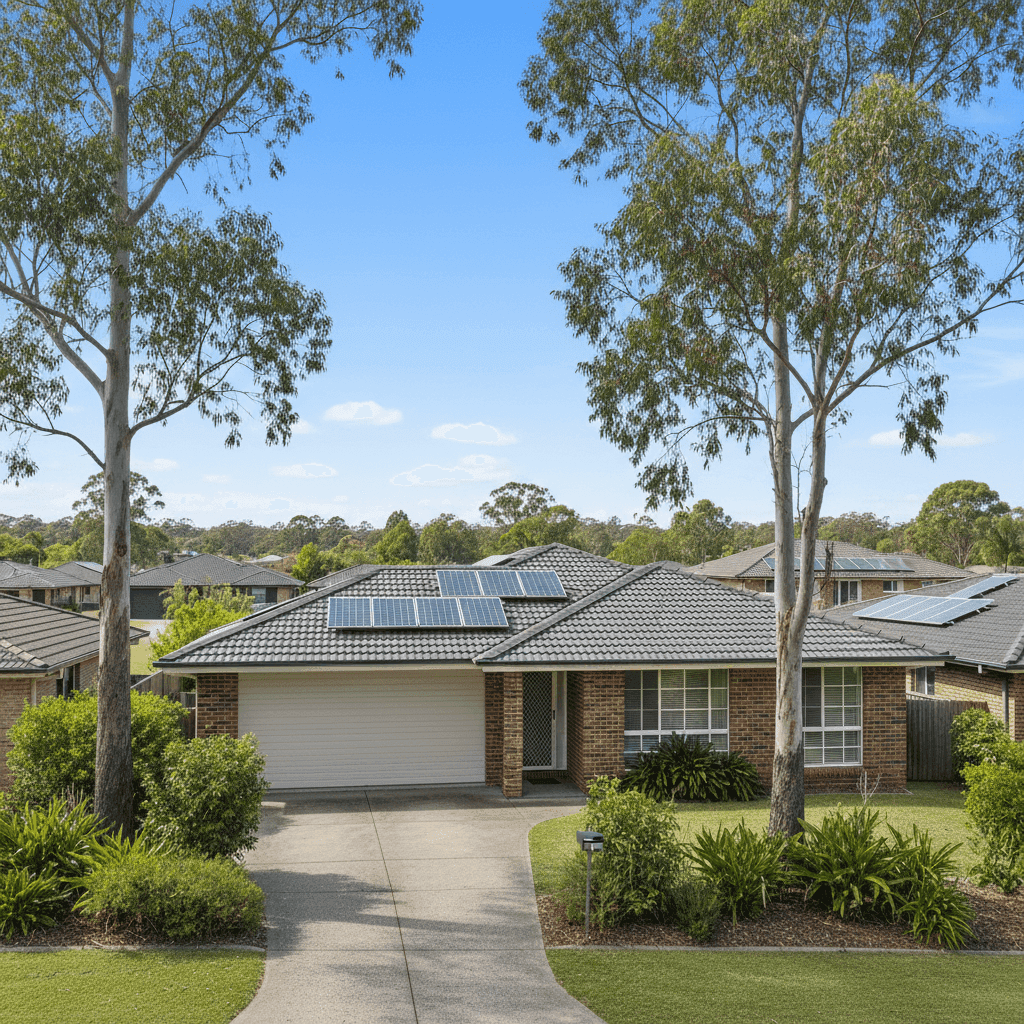
If you own a free standing home in Riverhills, QLD 4074, you've probably noticed that home insurance isn't cheap — and a recent quote we analysed for a three-bedroom, two-bathroom brick veneer property in the suburb confirms that premiums in this part of Brisbane can be eye-watering. This article breaks down a Home and Contents insurance quote of $12,975 per year (or $1,237/month), examines what's driving the cost, and shares practical tips to help Riverhills homeowners get better value.
---
Is This Quote Fair?
The short answer: this quote is expensive — well above average for the suburb, though it sits within a broader context worth understanding.
At $12,975 annually, this premium is nearly five times the Riverhills suburb average of $2,598/yr and more than triple the suburb median of $2,273/yr. Even compared to the broader Queensland state average of $9,129/yr, this quote runs significantly higher. Against the national average of $5,347/yr, it's more than double.
That said, context matters. The sum insured for the building is $461,000 — a relatively high replacement value — and the contents are covered for an additional $50,000. Higher insured values naturally push premiums up. The property was also built in 1975, which means ageing infrastructure, and it features timber and laminate flooring, which can be a factor in claims risk assessments.
Still, a premium of this magnitude warrants scrutiny. The price rating for this quote is firmly "Expensive (Above Average)", and homeowners in a similar position should strongly consider shopping around.
---
How Riverhills Compares
To put this quote in perspective, here's how it stacks up across different benchmarks:
| Benchmark | Premium |
|---|---|
| This Quote | $12,975/yr |
| Riverhills Suburb Average | $2,598/yr |
| Riverhills Suburb Median | $2,273/yr |
| Riverhills 25th Percentile | $1,653/yr |
| Riverhills 75th Percentile | $2,884/yr |
| QLD State Average | $9,129/yr |
| QLD State Median | $3,903/yr |
| National Average | $5,347/yr |
| National Median | $2,764/yr |
| Brisbane LGA Average | $16,277/yr |
A few things stand out here. First, the Brisbane LGA average of $16,277/yr is actually higher than this quote, suggesting that some properties in the greater Brisbane area are attracting even steeper premiums — likely those in higher flood-risk or storm-prone zones. Second, the Riverhills suburb statistics show a relatively tight range, with the 75th percentile sitting at just $2,884/yr — meaning this quote is well beyond what most comparable properties in the suburb are paying.
It's worth noting that the suburb sample size used for comparison is 14 quotes, which is a reasonable but not large dataset. Results may shift as more data comes in.
---
Property Features That Affect Your Premium
Several characteristics of this property are likely influencing the premium — both upward and downward.
Factors Likely Increasing the Premium
- Construction year (1975): Homes built in the mid-1970s are now 50 years old. Insurers factor in the age of electrical wiring, plumbing, and roofing materials when assessing risk. Older homes can be more expensive to repair or rebuild to modern standards.
- High building sum insured ($461,000): The replacement cost is the single biggest driver of building insurance premiums. At $461,000 for a 139 sqm home, this is a relatively high per-square-metre rebuild cost, which may reflect quality of finishes, site access costs, or local construction pricing.
- Timber and laminate flooring: Timber floors, while beautiful, are more susceptible to water damage than tiles or concrete, and can be costly to replace. Insurers may price this in.
- Ducted climate control: Ducted air conditioning systems are expensive to repair or replace and can be a source of water ingress if not properly maintained. Their inclusion in contents or building cover adds to the overall insured value.
- Slab foundation: While slabs are generally considered low-risk, they can be more expensive to remediate if subsidence or moisture issues arise, particularly in older builds.
Factors That May Be Keeping the Premium Lower
- Brick veneer construction: Brick veneer is generally viewed favourably by insurers due to its fire resistance and structural durability compared to weatherboard or clad homes.
- Tiled roof: Terracotta or concrete tiles are durable and perform well in hail and wind events — a positive risk signal for insurers.
- No pool: Swimming pools add liability and maintenance risk to a policy. Not having one simplifies the risk profile.
- No cyclone risk area: Riverhills falls outside Queensland's designated cyclone risk zones, which can dramatically inflate premiums for properties further north.
- Solar panels: While solar panels do add some replacement value, they're increasingly standard and most insurers incorporate them into building cover without a significant surcharge.
---
Tips for Homeowners in Riverhills
If your premium is coming in well above the suburb average, here are four practical steps you can take:
1. Shop Around and Compare Multiple Quotes
This is the single most effective thing you can do. Insurance pricing varies enormously between providers — sometimes by thousands of dollars for identical cover. Use a comparison tool like CoverClub to quickly see what multiple insurers would charge for your specific property.
2. Review Your Sum Insured
Make sure your building sum insured reflects the rebuild cost, not the market value of your home. Many homeowners are either over-insured (paying for more coverage than they need) or under-insured (at risk of a shortfall at claim time). Use a building cost calculator to verify your figure — $461,000 for 139 sqm may be accurate, but it's worth confirming.
3. Ask About Discounts for Security and Safety Features
Installing security systems, smoke alarms, and deadbolts can attract discounts with many insurers. If your home already has these features, make sure you're declaring them at quote time — you may not be getting credit for them.
4. Consider a Higher Excess to Lower Your Premium
Both the building and contents excess on this policy are set at $1,000. Increasing your voluntary excess — say, to $2,500 or $5,000 — can meaningfully reduce your annual premium. This strategy works best if you have sufficient savings to cover a larger out-of-pocket cost in the event of a claim.
---
Ready to Find a Better Deal?
Whether you're renewing your policy or shopping for the first time, comparing quotes is the fastest way to know if you're paying a fair price. CoverClub makes it easy — just enter your property address and get a clear picture of what home insurance should cost for your home. Get a quote today and see how much you could save.