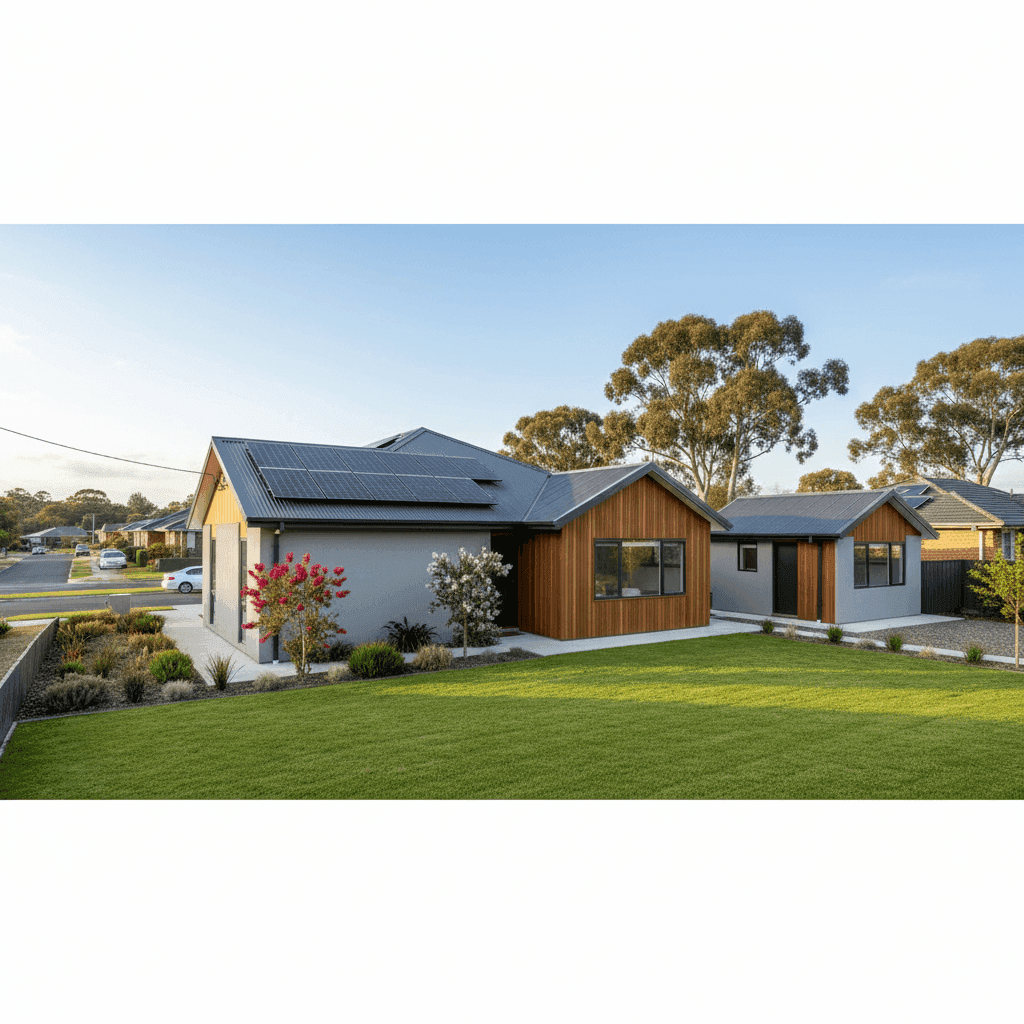
If you own a four-bedroom free standing home in Riverside, TAS 7250, you're probably wondering whether your home insurance premium is reasonable — or whether you're paying more than you need to. This article breaks down a real home and contents insurance quote for a property in this suburb, compares it against local, state, and national benchmarks, and offers practical tips to help you make a more informed decision.
---
Is This Quote Fair?
The quote in question comes in at $3,302 per year (or $310 per month) for combined home and contents cover, with a building sum insured of $1,002,000 and contents valued at $242,000. Both the building and contents excess are set at $1,000.
Based on our pricing data, this quote is rated Expensive — above average for the area.
To put that in perspective, the suburb average for Riverside sits at just $1,899 per year, with a median of $1,754. That means this particular quote is running roughly 74% above the suburb average — a significant gap that's worth investigating before renewing or committing to a policy.
That said, it's important to acknowledge that averages don't tell the whole story. The sum insured here — over $1 million for the building alone — is on the higher end, and the inclusion of a granny flat and solar panels can add complexity (and cost) to a policy. These factors legitimately push premiums upward, and we'll explore them in more detail below.
---
How Riverside Compares
Understanding where Riverside sits in the broader insurance landscape helps frame whether a premium is genuinely high or simply reflects local conditions.
| Benchmark | Average Premium | Median Premium |
|---|---|---|
| Riverside (suburb) | $1,899/yr | $1,754/yr |
| Meander Valley (LGA) | $2,039/yr | — |
| Tasmania (state) | $2,814/yr | $2,326/yr |
| National | $5,347/yr | $2,764/yr |
A few things stand out here. First, Riverside is actually a relatively affordable suburb to insure — the suburb average of $1,899 sits well below both the Tasmanian state average of $2,814 and the national average of $5,347. This is good news for most homeowners in the area.
Second, the quote of $3,302 exceeds even the state average, which suggests the property's specific characteristics — rather than location risk alone — are the primary driver of the elevated premium. Riverside is not a cyclone-risk area, and Tasmania generally benefits from lower natural disaster exposure compared to Queensland or northern Western Australia, which helps keep baseline premiums down across the state.
The 25th percentile for the suburb is $1,450 and the 75th percentile is $2,335, meaning this quote sits well above what three-quarters of comparable properties in the area are paying. With only 25 quotes in our Riverside sample, there's some variability in the data, but the signal is clear: this premium warrants a closer look.
---
Property Features That Affect Your Premium
Several characteristics of this property are likely contributing to the above-average premium. Here's what insurers are typically weighing up:
High Sum Insured
A building sum insured of $1,002,000 is substantial. At 214 sqm, this works out to roughly $4,682 per square metre — which is on the higher end for a 1992-built home with standard fittings. It's worth checking whether this figure accurately reflects the rebuild cost (not the market value) of your home. Overinsuring can quietly inflate your premium year after year.
Granny Flat
The presence of a granny flat adds a separate dwelling to the insured property, which increases the insurer's exposure. Whether it's occupied by a tenant or family member, it represents additional liability, additional structure, and additional contents risk — all of which feed into a higher premium.
Solar Panels
Solar panels are increasingly common in Tasmania, but they do add to the replacement cost of a home. Panels can be damaged by hail, high winds, or falling debris, and their inclusion in a policy — either explicitly or as part of the building sum — adds to the overall insured value.
Steel/Colorbond Roof
A Colorbond roof is generally viewed favourably by insurers. It's durable, fire-resistant, and less prone to storm damage than older tile or iron roofing. This feature may actually be working in your favour by moderating what could otherwise be a higher premium.
Slab Foundation & Carpet Flooring
A concrete slab foundation is standard for homes of this era and is generally considered low-risk by insurers. Carpet flooring is straightforward to assess and replace, and doesn't typically attract loading the way timber flooring or high-end finishes might.
Construction Year (1992)
At over 30 years old, this home sits in a bracket where insurers may apply modest age-related loadings, particularly around plumbing, electrical systems, and roofing. It's not old enough to be considered high-risk, but it's worth ensuring any recent renovations or upgrades are documented and disclosed.
---
Tips for Homeowners in Riverside
1. Review Your Sum Insured Carefully
The single biggest lever you have on your premium is the building sum insured. Use an independent building cost calculator (such as the one provided by the Housing Industry Association or your insurer) to verify that $1,002,000 genuinely reflects the rebuild cost of your home — including the granny flat. If it's inflated, you may be able to reduce it and save meaningfully on your annual premium.
2. Compare Multiple Quotes
With a premium sitting well above the suburb average, this is a clear case where shopping around could pay off. Insurers price risk differently, and the spread of quotes for any given property can be surprisingly wide. Get a comparison quote at CoverClub to see what other insurers would charge for the same cover.
3. Ask About Granny Flat Cover Specifics
Not all policies treat granny flats the same way. Some insurers include them automatically under the main building policy; others require a separate endorsement or policy. Make sure you understand exactly what is and isn't covered for the secondary dwelling — and whether the premium reflects that inclusion accurately.
4. Consider Your Excess Level
Both the building and contents excess are set at $1,000. Increasing your excess — say, to $1,500 or $2,000 — can reduce your annual premium. If you have a solid emergency fund and are unlikely to make small claims, a higher excess is often a cost-effective trade-off.
---
Compare Your Options with CoverClub
Whether you're renewing your policy or shopping for the first time, it pays to benchmark your premium against the market. CoverClub makes it easy to see how your quote stacks up against real data from homeowners in Riverside and across Tasmania. Start your comparison today and make sure you're getting the right cover at a fair price.