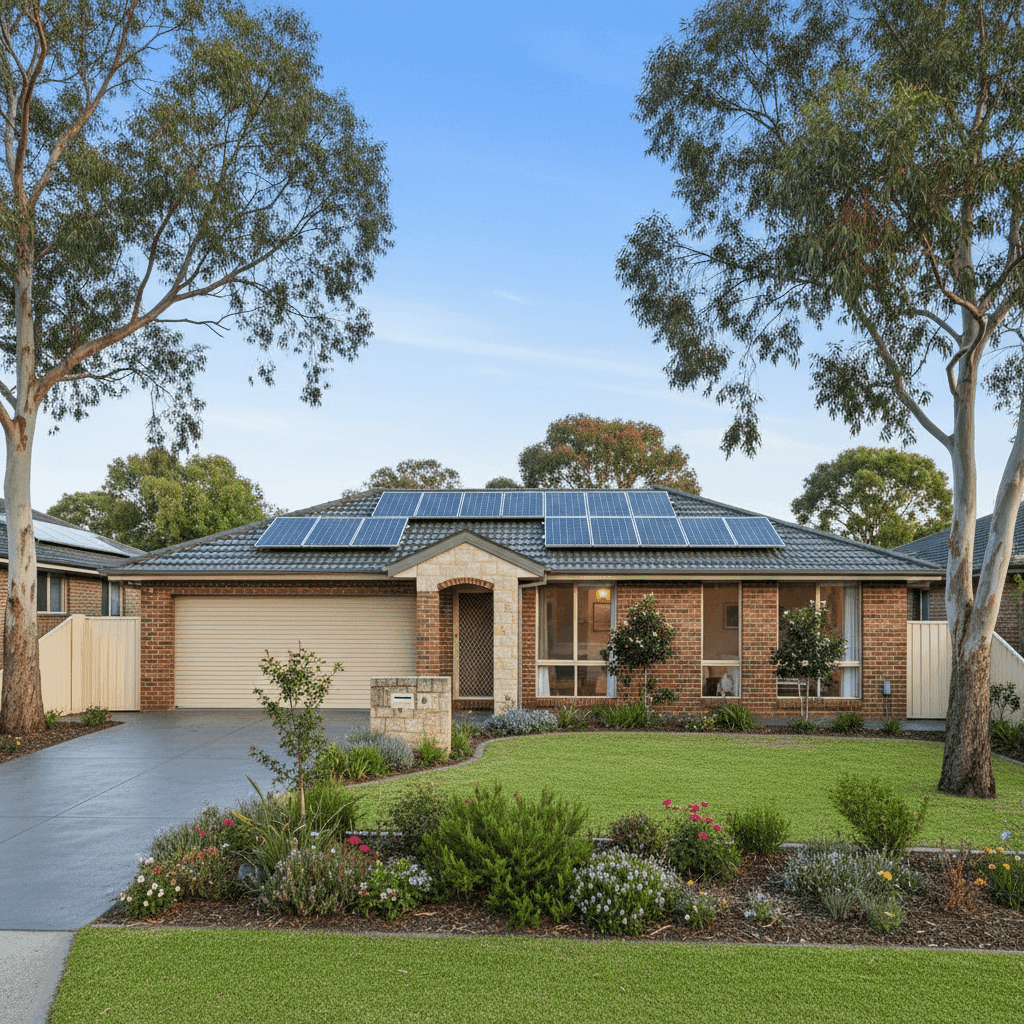
If you own a free standing home in Riverwood, NSW 2210, you might be wondering whether your home insurance premium is fair — or whether you're paying more than you need to. We recently analysed a quote for a three-bedroom, two-bathroom brick veneer home in this south-western Sydney suburb, and the results make for interesting reading. Here's a full breakdown of what the quote looked like, how it stacks up against local and national benchmarks, and what you can do to make sure you're getting the best possible deal.
---
Is This Quote Fair?
The annual premium for this property came in at $1,289 per year (or $126/month), covering both building and contents under a combined Home and Contents policy. The building sum insured is $1,025,000, with contents covered at $24,000. The building excess is $2,000 and the contents excess is $1,000.
Based on our pricing data, this quote is rated CHEAP — meaning it sits below the average for the Riverwood area. To put that in perspective, the suburb average premium is $1,706/year and the median sits at $1,593/year. This quote comes in roughly 24% below the suburb average and about 19% below the median — a meaningful saving for a homeowner on an otherwise typical property.
Even when compared to the 25th percentile of quotes in the suburb ($1,326/year), this premium still undercuts the cheapest quarter of the market. That's a strong result, and suggests the insurer has assessed this particular property as relatively low risk.
---
How Riverwood Compares
To understand just how well-priced this quote is, it helps to zoom out and look at the broader picture.
| Benchmark | Premium |
|---|---|
| This quote | $1,289/yr |
| Riverwood suburb average | $1,706/yr |
| Riverwood suburb median | $1,593/yr |
| Canterbury-Bankstown LGA average | $1,910/yr |
| NSW state average | $3,801/yr |
| NSW state median | $3,410/yr |
| National average | $2,965/yr |
| National median | $2,716/yr |
The contrast with state and national figures is striking. The NSW state average premium of $3,801/year is nearly three times the cost of this quote — a difference largely driven by high-risk areas in regional and coastal NSW, where flood, cyclone, and bushfire exposure push premiums significantly higher.
Compared to the national average of $2,965/year, this Riverwood quote is less than half the price. Even within the Canterbury-Bankstown LGA, where the average sits at $1,910/year, this property is well ahead. Riverwood itself benefits from its position as a relatively low-risk suburban pocket — no cyclone exposure, manageable flood risk, and good proximity to emergency services all contribute to keeping premiums competitive.
---
Property Features That Affect Your Premium
Several characteristics of this property work in favour of a lower premium, while a couple of others are worth keeping an eye on.
Brick veneer construction is generally viewed favourably by insurers. It offers solid fire resistance and structural durability, which reduces the likelihood of a total loss claim. Combined with a tiled roof, the property presents a low-risk profile from a materials standpoint — both are considered standard and resilient construction types in the Australian market.
The 1975 construction year is worth noting. Properties built in the mid-1970s are now approaching 50 years old, and while many remain in excellent condition, ageing infrastructure — including plumbing, electrical wiring, and roof membranes — can increase the likelihood of escape-of-liquid or storm damage claims over time. Insurers often factor this in when pricing older homes.
The slab foundation is a neutral-to-positive factor in most parts of Sydney. Unlike pier-and-beam foundations, slabs tend to be more resistant to pest intrusion and are less susceptible to movement in stable soil conditions. However, in areas with expansive clay soils, slabs can be prone to cracking — something worth monitoring.
Solar panels are present on this property. While they add value and can be a positive feature, they do introduce a modest additional risk factor — panels can be damaged by hail or storms, and their presence on the roof may complicate some repair claims. It's important to confirm with your insurer that solar panels are explicitly covered under your policy, as some standard policies treat them as optional extras.
The vinyl flooring and standard fittings quality keep the contents and internal replacement costs at a manageable level, which is consistent with the $24,000 contents sum insured. Homeowners with high-end finishes or bespoke joinery would typically need to increase their contents and building sums insured accordingly.
The absence of a pool and ducted climate control system also simplifies the risk profile — both can be sources of claims (leaks, electrical faults) and their absence marginally reduces exposure.
---
Tips for Homeowners in Riverwood
1. Review your building sum insured regularly At $1,025,000, the building sum insured on this property is substantial. Construction costs have risen sharply in recent years, so it's worth checking that your sum insured reflects current rebuild costs — not just the market value of your home. Underinsurance is one of the most common and costly mistakes homeowners make.
2. Confirm solar panel coverage If you have solar panels, contact your insurer and ask specifically whether they are covered under your policy and under what circumstances. Some insurers include them automatically; others require an endorsement or charge an additional premium. Don't assume — check.
3. Get competing quotes before renewal Even if your current premium looks competitive, the insurance market changes every year. Use a comparison platform like CoverClub to benchmark your renewal quote against the market before you accept it. A few minutes of research could save you hundreds of dollars annually.
4. Consider your excess settings carefully This policy carries a $2,000 building excess and $1,000 contents excess. Higher excesses generally result in lower premiums, but you need to be confident you can comfortably cover the excess amount out of pocket in the event of a claim. If cash flow is a concern, it may be worth accepting a slightly higher premium in exchange for a lower excess.
---
Ready to Compare?
Whether you're a first-time buyer or a long-time Riverwood resident, it pays to know where your premium sits relative to the market. CoverClub makes it easy to see how your home insurance stacks up — and to find a better deal if one exists. Get a quote today and see what Riverwood homeowners are actually paying for cover.