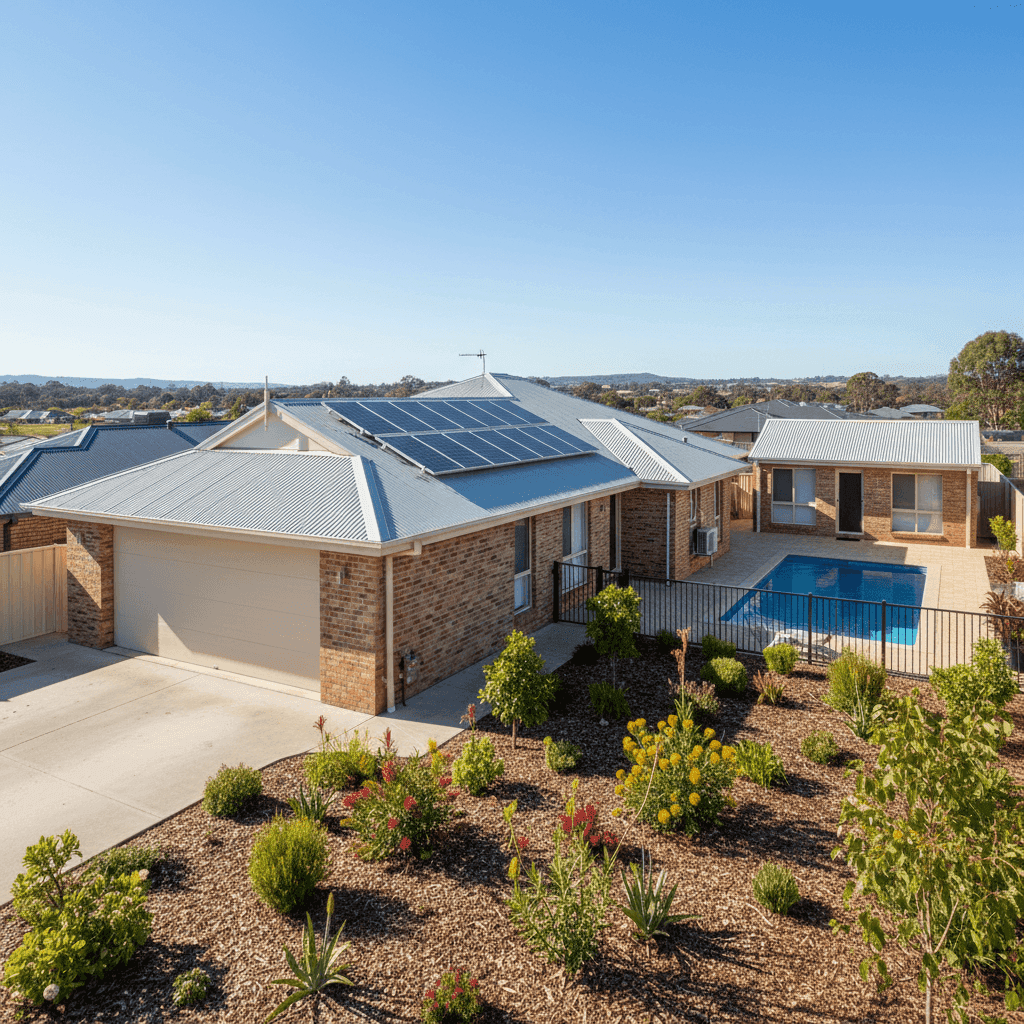
If you own a four-bedroom free standing home in Robin Hill, NSW 2795, you're probably curious about whether your home insurance premium is competitive — or whether you're quietly paying more than you should be. In this article, we break down a real home and contents insurance quote for a property in Robin Hill, compare it against local, state, and national benchmarks, and share some practical tips to help you get the best value cover.
---
Is This Quote Fair?
The quote in question comes in at $2,919 per year (or $286 per month) for combined home and contents insurance, covering a building sum insured of $749,000 and contents valued at $75,000. Both the building and contents excess are set at $2,000.
Our price rating for this quote is FAIR — Around Average.
That assessment holds up well when you look at the numbers. The suburb average premium in Robin Hill sits at $3,338 per year, and the median is $3,053 per year — meaning this quote comes in noticeably below both figures. In fact, at $2,919, it falls between the 25th percentile ($2,603/yr) and the median ($3,053/yr) for the area, which is a reasonably comfortable position to be in.
So while there may be room to find a slightly cheaper option, this quote is by no means overpriced for the property type and level of cover provided. Homeowners in Robin Hill paying anywhere above $3,878 per year (the 75th percentile) should definitely be shopping around.
---
How Robin Hill Compares
Understanding where Robin Hill sits relative to broader markets helps put your premium in perspective. Here's a snapshot:
| Benchmark | Average Premium | Median Premium |
|---|---|---|
| Robin Hill (suburb) | $3,338/yr | $3,053/yr |
| LGA (Cabonne) | $3,163/yr | — |
| NSW (state) | $9,528/yr | $3,770/yr |
| National | $5,347/yr | $2,764/yr |
A couple of things stand out here. First, the NSW state average of $9,528 looks eye-watering — but that figure is heavily skewed by high-value properties and elevated-risk areas across the state (think flood-prone regions and Sydney's inner suburbs). The state median of $3,770 is a far more representative figure for typical NSW homeowners, and Robin Hill tracks below that, which is encouraging.
Compared to the national median of $2,764, Robin Hill's median of $3,053 is modestly higher, reflecting the general cost of insuring regional NSW properties with features like pools and solar systems. The Cabonne LGA average of $3,163 is also a useful local reference point — and our quoted premium of $2,919 sits comfortably below it.
You can explore more detailed local data on the Robin Hill suburb insurance stats page, compare it to NSW-wide figures, or take a look at national home insurance benchmarks to see the full picture.
---
Property Features That Affect Your Premium
Every home is different, and insurers price risk based on a wide range of property characteristics. Here's how the features of this particular Robin Hill home influence the premium:
Brick Veneer Walls & Colorbond Roof Brick veneer is one of the more insurer-friendly wall types in Australia — it's durable, fire-resistant, and widely understood by assessors. Paired with a steel Colorbond roof, this combination is generally viewed favourably. Colorbond roofing is lightweight, resistant to corrosion, and performs well in both heat and moderate weather events. Together, these materials tend to attract more competitive premiums compared to timber-framed or fibro-clad homes.
Slab Foundation & Tiled Flooring A concrete slab foundation is considered low-risk by most insurers — there's no underfloor cavity to worry about and it's resistant to termite ingress. Tiled flooring similarly signals durability and easy repairability, which can work in your favour at claims time.
Swimming Pool Pools add value to a property but also introduce liability and maintenance considerations. Some insurers factor a pool into their premium calculations, particularly around public liability cover. It's worth confirming your policy includes adequate liability protection in case of an accident involving the pool.
Solar Panels Solar panels are increasingly common on Australian homes, but they do add to the replacement cost of a property. At $749,000 sum insured, it's important to ensure the building cover adequately accounts for the cost of reinstalling a solar system — panels, inverter, and all associated hardware — in the event of a total loss.
Ducted Climate Control & Granny Flat Ducted air conditioning is a significant fixed asset and should be explicitly covered under your building policy. The presence of a granny flat is also worth flagging with your insurer — some policies cover ancillary structures automatically up to a certain value, while others may require a specific endorsement. Make sure you're not underinsured here.
Construction Year: 1998 At around 26 years old, this home is well past its initial build phase but still relatively modern by Australian standards. Properties of this age are generally straightforward to insure, though it's worth keeping an eye on ageing systems like plumbing and electrical wiring, which can become claims triggers as they approach the end of their serviceable life.
Standard Fittings Standard-quality fittings keep replacement costs predictable and help avoid the premium loading that often comes with high-end or bespoke finishes. This is a positive factor in keeping the overall premium reasonable.
---
Tips for Homeowners in Robin Hill
1. Review your sum insured regularly Building costs have risen significantly across regional NSW in recent years. With a 214 sqm home featuring a pool, solar panels, and a granny flat, it's essential to revisit your $749,000 building sum insured annually. Underinsurance is one of the most common — and costly — mistakes homeowners make. Use a building cost calculator or speak with a quantity surveyor if you're unsure.
2. Check your granny flat is covered Not all home insurance policies automatically extend cover to secondary dwellings on the same property. Confirm with your insurer whether your granny flat is included in the building sum insured or whether it requires separate cover. This is a detail that's easy to overlook until you need to make a claim.
3. Compare quotes before renewal With 18 quotes sampled in the Robin Hill area, there's clearly a competitive market at play. The spread between the 25th percentile ($2,603/yr) and the 75th percentile ($3,878/yr) is substantial — over $1,200 per year. Shopping around at renewal time (rather than simply auto-renewing) could save you hundreds without sacrificing cover quality.
4. Consider your excess strategically Both the building and contents excess on this policy are set at $2,000. A higher excess typically reduces your annual premium, but make sure you can comfortably afford to pay it in the event of a claim. If cash flow allows, a $2,000 excess is a reasonable middle ground — just avoid setting it so high that a minor claim becomes financially painful.
---
Ready to Compare?
Whether you're renewing your existing policy or shopping for cover for the first time, comparing quotes is the single most effective way to ensure you're getting fair value. Get a home insurance quote at CoverClub and see how your premium stacks up against the Robin Hill market — it only takes a few minutes and could save you a meaningful amount each year.