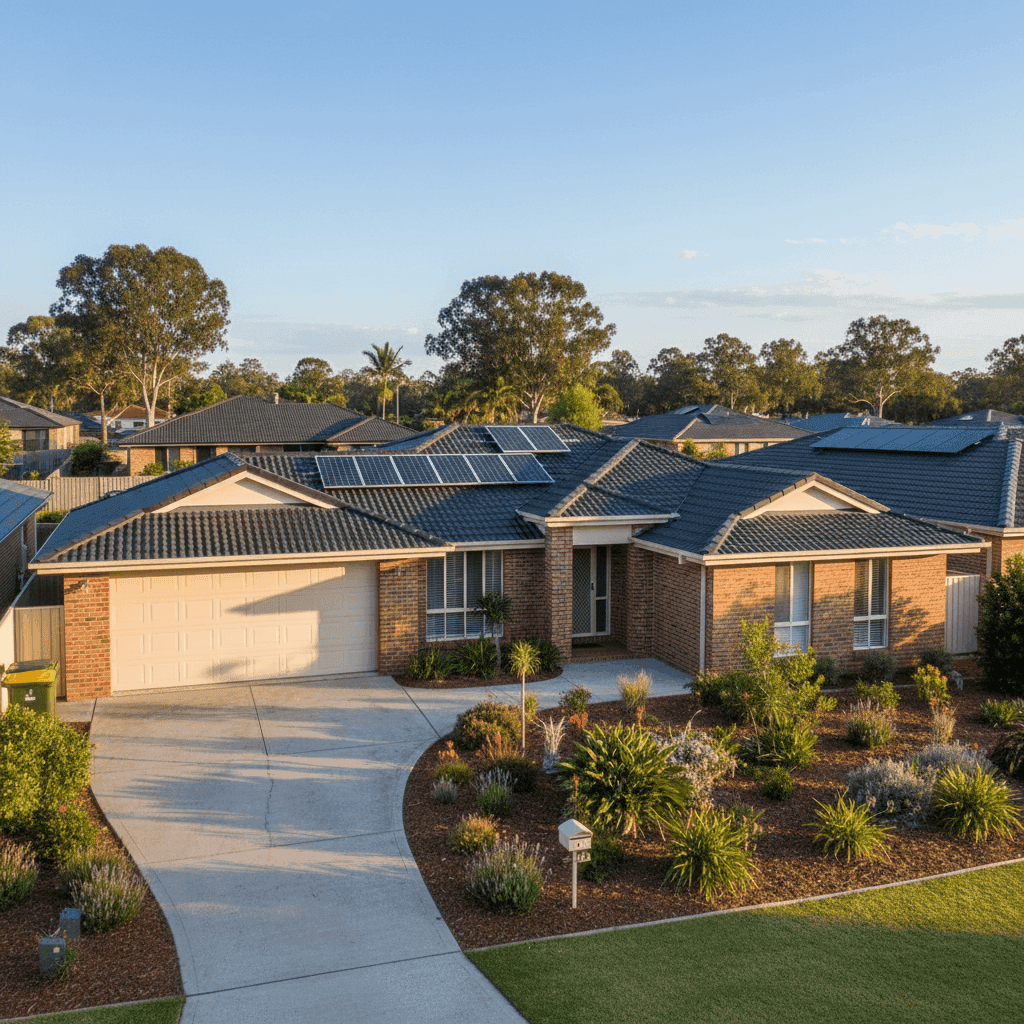
Robina is one of the Gold Coast's most established and sought-after suburbs — a master-planned community known for its leafy streets, quality schools, and proximity to major shopping and transport links. For owners of a free standing home in this pocket of Queensland, understanding what you should be paying for home and contents insurance is just as important as knowing the local property market. This article breaks down a real quote for a four-bedroom, two-bathroom brick veneer home in Robina (QLD 4226) and puts it in context against suburb, state, and national benchmarks.
---
Is This Quote Fair?
The short answer: yes — and then some. This quote comes in at $1,975 per year (or roughly $204 per month) for combined home and contents cover, with a building sum insured of $840,000 and contents valued at $185,000. Our pricing model rates this as CHEAP — below average for the area.
To put that in perspective, the suburb average premium in Robina sits at $3,763 per year, and the median is $3,127 per year. That means this quote is roughly 48% below the suburb average and well under the 25th percentile of $2,404 — placing it among the most competitive quotes seen in the area across 106 sampled policies.
For a property of this size and value, a sub-$2,000 annual premium is genuinely strong. The building excess of $3,000 is on the higher side (which does help reduce the premium), while the contents excess of $1,000 is fairly standard. Homeowners comfortable self-insuring smaller claims will find this trade-off very reasonable.
---
How Robina Compares
Zooming out from the suburb level reveals just how variable home insurance premiums can be across Queensland and the country as a whole.
| Benchmark | Annual Premium |
|---|---|
| This Quote | $1,975 |
| Robina (suburb average) | $3,763 |
| Robina (suburb median) | $3,127 |
| Robina (25th percentile) | $2,404 |
| Gold Coast LGA average | $8,161 |
| QLD state average | $9,129 |
| QLD state median | $3,903 |
| National average | $5,347 |
| National median | $2,764 |
The figures for Queensland are striking. The QLD state average of $9,129 is heavily skewed by high-risk coastal and cyclone-prone regions further north — think Cairns, Townsville, and the Whitsundays — where insurers price in significant natural disaster exposure. Robina, sitting in the southern Gold Coast, does not fall within a designated cyclone risk zone, which is a meaningful factor in keeping local premiums more manageable.
Even so, the Gold Coast LGA average of $8,161 is surprisingly high, likely pulled up by beachside and canal-front properties with elevated flood, storm surge, or inundation risk. Robina's inland position generally insulates it from the worst of these exposures.
Compared to the national average of $5,347, this quote is less than 37 cents in the dollar — a remarkable outcome for a property of this size and rebuild value.
---
Property Features That Affect Your Premium
Several characteristics of this property work in the owner's favour when it comes to insurance pricing:
Brick Veneer Construction Brick veneer is one of the most insurer-friendly wall materials in Australia. It offers strong fire resistance, durability, and relatively predictable repair costs. Compared to weatherboard or lightweight cladding, brick veneer homes typically attract lower base premiums.
Tiled Roof Concrete or terracotta tiles are considered a robust roofing material by most insurers. They hold up well in storms and hail events — a relevant consideration on the Gold Coast — and are less susceptible to fire than some alternatives. This works in the homeowner's favour at assessment time.
Slab Foundation A concrete slab foundation is straightforward to assess and repair, and doesn't carry the moisture or pest-related risks sometimes associated with suspended timber floors. Insurers generally view slab homes favourably.
Construction Year: 1992 Homes built in the early 1990s fall into a comfortable middle ground — old enough to have appreciated significantly in land and replacement value, but built under modern enough building codes to be considered structurally sound. There are no major red flags here for underwriters.
Solar Panels This property has rooftop solar panels, which adds a small but real element of risk — panels can be damaged by hail or storms, and their replacement cost needs to be factored into the building sum insured. It's worth confirming with your insurer that solar panels are explicitly covered under the building policy, as some policies treat them as an optional add-on.
Ducted Climate Control Ducted air conditioning systems are a significant fixed asset and are typically covered under building insurance. As with solar, it's worth verifying the system is captured in your sum insured calculation — particularly given the cost of replacing a full ducted system, which can run into the tens of thousands.
No Pool The absence of a swimming pool removes a meaningful liability and maintenance consideration. Pools can complicate insurance assessments and add to premium costs, so this is a straightforward advantage.
214 sqm Building Size At 214 square metres, this is a comfortably sized family home. The $840,000 building sum insured equates to roughly $3,925 per square metre — a reasonable rebuild cost estimate for a brick veneer home in South East Queensland, though homeowners should periodically review this figure against current construction costs, which have risen sharply in recent years.
---
Tips for Homeowners in Robina
1. Review your sum insured annually Construction costs in Queensland have increased significantly since the pandemic, driven by labour shortages and materials inflation. A sum insured set two or three years ago may no longer reflect the true cost of rebuilding. Use a building cost calculator or ask your insurer to reassess — being underinsured at claim time can be a costly mistake.
2. Check your solar panels are covered As noted above, solar panels on the roof should be explicitly listed under your building cover. Review your Product Disclosure Statement (PDS) carefully, and if in doubt, call your insurer to confirm. The same applies to your ducted air conditioning system.
3. Understand your excess structure This policy carries a $3,000 building excess — higher than the market standard. This is a common lever insurers use to reduce premiums, and it works well for homeowners who can absorb smaller claims out of pocket. Just be clear on what that means in practice: a storm that causes $2,500 of damage would not result in a payout under this structure.
4. Compare quotes at renewal — every year The insurance market is dynamic. The fact that this quote came in well below the suburb median is a reminder that significant savings are available to those who shop around. Loyalty doesn't always pay in insurance; comparing at renewal is one of the simplest ways to avoid overpaying. Get a new quote at CoverClub to see what's available for your property.
---
Find the Right Cover for Your Home
Whether you're a first-time buyer in Robina or a long-term homeowner reviewing your existing policy, understanding how your premium stacks up against the market is the first step to making an informed decision. CoverClub makes it easy to compare home and contents insurance quotes tailored to your specific property — so you're never paying more than you need to.
Compare home insurance quotes for your Robina property today →