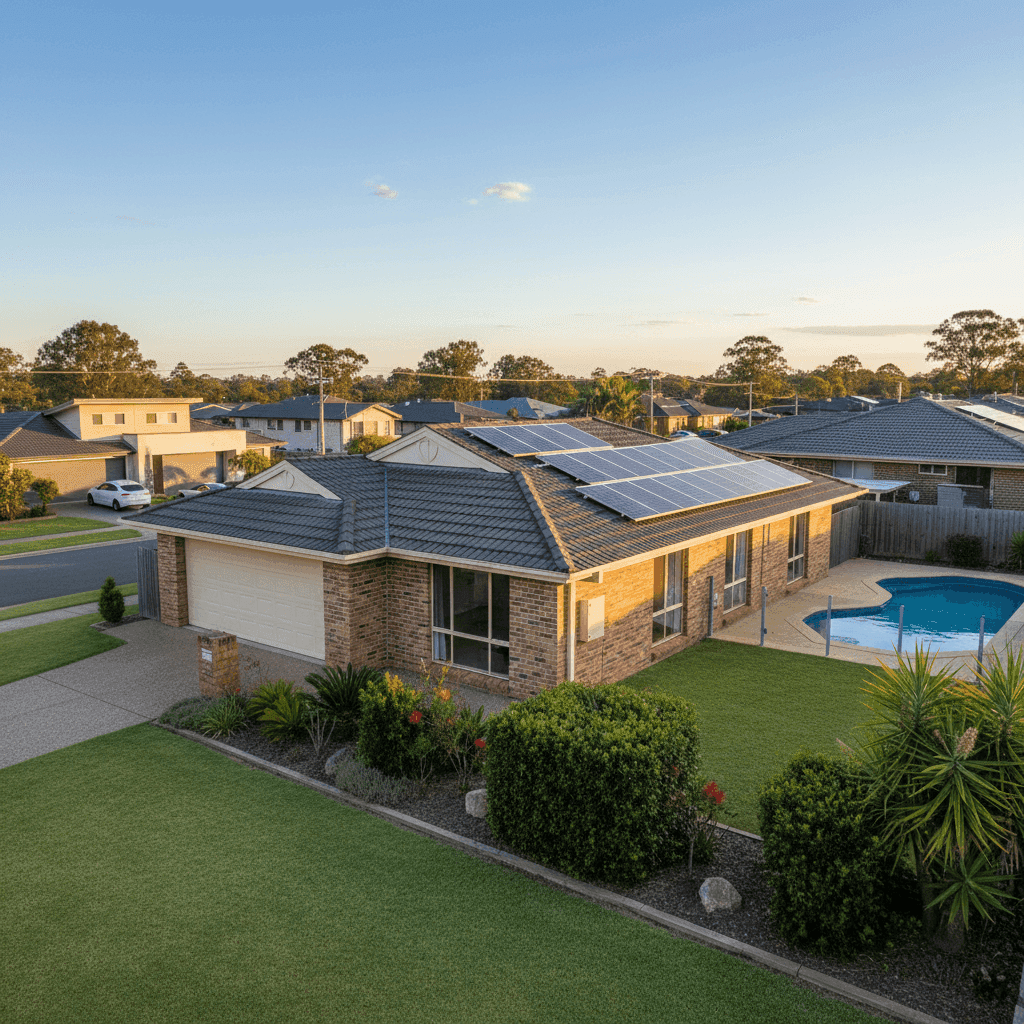
Rochedale South is a well-established suburban pocket in Brisbane's south-east, characterised by comfortable family homes and tree-lined streets. If you own a free standing home here, you're likely paying close attention to the cost of protecting it — and for good reason. Home and contents insurance premiums can vary enormously, even within the same postcode. This article breaks down a real quote for a 3-bedroom, 2-bathroom brick veneer home in Rochedale South (QLD 4123), and puts it into context against local, state, and national benchmarks.
---
Is This Quote Fair?
The quote in question comes in at $931 per year (or roughly $91 per month) for combined home and contents cover, with a building sum insured of $512,000 and contents valued at $102,000. The building excess sits at $2,000, while the contents excess is a more modest $600.
Our price rating for this quote is CHEAP — below average — and the numbers back that up convincingly.
The suburb average for Rochedale South sits at $2,354 per year, based on a sample of 59 quotes. That means this particular quote is coming in at less than 40% of what most homeowners in the area are paying. Even against the suburb's 25th percentile — which represents the cheapest quarter of quotes — of $1,557 per year, this policy is still significantly lower.
Put simply: if you were quoted $931 for this property, you'd be doing very well indeed.
---
How Rochedale South Compares
To appreciate just how competitive this quote is, it helps to zoom out and look at the broader pricing landscape.
| Benchmark | Annual Premium |
|---|---|
| This Quote | $931 |
| Suburb Average (Rochedale South) | $2,354 |
| Suburb Median | $2,318 |
| Suburb 25th Percentile | $1,557 |
| Suburb 75th Percentile | $3,049 |
| LGA Average (Brisbane) | $4,485 |
| QLD State Average | $4,547 |
| National Average | $2,965 |
| National Median | $2,716 |
A few things stand out here. First, Queensland's average premium of $4,547 is dramatically higher than the national average of $2,965 — a gap driven largely by the state's exposure to severe weather events, including flooding, hailstorms, and cyclones in northern regions. The Brisbane LGA average of $4,485 tracks closely with the state figure, reflecting the elevated risk profile of South East Queensland more broadly.
Rochedale South's suburb average of $2,354, while still above the national median, is considerably lower than the broader Brisbane and QLD averages — suggesting the suburb benefits from relatively favourable risk characteristics compared to many other parts of the state.
Against all of these benchmarks, a quote of $931 represents outstanding value. Homeowners in this postcode would typically expect to pay two to five times this amount, depending on their insurer and circumstances.
---
Property Features That Affect Your Premium
Several characteristics of this property are likely contributing to the competitive premium on offer.
Brick veneer construction is generally well-regarded by insurers. It offers solid fire resistance and structural durability, which tends to translate into lower rebuild risk compared to timber-framed or clad homes. Combined with a tiled roof — another material that insurers view favourably for its longevity and weather resistance — this home presents a relatively low-risk profile from a construction standpoint.
The slab foundation is standard for Queensland homes of this era and doesn't introduce the elevated flood or moisture risk that pier-and-beam foundations can sometimes carry.
The home was built in 1970, which places it in a bracket that insurers assess carefully. Older homes can attract higher premiums if electrical wiring, plumbing, or roofing hasn't been updated, so it's worth ensuring your policy reflects any renovations or upgrades that have been made.
The 139 sqm building size is modest by today's standards, which helps keep the sum insured and therefore the premium more manageable. The $512,000 building sum insured reflects current rebuild costs rather than market value — an important distinction that homeowners sometimes overlook.
Two features worth noting are the swimming pool and solar panels. Pools add liability considerations and can increase contents or ancillary structure cover requirements. Solar panels, while generally straightforward to insure, should be explicitly listed in your policy to ensure they're covered for damage from storms or hail. At standard fittings quality, the home doesn't attract the premium loading that high-end fixtures and finishes might otherwise trigger.
Finally, Rochedale South is not classified as a cyclone risk area, which is a meaningful factor in Queensland. Properties in cyclone-prone regions — particularly north of Capricorn — face significant premium surcharges. Being outside this zone is a genuine advantage for homeowners here.
---
Tips for Homeowners in Rochedale South
1. Review your building sum insured regularly Construction costs have risen sharply in recent years. The $512,000 sum insured on this quote may be appropriate today, but it's worth revisiting annually to ensure you wouldn't be underinsured in the event of a total loss. Use a quantity surveyor's estimate or your insurer's rebuild calculator as a guide.
2. Confirm your solar panels and pool are explicitly covered Don't assume these features are automatically included in your policy. Ask your insurer directly whether solar panels are covered for storm, hail, and accidental damage, and whether your pool equipment and surrounding structure are included in the building definition.
3. Shop around — the savings can be substantial This quote is a clear example of how much premiums can vary. With a suburb average of $2,354 and this quote coming in at $931, the difference is over $1,400 per year. Comparing multiple quotes through a platform like CoverClub takes minutes and can lead to significant savings without sacrificing cover quality.
4. Consider your excess settings strategically The $2,000 building excess on this policy is on the higher side. A higher excess typically reduces your premium, but it also means more out-of-pocket costs if you need to claim. Review whether this trade-off suits your financial situation, and consider whether a lower excess might be worth a modest premium increase for peace of mind.
---
Find Out What You Should Be Paying
Whether you're renewing your existing policy or shopping for cover for the first time, understanding the market rate in your area is the first step to making an informed decision. Explore Rochedale South insurance statistics to see how your quote stacks up, or compare home insurance quotes at CoverClub to find competitive options tailored to your property. With premiums varying this widely, a few minutes of comparison could save you hundreds — or more — every year.