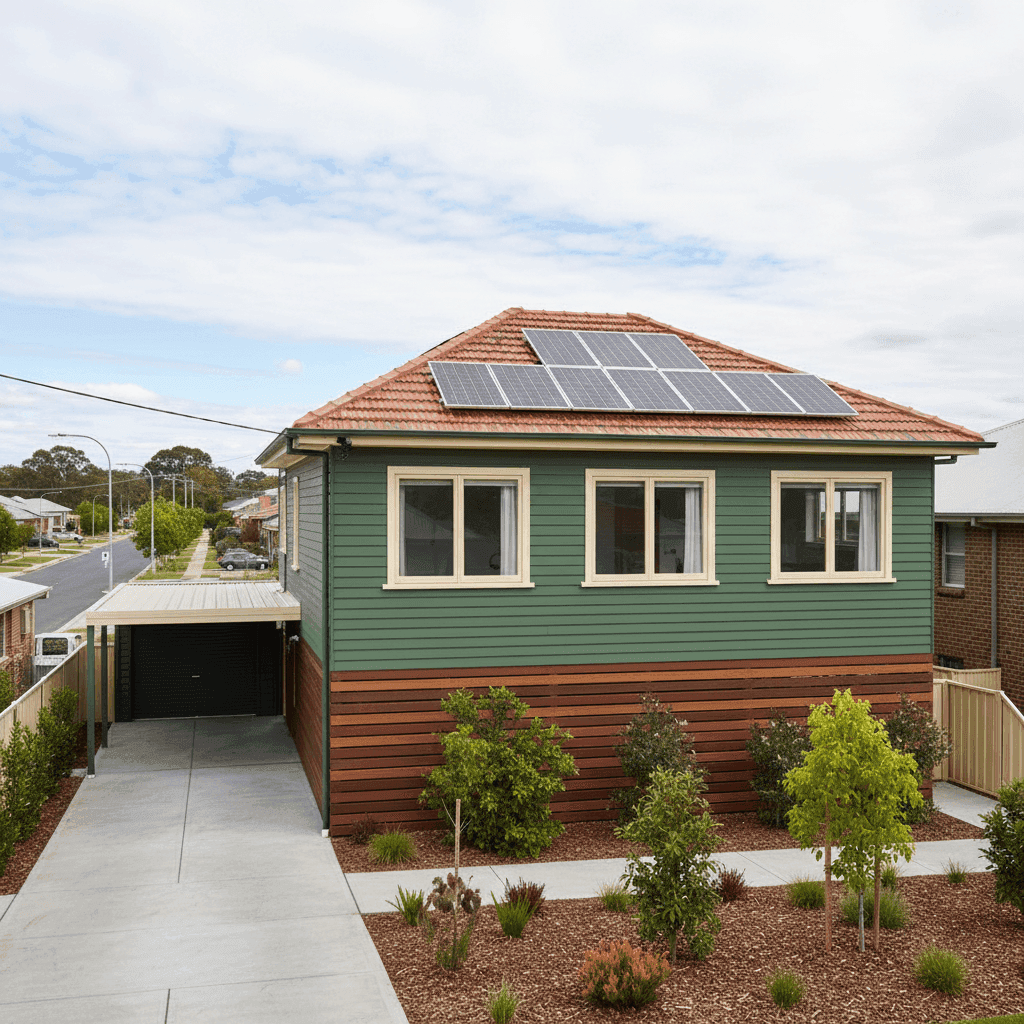
If you own a free standing home in Rockbank, VIC 3335, you might be wondering whether your home insurance premium is reasonable — or whether you're paying too much (or too little). This article breaks down a real quote for a four-bedroom, two-bathroom weatherboard home in Rockbank, comparing it against local, state, and national benchmarks to help you make a more informed decision.
---
Is This Quote Fair?
The annual premium on this quote comes in at $1,104 per year (or $111/month) for combined home and contents cover, with a building sum insured of $451,000 and contents valued at $50,000. Based on our pricing data, this quote is rated CHEAP — sitting well below average for the Rockbank area.
To put that in perspective:
- The suburb average for Rockbank is $1,863/yr, meaning this quote is roughly 41% cheaper than what most locals are paying.
- Even against the suburb's 25th percentile — the point at which only a quarter of quotes come in cheaper — the going rate is $1,348/yr. This quote still undercuts that benchmark by around $244.
So yes, by any reasonable measure, $1,104/yr is a genuinely competitive result for this type of property in this postcode. That said, it's worth understanding why the premium lands where it does — and whether the cover levels are appropriate for your circumstances.
---
How Rockbank Compares to the Rest of Victoria and Australia
Rockbank sits within the City of Melton, one of Melbourne's fastest-growing outer-western corridors. Compared to broader benchmarks, the suburb tends to attract lower-than-average insurance premiums — and this quote reflects that trend strongly.
Here's how the numbers stack up:
| Benchmark | Annual Premium |
|---|---|
| This Quote | $1,104 |
| Rockbank Suburb Average | $1,863 |
| Rockbank Suburb Median | $1,684 |
| LGA (Melton) Average | $1,803 |
| VIC State Average | $2,921 |
| VIC State Median | $2,694 |
| National Average | $2,965 |
| National Median | $2,716 |
The gap between this quote and the Victorian state average is striking — at nearly $1,817/yr less than what the average Victorian homeowner pays, this is a notably affordable result. Even compared to the national average of $2,965/yr, the saving is substantial.
Part of this comes down to Rockbank itself. The suburb is not in a cyclone-prone zone, sits away from high-bushfire-risk corridors compared to many parts of regional Victoria, and is a relatively new residential area with modern infrastructure. You can explore more localised pricing data on the Rockbank suburb stats page or compare it against the broader Victorian picture.
It's worth noting that our suburb sample for Rockbank is based on 59 quotes, which gives a reasonable indication of local pricing trends — though individual results will always vary depending on specific property features, insurer choice, and cover selections.
---
Property Features That Affect Your Premium
Several characteristics of this particular property influence where the premium lands. Understanding these factors can help you anticipate how your own home might be priced.
Weatherboard Timber Walls
Weatherboard construction is one of the most common wall types in older Australian homes, and it does carry a higher fire risk than brick or rendered masonry. Insurers typically price this in — but in a low-risk suburb like Rockbank, the impact is moderated.
Tiled Roof
A tiled roof is generally viewed favourably by insurers. Tiles are durable, fire-resistant, and widely used across Victoria. Compared to Colorbond or corrugated iron, tiles tend to attract neutral-to-positive pricing outcomes.
Stump Foundation & Elevated Design
This home sits on stumps and is elevated by less than one metre — a classic construction style for homes of this era (built in 1978). The elevated foundation can improve airflow and reduce moisture-related damage, though it does introduce some vulnerability to underfloor damage. On balance, this style doesn't significantly inflate premiums in non-flood-prone areas.
Solar Panels
The presence of solar panels adds a modest layer of complexity to the building sum insured. Solar systems are generally covered under the building policy, but it's worth confirming with your insurer that the panels and inverter are explicitly included — and that the $451,000 sum insured accounts for their replacement cost.
No Pool, No Ducted Climate Control
The absence of a pool and ducted HVAC system keeps the risk profile — and the rebuild cost estimate — simpler and lower. These are two features that can meaningfully lift a premium when present.
1978 Construction
Homes built in the late 1970s may have older electrical wiring, plumbing, and roofing materials that could be more susceptible to damage or failure. Some insurers factor age of construction into their pricing. If your home has had significant renovations or system upgrades, it's worth mentioning this when obtaining quotes.
---
Tips for Homeowners in Rockbank
Whether you're reviewing an existing policy or shopping around for the first time, here are four practical steps worth taking:
- Check your building sum insured regularly. Construction costs have risen sharply across Victoria in recent years. A sum insured of $451,000 for a 130 sqm weatherboard home may be appropriate today, but it's worth reassessing annually — especially if you've made improvements or if local building costs have shifted.
- Confirm solar panels are explicitly covered. Don't assume your solar system is automatically included in your building cover. Ask your insurer to confirm the panels, inverter, and associated wiring are all covered under the policy, and check whether storm or hail damage is included.
- Review your contents figure. $50,000 in contents cover is a starting point, but many households underestimate what it would actually cost to replace everything — furniture, appliances, clothing, and electronics. A quick room-by-room audit can help you arrive at a more accurate figure.
- Compare quotes before renewal. Given that this quote comes in well below the suburb average, it's a good reminder that premiums vary significantly between insurers for the same property. Don't auto-renew without checking — you could be leaving real savings on the table.
---
Ready to Compare Home Insurance in Rockbank?
Whether this quote is yours or you're simply researching what to expect, CoverClub makes it easy to see how different insurers price your specific property. Our comparison tool is tailored to Australian homes and gives you a clear picture of where your premium sits relative to your neighbours.