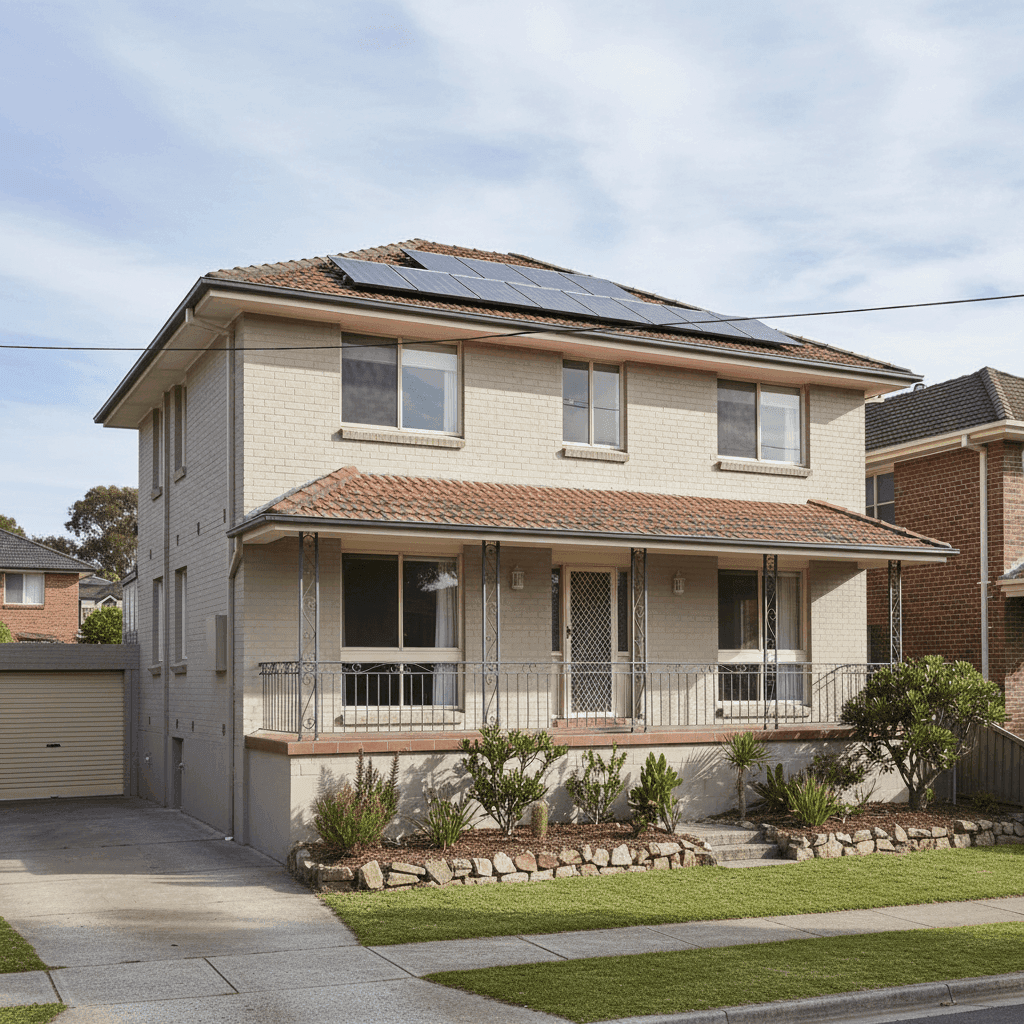
Rockdale is a well-established suburb in Sydney's southern corridor, sitting within the Bayside local government area just 12 kilometres from the CBD. Known for its mix of older brick homes and ongoing urban renewal, it's the kind of suburb where property values — and the cost of protecting them — deserve careful attention. If you own a free standing home here, understanding what drives your insurance premium can save you hundreds of dollars a year.
This article breaks down a recent home and contents insurance quote for a six-bedroom, four-bathroom free standing home in Rockdale, NSW 2216, comparing it against local, state, and national benchmarks to help you understand whether you're getting a fair deal.
---
Is This Quote Fair?
The quote in question comes in at $2,475 per year (or $242/month) for a combined home and contents policy, covering a building sum insured of $1,004,000 and contents valued at $72,000. Both the building and contents excess are set at $5,000.
Our price rating for this quote is Expensive — Above Average. That assessment is based on how it stacks up against other quotes we've seen for comparable properties in the Rockdale area.
To put it in perspective: the suburb average premium sits at $1,877/year, and the median is $1,903/year. This quote lands above both of those figures by a meaningful margin. However, it's worth noting that the suburb's 75th percentile is $2,448/year — meaning this quote is only just above the upper quartile of local pricing. In other words, while it's on the higher end, it's not dramatically out of step with what some Rockdale homeowners are paying.
That said, "above average" is still worth scrutinising. A larger-than-typical home — six bedrooms and four bathrooms across 268 square metres — naturally attracts a higher premium, and a building sum insured of just over $1 million reflects the genuine replacement cost of a substantial double brick property. The above-average fittings quality noted for this home also pushes the replacement cost (and therefore the premium) upward.
---
How Rockdale Compares
Zooming out gives useful context. Here's how the Rockdale suburb average compares to broader benchmarks:
| Benchmark | Average Premium | Median Premium |
|---|---|---|
| Rockdale (NSW 2216) | $1,877/yr | $1,903/yr |
| Bayside LGA (NSW) | $2,675/yr | — |
| NSW State | $3,801/yr | $3,410/yr |
| National | $2,965/yr | $2,716/yr |
What stands out immediately is that Rockdale premiums are notably lower than both the NSW state average and the national average. This is actually good news for local homeowners — Rockdale doesn't carry the same elevated risk profile as many regional or coastal NSW areas that push state averages higher.
It's also interesting that the Bayside LGA average ($2,675/year) sits well above the Rockdale suburb average. This suggests that other suburbs within the Bayside council area carry higher risk profiles, and Rockdale itself is a relatively favourable postcode from an insurer's perspective.
The quote we're analysing at $2,475/year sits below the Bayside LGA average and well below the NSW state average — which provides some reassurance that, despite the "expensive" rating relative to the local suburb, it's not out of line with the broader regional picture, particularly given the size and value of the property.
Explore the full data for your postcode at our Rockdale insurance stats page.
---
Property Features That Affect Your Premium
Several characteristics of this property have a direct bearing on the premium:
Double Brick Construction Double brick is one of the most durable and fire-resistant building materials used in Australian residential construction. Insurers generally view it favourably, as it tends to reduce the severity of damage from fire, wind, and even minor impacts. This is a positive factor that may be helping to keep the premium from being even higher.
Tiled Roof Terracotta or concrete tile roofs are considered a standard, low-risk roofing material in NSW. They perform well in most weather conditions and have a long lifespan, which insurers factor positively into their risk assessments.
Slab Foundation A concrete slab foundation is common for homes of this era and is generally considered stable. It also means there's no underfloor cavity — reducing the risk of certain types of pest damage and moisture ingress that can affect older stumped or suspended-floor homes.
Construction Year: 1985 At roughly 40 years old, this home sits in a mid-age bracket. It predates some modern building codes but is not so old as to raise significant structural concerns. Insurers may factor in the age of plumbing, electrical wiring, and roofing materials when pricing a policy for a home of this vintage.
Solar Panels The presence of solar panels adds a modest amount to the insured value of the property. Panels need to be covered for storm damage, hail, and fire — and some insurers include them automatically under building cover while others treat them as an optional extra. It's worth confirming with your insurer that your solar system is explicitly covered.
Ducted Climate Control Ducted air conditioning systems are a significant fixed asset and are typically covered under building insurance. Their inclusion contributes to the overall replacement cost, which is reflected in the $1,004,000 sum insured.
Above-Average Fittings Above-average fittings — think stone benchtops, quality cabinetry, premium fixtures — increase the cost to rebuild or repair, and insurers price accordingly. This is one of the more significant upward factors on this particular quote.
Slightly Elevated Position The property is elevated by less than one metre. While this is a minimal elevation, it can offer a marginal benefit in flood-prone areas by reducing water ingress risk. In Rockdale's context, this is a minor factor but worth noting.
---
Tips for Homeowners in Rockdale
1. Review Your Sum Insured Annually Building costs in Sydney have risen sharply in recent years. Make sure your $1,004,000 sum insured still reflects the true cost to rebuild — not just the market value of the land. Underinsurance is one of the most common and costly mistakes homeowners make. Use an independent building cost calculator or ask your insurer how they've arrived at the figure.
2. Check Your Solar Panel Coverage Not all policies automatically cover solar panels under building insurance. Given the cost of a quality solar system, confirm in writing with your insurer that your panels are covered for storm damage, hail, fire, and accidental damage.
3. Consider Adjusting Your Excess Both the building and contents excess on this policy are set at $5,000. A higher excess typically reduces your annual premium — but make sure it's an amount you could genuinely afford to pay out of pocket in the event of a claim. If $5,000 feels manageable, this excess level may already be working in your favour on the premium.
4. Shop Around at Renewal Even if you're happy with your current insurer, it pays to compare at renewal time. The insurance market is competitive, and loyalty doesn't always translate to the best price. Use a comparison tool like CoverClub to benchmark your renewal quote against the market before you commit.
---
Compare Your Quote at CoverClub
Whether you're renewing an existing policy or shopping for cover on a new purchase, it's always worth seeing how your quote stacks up. At CoverClub, we analyse real insurance quotes across Australia to give you transparent, data-driven comparisons — no fluff, no hidden agendas. Get started with your address and see how your premium compares to your neighbours in Rockdale and beyond.