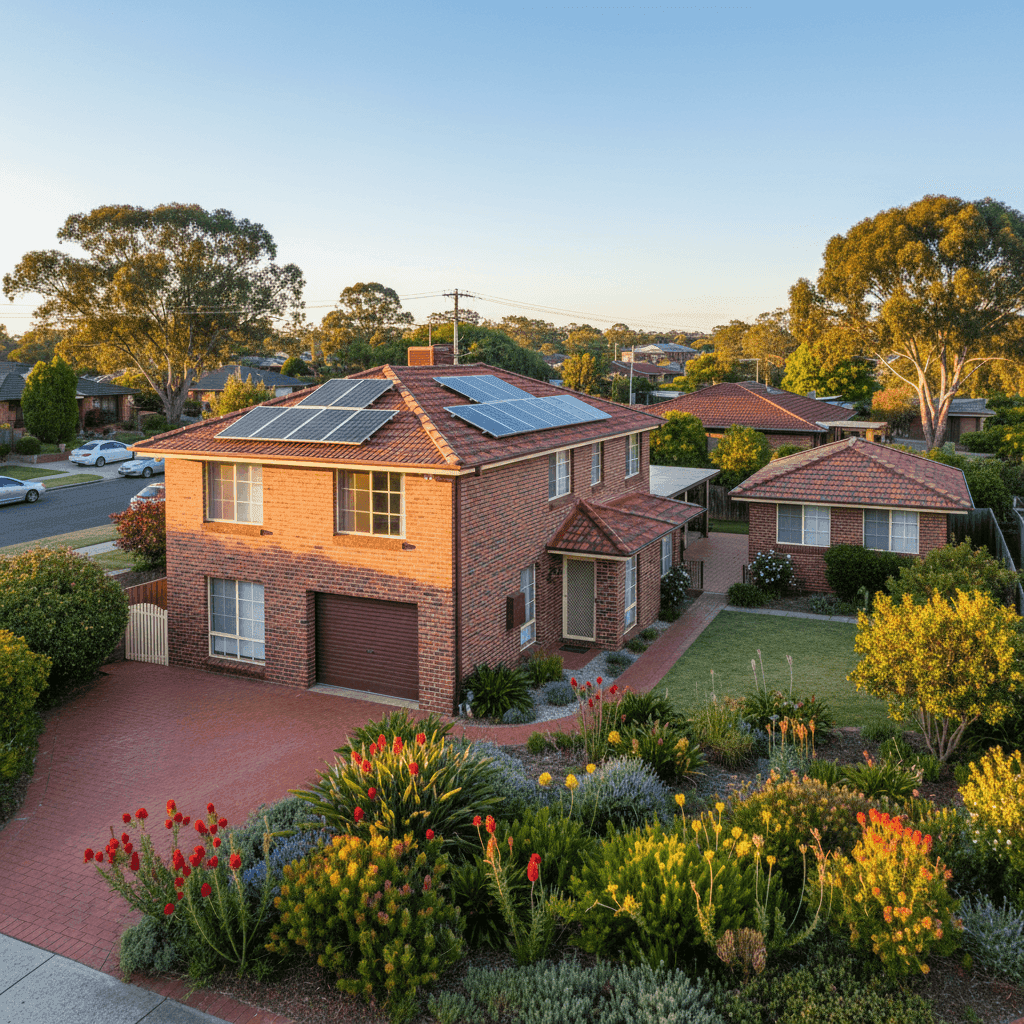
If you own a free standing home in Rockdale, NSW 2216, you're likely no stranger to the challenge of finding competitive home insurance. Rockdale sits within the Bayside local government area in Sydney's south, a well-established suburb with a mix of older character homes and newer builds. With property values continuing to hold strong in this part of Sydney, making sure your home and contents are properly protected — without overpaying — is more important than ever.
This article takes a close look at a real home and contents insurance quote for a 6-bedroom, 4-bathroom free standing home in Rockdale, breaking down whether the premium is reasonable, how it stacks up against local and national benchmarks, and what property features are likely driving the cost.
---
Is This Quote Fair?
The annual premium for this property came in at $2,177 per year (or approximately $202 per month), covering both building (sum insured: $200,000) and contents ($100,000), each with a $1,000 excess.
Our pricing engine has rated this quote as FAIR — Around Average, and the data backs that up. The suburb average for Rockdale sits at $1,974/year, with a median of $1,970/year. This quote lands above the median but comfortably within the 75th percentile of $2,256/year, meaning roughly three-quarters of comparable quotes in the area come in at or below that figure.
In short, this isn't a bargain-basement price, but it's not an outlier either. For a large, older home with premium fittings and additional features like a granny flat and solar panels, a premium in this range is understandable. That said, there's still room to shop around — quotes at the 25th percentile are as low as $1,701/year, suggesting meaningful savings could be available with the right insurer.
---
How Rockdale Compares
To put this quote in proper context, it helps to zoom out and look at the broader picture.
| Benchmark | Average Premium | Median Premium |
|---|---|---|
| Rockdale (NSW 2216) | $1,974/yr | $1,970/yr |
| Bayside LGA (NSW) | $2,954/yr | — |
| New South Wales | $9,528/yr | $3,770/yr |
| National | $5,347/yr | $2,764/yr |
A few things stand out here. The NSW state average of $9,528/year is dramatically higher than what Rockdale homeowners typically pay — but this is largely a statistical effect, skewed by extremely high-value properties and higher-risk regions across the state. The median of $3,770/year is a more useful comparison, and Rockdale's median of $1,970/year sits well below it, reflecting the suburb's relatively low natural disaster risk profile.
Similarly, the national average of $5,347/year is heavily influenced by cyclone-prone regions in Queensland and Western Australia, as well as flood-affected areas. Rockdale doesn't carry those risk factors, which explains why premiums here are considerably more modest.
What is worth noting is that the Bayside LGA average of $2,954/year is noticeably higher than the Rockdale suburb average. This suggests that other suburbs within the Bayside council area may carry higher risk profiles or larger insured values, making Rockdale one of the more affordable pockets within the LGA.
---
Property Features That Affect Your Premium
Several characteristics of this particular property have a direct bearing on what insurers charge. Here's how each one plays into the pricing:
Double brick construction is generally viewed favourably by insurers. It's durable, fire-resistant, and less susceptible to wind damage compared to weatherboard or cladding. This likely has a moderating effect on the premium.
Tiled roof is another positive signal. Terracotta or concrete tiles are considered a lower-risk roofing material than older materials like fibro or corrugated iron, and they tend to perform well in storms and hail events.
Built in 1945 — the age of the home is a factor that can push premiums upward. Older homes may have ageing plumbing, electrical wiring, or structural elements that increase the likelihood of a claim. Insurers often price this risk into the premium, particularly for homes approaching or past the 80-year mark.
420 sqm building size is substantial. Larger homes cost more to rebuild, and while the sum insured here is set at $200,000, homeowners should periodically review whether this figure accurately reflects current construction costs. Underinsurance is a genuine risk, particularly given the rise in building material and labour costs in recent years.
Top-of-the-range fittings will also attract a higher premium. High-end kitchens, bathrooms, and fixtures are more expensive to repair or replace, and insurers factor this into their risk calculations.
Solar panels add replacement value to the property and may slightly increase the premium, though many insurers now include them as standard under building cover.
Granny flat — the presence of a secondary dwelling on the property adds to the overall insured value and complexity of the risk. It's important to confirm with your insurer that the granny flat is explicitly covered under your policy, as some standard policies may not automatically include it.
Ducted climate control is another high-value fixture that contributes to both the building and contents sum insured, and may influence premium calculations accordingly.
---
Tips for Homeowners in Rockdale
1. Review your sum insured regularly With a 420 sqm home featuring top-of-the-range fittings, $200,000 as a building sum insured may not be sufficient to fully rebuild in today's market. Use a building cost calculator or speak with a quantity surveyor to ensure you're not underinsured — this is one of the most common and costly mistakes homeowners make.
2. Confirm granny flat coverage explicitly Not all home insurance policies automatically extend cover to a secondary dwelling on the same title. Contact your insurer to clarify whether your granny flat is included, and if not, whether it can be added as an endorsement or requires a separate policy.
3. Compare quotes before renewal This quote is rated as fair, but the spread between the 25th percentile ($1,701/year) and 75th percentile ($2,256/year) in Rockdale shows there's meaningful variation in the market. Getting a fresh quote at CoverClub at renewal time takes only a few minutes and could save you hundreds of dollars annually.
4. Ask about discounts for security features Older homes like this one can sometimes attract higher premiums due to age-related risk. However, installing or upgrading security systems, smoke alarms, and deadlocks may qualify you for discounts with certain insurers — it's always worth asking.
---
Compare Your Options at CoverClub
Whether you're reviewing an existing policy or shopping for cover for the first time, CoverClub makes it easy to compare home and contents insurance quotes tailored to your property in Rockdale. With suburb-level data and real quote comparisons, you can see exactly where your premium sits in the market — and whether there's a better deal available. Start comparing quotes today and make sure your home is protected at the right price.