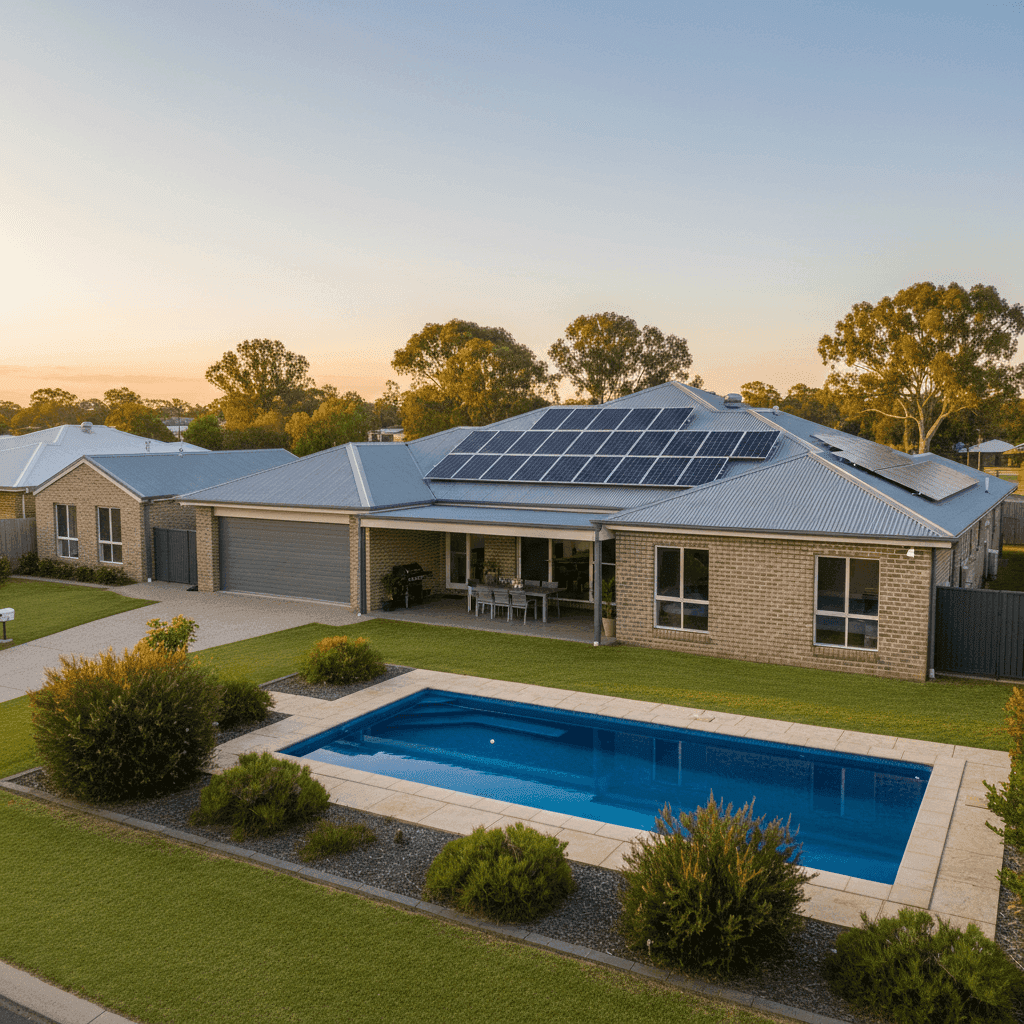
If you own a free standing home in Rockville, QLD 4350, you're probably curious about whether your home insurance premium is competitive — or whether you're quietly paying too much. This article breaks down a real home and contents insurance quote for a four-bedroom brick veneer property in Rockville, comparing it against local, state, and national benchmarks so you can make a more informed decision at renewal time.
---
Is This Quote Fair?
The annual premium on this quote comes in at $1,253 per year (or roughly $121 per month), covering both building and contents for a sum insured of $649,000 on the building and $81,000 on contents. The building excess is $2,000 and the contents excess is $1,000.
Our pricing analysis rates this quote as Fair — Around Average. That's a reasonable outcome, but it doesn't necessarily mean you couldn't do better. "Fair" means the premium sits within a normal range for properties of this type in the area — it's not a standout bargain, but it's also not cause for alarm.
For context, the suburb median premium in Rockville is $1,300 per year, meaning this quote actually comes in slightly below the median — a modest but meaningful saving. The suburb average sits a little higher at $1,588 per year, which is pulled upward by some higher-priced policies in the mix. At $1,253, this quote sits between the 25th percentile ($1,122/yr) and the median, which is a solid position to be in.
---
How Rockville Compares
One of the most striking takeaways from this data is just how favourably Rockville compares to the broader Queensland and national landscape.
| Benchmark | Premium |
|---|---|
| This Quote | $1,253/yr |
| Rockville Suburb Median | $1,300/yr |
| Rockville Suburb Average | $1,588/yr |
| QLD State Average | $4,547/yr |
| QLD State Median | $3,931/yr |
| Toowoomba LGA Average | $2,535/yr |
| National Average | $2,965/yr |
| National Median | $2,716/yr |
The numbers tell a clear story. Queensland's state average of $4,547 per year is extraordinarily high compared to what Rockville homeowners are typically paying — that's largely because QLD premiums are dragged up by cyclone-prone coastal and far-north Queensland regions, where insurers price in significant weather risk. Rockville, sitting inland on the Darling Downs, benefits from being outside cyclone risk zones, which is a major factor keeping local premiums grounded.
Even against the Toowoomba LGA average of $2,535 per year, this quote looks competitive — coming in roughly 50% lower. That gap may reflect differences in property size, construction type, sum insured, and individual insurer pricing models across the LGA.
At a national level, the average Australian home insurance premium sits at $2,965 per year. This Rockville quote is less than half that figure — a significant difference that underscores the relative affordability of insuring well-built, inland Queensland properties.
---
Property Features That Affect Your Premium
Several characteristics of this property play a meaningful role in how insurers price the risk — for better and for worse.
Brick Veneer Walls & Colorbond Roof Brick veneer construction is generally viewed favourably by insurers. It's durable, fire-resistant, and widely used across Australian suburbs. Paired with a steel Colorbond roof — a popular and resilient roofing material — this combination tends to attract more competitive premiums compared to older materials like fibro or timber weatherboard.
Construction Year: 1975 At around 50 years old, this home is ageing but not ancient. Insurers may factor in the age of plumbing, electrical systems, and structural components when pricing risk. Homes built in the mid-70s can carry slightly higher risk profiles than newer builds, though solid maintenance records can offset this.
Slab Foundation & Tiled Flooring A concrete slab foundation is considered stable and low-risk in most inland Queensland conditions. Tiled flooring is durable and less susceptible to water damage than carpet or timber, which is a minor but positive factor in risk assessment.
Swimming Pool A pool adds to the insured value of the property and introduces some liability considerations, both of which can nudge premiums upward. Ensuring your policy explicitly covers pool-related structures and liability is important.
Solar Panels Solar panels are increasingly common on Australian homes, but they do add to the rebuild cost and can be a target for storm or hail damage. Confirming your policy covers solar panels — including inverters — is worth checking at renewal.
Granny Flat The presence of a granny flat adds complexity to your insurance needs. Depending on your policy, a separate dwelling on the same property may or may not be automatically covered under a standard home insurance policy. It's worth clarifying with your insurer whether the granny flat's structure and any contents within it are included in your sum insured.
No Cyclone Risk This is a significant premium-saver. Rockville is not classified as a cyclone risk area, which removes one of the largest cost drivers for Queensland home insurance. Coastal and northern QLD homeowners often pay dramatically more for this reason alone.
---
Tips for Homeowners in Rockville
1. Review your granny flat coverage carefully Standard home insurance policies don't always automatically cover secondary dwellings. Contact your insurer to confirm whether the granny flat is included in your building sum insured, and whether any contents within it are covered. You may need a policy endorsement or a separate policy altogether.
2. Make sure your solar panels are explicitly covered Ask your insurer to confirm that solar panels, mounting hardware, and inverters are included in your building cover. Some policies treat them as standard fixtures; others require you to list them separately or increase your sum insured to account for them.
3. Check your building sum insured reflects current rebuild costs With construction costs having risen significantly across Australia in recent years, a sum insured set several years ago may no longer be sufficient to fully rebuild your home. The 205 sqm floor area, brick veneer construction, and granny flat all need to be factored into your estimate. Tools like the Cordell Sum Sure calculator can help you arrive at a more accurate figure.
4. Compare quotes before renewing Even a "fair" premium can often be improved upon. Insurers frequently offer better rates to new customers than to existing ones, so shopping around at renewal — rather than simply accepting the automatic renewal price — can yield meaningful savings. The 25th percentile for Rockville sits at $1,122 per year, suggesting cheaper options do exist in this market.
---
Ready to Compare?
Whether you're reviewing your current policy or insuring a property for the first time, comparing quotes is one of the simplest ways to make sure you're not overpaying. CoverClub makes it easy to compare home and contents insurance quotes for your specific property in Rockville and across Australia — so you can find cover that fits your needs and your budget.