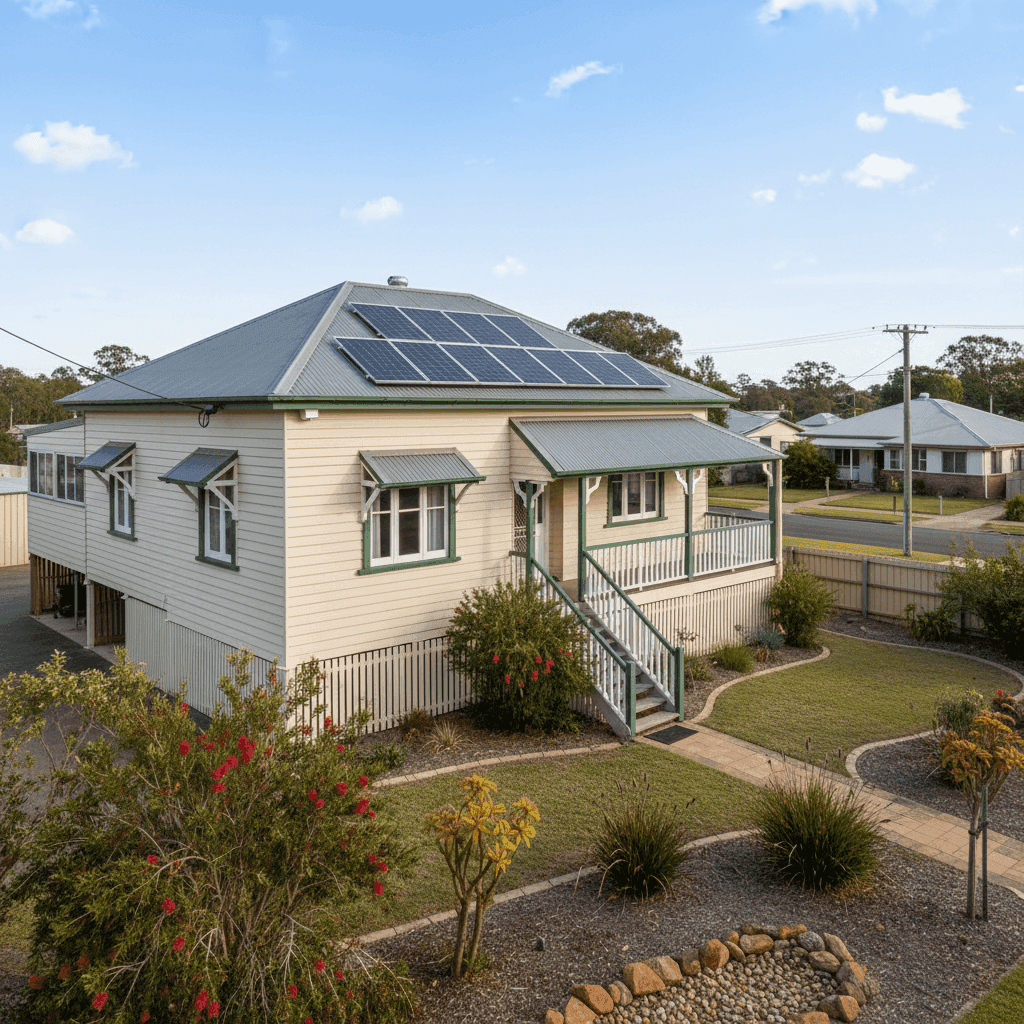
If you own a free standing home in Roma, QLD 4455, you've probably noticed that insurance premiums in regional Queensland can vary wildly. This article breaks down a real building insurance quote for a 3-bedroom, 2-bathroom home in Roma — and puts it in context against local, state, and national benchmarks so you can judge whether you're getting a fair deal.
---
Is This Quote Fair?
The quote in question comes in at $1,342 per year (or about $122 per month) for building-only cover on a free standing home with a sum insured of $747,000 and a building excess of $5,000.
Our price rating for this quote is CHEAP — below average — and the data backs that up convincingly.
Based on a sample of 145 quotes for comparable properties in the Roma area, the suburb average sits at $3,224 per year, with a median of $2,548. That means this quote is coming in at roughly 42% of the suburb median — well below what most Roma homeowners are paying. Even at the 25th percentile (meaning only 25% of quotes are cheaper), the figure is $1,710 per year — still $368 more than this quote.
In short: if you received this quote, you'd be paying significantly less than the vast majority of your neighbours. That's a strong result.
---
How Roma Compares to the Rest of Queensland and Australia
Roma's insurance costs are worth examining in a broader context, because they tell an interesting story about regional Queensland pricing.
| Benchmark | Average Premium | Median Premium |
|---|---|---|
| Roma (suburb) | $3,224/yr | $2,548/yr |
| Queensland (state) | $4,547/yr | $3,931/yr |
| National | $2,965/yr | $2,716/yr |
| Maranoa (LGA) | $6,236/yr | — |
A few things stand out here. First, Queensland's average home insurance premium of $4,547 per year is well above the national average of $2,965 — a reflection of the state's elevated exposure to natural hazards including flooding, hailstorms, and extreme heat events.
Second, and perhaps most striking, is the Maranoa LGA average of $6,236 per year — nearly double the Roma suburb average. This suggests significant variation within the local government area, with some properties in the broader Maranoa region attracting much higher premiums, likely due to flood zone classifications or other localised risk factors.
Roma itself sits below the state average, which is a relative positive for homeowners in the township. You can explore Roma suburb insurance statistics in detail here.
---
Property Features That Affect Your Premium
Every property is different, and insurers weigh up a range of characteristics when calculating your premium. Here's how the features of this particular home are likely influencing its price:
Construction Era and Materials
Built in 1910, this is a heritage-era home — over 115 years old. Older homes can attract higher premiums due to the cost of sourcing period-appropriate materials and the likelihood of ageing infrastructure (plumbing, wiring, structural elements). However, this appears to be offset by other factors in this quote.
The weatherboard timber exterior walls are a common construction type in regional Queensland and are generally insurable at standard rates, though they can carry a slightly higher fire risk than brick veneer. The steel/Colorbond roof is a positive — it's durable, widely used across rural Queensland, and well-regarded by insurers for its resistance to wind and water ingress.
Foundation: Stumps
The home sits on stumps, which is typical for older Queensland homes and allows for airflow beneath the structure. While this style of foundation is well-suited to the local climate, it can be a consideration in flood-prone areas. In Roma's case, flood risk is a real factor for some properties — though not universally applied.
Flooring
Timber and laminate flooring is standard for homes of this era and construction type. It's unlikely to be a significant premium driver on its own.
Solar Panels
The property has solar panels, which adds some replacement value to the building sum insured. Most building policies cover rooftop solar as part of the structure, so it's important to ensure the $747,000 sum insured accounts for their replacement cost.
No Pool, No Ducted Climate Control
The absence of a pool removes a common liability and maintenance risk factor. No ducted climate control system means fewer mechanical components to insure within the building.
Fittings Quality: Standard
Standard fittings mean the rebuild cost is more predictable and doesn't attract the premium loading that high-end or custom fittings might.
---
Tips for Homeowners in Roma
Whether you're reviewing your current policy or shopping around for the first time, here are some practical steps to make sure you're getting the best outcome:
- Check your sum insured annually. Construction costs have risen sharply across regional Queensland in recent years. A sum insured of $747,000 for a 139 sqm home is worth reviewing against current builder rates in the Roma area — underinsurance is one of the most common and costly mistakes homeowners make.
- Understand your flood risk. Roma has a documented history of flooding, most notably the 2010–2011 events. Even if your property isn't in a high-risk zone, it's worth confirming with your insurer whether flood cover is included or excluded in your policy — and what definition of "flood" they use.
- Consider your excess carefully. This quote carries a $5,000 building excess, which is on the higher end. A higher excess typically lowers your premium, but it means you'll need to cover more out of pocket in the event of a claim. Make sure this aligns with your financial buffer.
- Compare quotes before renewing. The spread between the cheapest and most expensive quotes in Roma is enormous — from well under $1,500 to well above $3,500. Loyalty doesn't always pay in insurance. Shopping around at renewal time is one of the simplest ways to save hundreds of dollars per year.
---
Compare Home Insurance Quotes for Your Roma Property
Whether this quote is yours or you're simply benchmarking what's available in the market, the data is clear: there's significant variation in what Roma homeowners pay for building insurance. The best way to know if you're getting a competitive rate is to compare.
Get a home insurance quote at CoverClub and see how your premium stacks up against real data from your suburb, your state, and across Australia — all in one place.