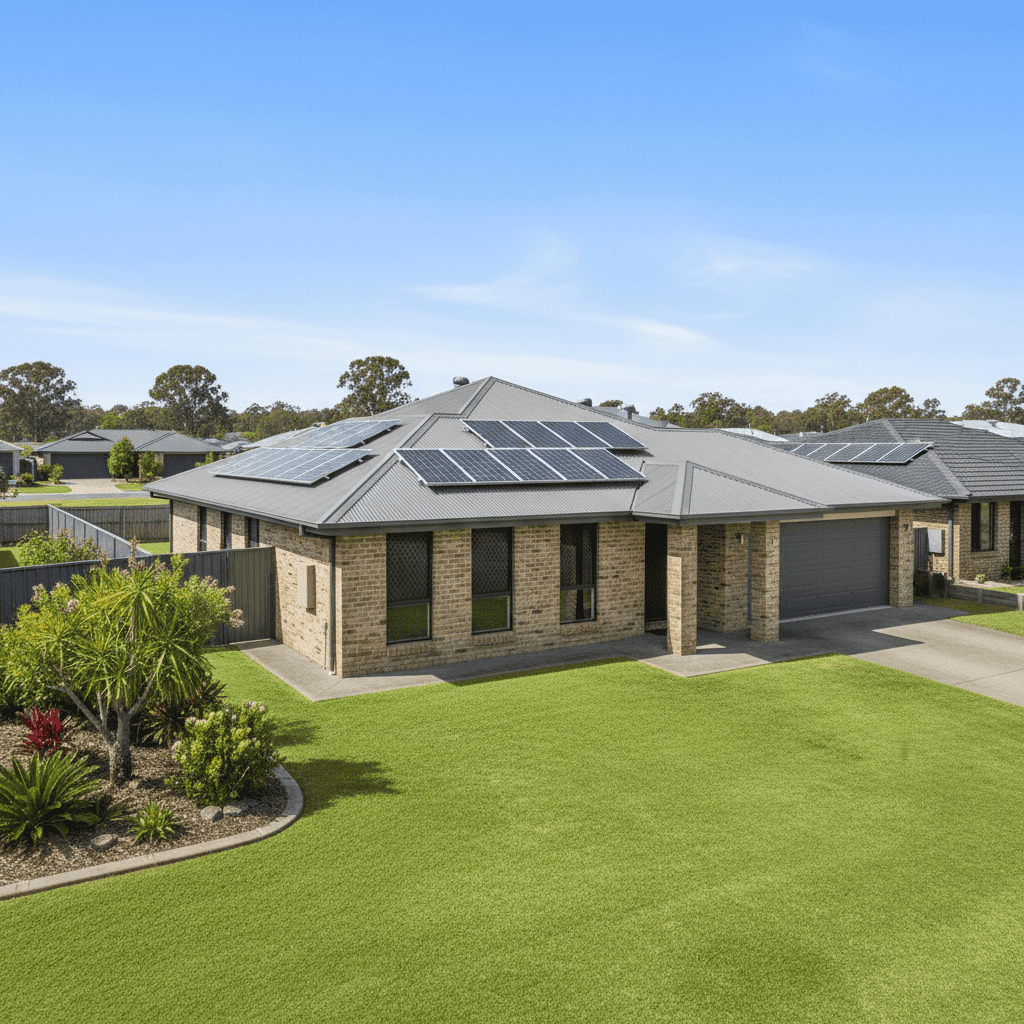
If you own a free standing home in Rosenthal Heights, QLD 4370, you're probably wondering whether the premium sitting in your inbox is reasonable — or whether you're quietly overpaying. This article breaks down a real home and contents insurance quote for a four-bedroom, double brick property in the suburb, and puts it in context using suburb, state, and national benchmarks.
---
Is This Quote Fair?
The quote in question comes in at $2,566 per year (or $245/month) for combined home and contents cover, with a building sum insured of $654,000 and contents valued at $91,000. The building excess is $2,000 and the contents excess is $1,000.
Our pricing analysis rates this quote as FAIR — Around Average.
That's actually a reasonable outcome for a property of this size and age. A fair rating means the premium is competitive without being a standout bargain, sitting comfortably within the normal range for this type of property in the area. It's not the cheapest quote you'll ever see, but it's not inflated either — and for a 214 sqm home built in 1987 with ducted climate control and solar panels, that's worth noting.
---
How Rosenthal Heights Compares
To understand whether this quote stacks up, it helps to look at what others in the same suburb, state, and across Australia are paying.
| Benchmark | Average Premium | Median Premium |
|---|---|---|
| Rosenthal Heights (4370) | $2,685/yr | $2,709/yr |
| Southern Downs LGA | $2,861/yr | — |
| Queensland | $9,129/yr | $3,903/yr |
| National | $5,347/yr | $2,764/yr |
At $2,566/yr, this quote comes in below the suburb average of $2,685 and below the suburb median of $2,709 — a positive sign. It also sits below the Southern Downs LGA average of $2,861, which covers a broader regional area including properties that may carry higher risk profiles.
The suburb's 25th percentile is $2,195 and the 75th percentile is $2,961, meaning this quote lands solidly in the middle band. Roughly a quarter of comparable quotes in the area are cheaper, and a quarter are more expensive. That's exactly what "around average" looks like in practice.
What's particularly striking is the Queensland state average of $9,129/yr — a figure heavily skewed by high-risk coastal and cyclone-prone areas like Cairns, Townsville, and parts of Far North Queensland. The state median of $3,903 is a more grounded comparison, and even that is well above what this Rosenthal Heights property is attracting. Inland Southern Queensland, including the Darling Downs region, benefits from significantly lower risk exposure than coastal QLD.
Nationally, the average sits at $5,347 and the median at $2,764. This quote comes in just under the national median — a solid result for a property of this specification.
Explore the full data for your area at the Rosenthal Heights insurance stats page, or browse Queensland-wide benchmarks and national comparisons.
---
Property Features That Affect Your Premium
Several characteristics of this property directly influence what insurers are willing to charge. Here's how the key features play out:
Double Brick Construction
Double brick is generally viewed favourably by insurers. It offers strong structural integrity, good fire resistance, and solid protection against the elements. Compared to timber-framed or clad homes, double brick can attract lower premiums because the rebuild risk is more predictable and the material is more resilient.
Steel/Colorbond Roof
Colorbond roofing is a popular choice across regional Queensland, and for good reason. It's durable, low-maintenance, and performs well in heat and moderate weather events. Insurers tend to view it positively — particularly when compared to older terracotta or fibrous cement alternatives that can deteriorate or become costly to replace.
Slab Foundation
A concrete slab foundation is one of the more stable options available, reducing the risk of subsidence or movement-related claims. For a home built in 1987, a slab foundation is a reassuring structural feature.
Solar Panels
The presence of solar panels adds a layer of complexity to a home insurance policy. Panels need to be covered for damage from storms, hail, and fire, and the inverter and associated wiring should also be accounted for. It's worth confirming with your insurer that your solar system is explicitly included in your building sum insured.
Ducted Climate Control
Ducted air conditioning is a significant fixed asset and a common source of claims — both for mechanical breakdown (if covered) and for storm or impact damage. Its inclusion as a feature of the home is factored into the building sum insured, which is appropriate here.
No Cyclone Risk
Rosenthal Heights is not classified as a cyclone risk area, which is a meaningful premium advantage in Queensland. Cyclone loading can add hundreds — sometimes thousands — of dollars to annual premiums in coastal zones. Inland Darling Downs properties like this one avoid that surcharge entirely.
---
Tips for Homeowners in Rosenthal Heights
1. Review Your Building Sum Insured Annually
At $654,000, the building sum insured needs to keep pace with rising construction costs. Building costs across regional Queensland have increased substantially in recent years, and being underinsured at claim time can leave you seriously out of pocket. Use a building cost calculator or speak to a local builder to sense-check your figure each year.
2. Confirm Solar Panel Coverage
Ask your insurer directly: are your solar panels, inverter, and associated wiring covered under the building policy? Some policies include them automatically; others require a specific endorsement. Don't assume — get it in writing.
3. Consider Your Excess Trade-Off
This policy carries a $2,000 building excess and a $1,000 contents excess. Higher excesses typically reduce your annual premium. If you've chosen these levels to keep the premium down, that's a valid strategy — just make sure you have that amount readily accessible if you ever need to make a claim.
4. Compare at Renewal Time
Even a "fair" quote can be beaten. Insurance markets shift, and the insurer who offered the best deal last year may not be the most competitive this year. Running a fresh comparison at renewal takes only a few minutes and could save you hundreds of dollars.
---
Ready to Compare?
Whether you're reviewing an existing policy or shopping for the first time, CoverClub makes it easy to see what's available for your property. Get a home insurance quote at CoverClub and find out whether you can do better than average.