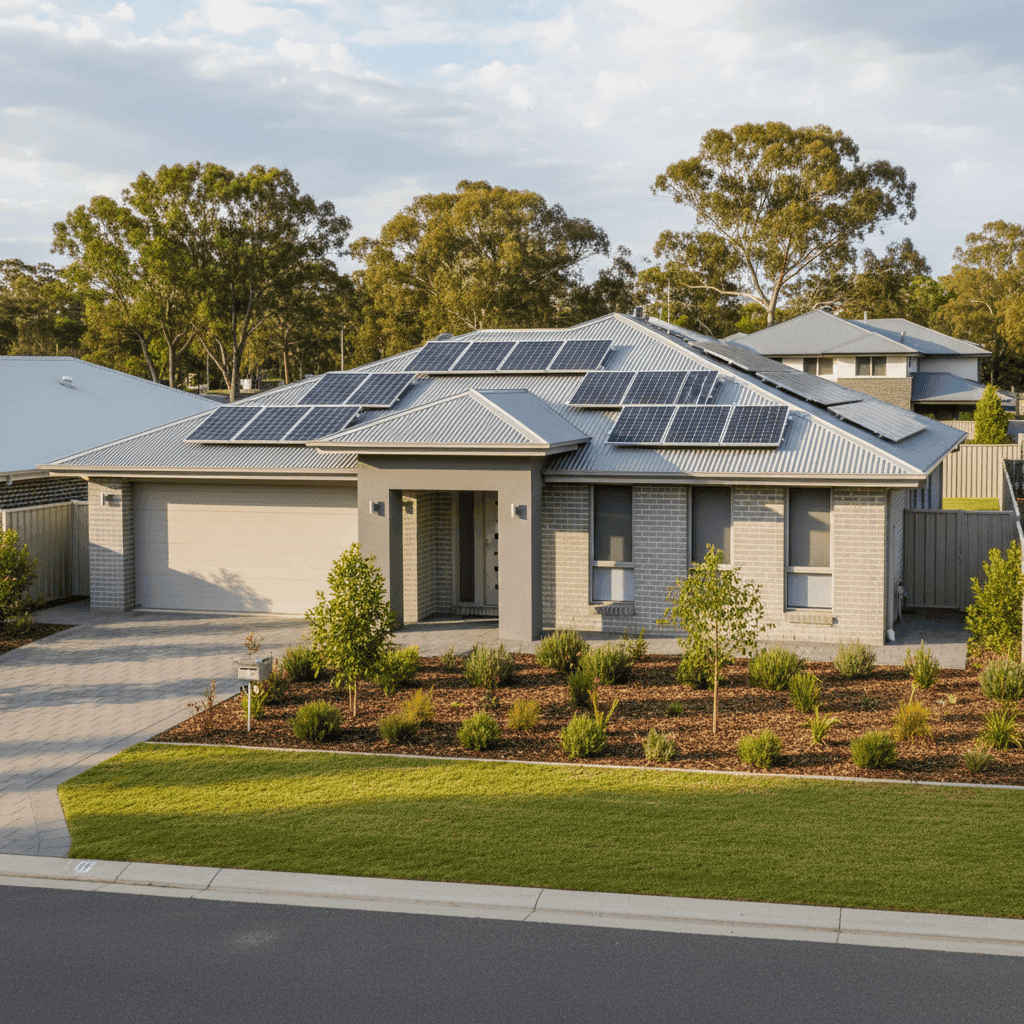
If you own a free standing home in Rossglen, NSW 2439, you're likely no stranger to the balancing act of finding solid home insurance cover without paying more than you need to. Nestled in the Port Macquarie-Hastings region on the NSW Mid North Coast, Rossglen sits in a part of the state where insurance premiums can vary significantly depending on your property's features and proximity to natural hazard zones. This article breaks down a real building-only insurance quote for a 3-bedroom, 2-bathroom brick veneer home in the area — and helps you understand whether the price stacks up.
---
Is This Quote Fair?
The quote in question comes in at $4,253 per year (or $424/month) for building-only cover, with a building excess of $2,000 and a sum insured of $580,000.
Our price rating for this quote is FAIR — Around Average. That means the premium isn't a standout bargain, but it's also not overpriced when you consider the full picture. It sits above both the NSW state average and the national average, but — importantly — it comes in meaningfully below the local LGA average for Port Macquarie-Hastings, which is $5,055 per year.
In practical terms, a "Fair" rating means there's likely room to shop around and potentially find a better deal, but the quote isn't unreasonable given the property's characteristics and location. Homeowners in this region should treat this as a reasonable baseline rather than a ceiling.
---
How Rossglen Compares
Understanding where your premium sits relative to broader benchmarks is one of the most useful things you can do as a homeowner. Here's how this quote measures up:
| Benchmark | Annual Premium |
|---|---|
| This Quote | $4,253 |
| LGA Average (Port Macquarie-Hastings) | $5,055 |
| NSW State Average | $3,801 |
| NSW State Median | $3,410 |
| National Average | $2,965 |
| National Median | $2,716 |
A few things stand out here. First, the quote is $802 above the NSW state average and roughly $1,288 above the national average — a notable gap that reflects the elevated risk profile of properties in coastal and semi-rural NSW. Second, and perhaps more telling, the quote is $802 below the LGA average for Port Macquarie-Hastings, suggesting this particular property is being assessed more favourably than many others in the region.
You can explore more detailed premium data for this postcode at the Rossglen suburb stats page, compare it against NSW-wide insurance trends, or take a broader view at national home insurance statistics.
The absence of suburb-level comparison data for Rossglen itself is worth noting — it means there aren't enough local data points to draw a hyper-local benchmark, which makes state and LGA comparisons all the more important for context.
---
Property Features That Affect Your Premium
Insurance premiums aren't pulled from thin air — they're calculated based on dozens of property-specific factors. Here's how the features of this particular home likely influence the quote:
Brick Veneer Walls Brick veneer is one of the more common external wall materials in Australian suburban homes, and insurers generally view it favourably. It offers solid fire resistance and structural durability compared to lightweight cladding options, which can help moderate premiums.
Steel / Colorbond Roof A Colorbond steel roof is a strong asset from an insurance perspective. It's highly resistant to ember attack (a key concern in bushfire-prone regions), handles heavy rainfall well, and has a long serviceable life. This roof type is typically viewed positively by underwriters.
Slab Foundation A concrete slab foundation is considered low-risk by most insurers. Unlike raised or suspended floors, slabs offer minimal exposure to subsidence or pest ingress from beneath the structure, which keeps the risk profile clean.
Solar Panels The presence of solar panels adds modest value to the insured structure and can slightly increase the sum insured required to achieve adequate cover. It's worth confirming with your insurer that rooftop solar is explicitly included in your building policy — not all standard policies cover panels as a default.
Ducted Climate Control Ducted air conditioning is a fixed building asset and should be covered under a building policy. It's a meaningful installation cost if damaged or destroyed, so its inclusion in the sum insured is important.
Slightly Elevated Foundation This home is elevated by less than 1 metre — a relatively minor elevation that can offer some protection against localised surface flooding, though it's unlikely to dramatically shift the premium in either direction.
Construction Year: 2005 At around 20 years old, this home is relatively modern by insurance standards. Newer builds generally benefit from more recent construction codes and materials, which can translate to a more competitive premium than older homes of equivalent size.
139 sqm Building Size At 139 square metres, this is a modest but practical family home. The sum insured of $580,000 works out to approximately $4,173 per square metre — a figure worth reviewing periodically to ensure it reflects current rebuild costs in the area.
---
Tips for Homeowners in Rossglen
1. Review your sum insured annually Building costs in regional NSW have risen significantly in recent years. The $580,000 sum insured on this property should be reviewed at least once a year — ideally using a professional rebuild cost estimator — to make sure you're not underinsured. Being even 10–15% underinsured can have a major financial impact at claim time.
2. Confirm solar panels are covered It sounds simple, but many homeowners assume their rooftop solar system is automatically included in their building policy. Ask your insurer explicitly whether the panels, inverter, and associated wiring are covered for events like storm damage, hail, and fire. If not, you may need to add them as a specified item.
3. Shop around — even if your current quote seems reasonable A "Fair" rating means you're in the ballpark, but premiums for the same property can vary by hundreds of dollars between insurers. Use a comparison platform like CoverClub to see multiple quotes side by side without having to fill out the same form repeatedly.
4. Consider your excess strategically This quote carries a $2,000 building excess. Opting for a higher voluntary excess is one of the most straightforward ways to reduce your annual premium — particularly if your financial position means you could comfortably cover a larger out-of-pocket amount in the event of a claim. Conversely, if cash flow is a concern, a lower excess with a slightly higher premium may be worth the trade-off.
---
Ready to Compare?
Whether this quote is the right fit or you're just starting your search, it pays to see what else is out there. At CoverClub, you can compare home insurance quotes from a range of Australian insurers in minutes — all in one place, with no obligation. Get a quote today and make sure your Rossglen home is protected at a price that works for you.