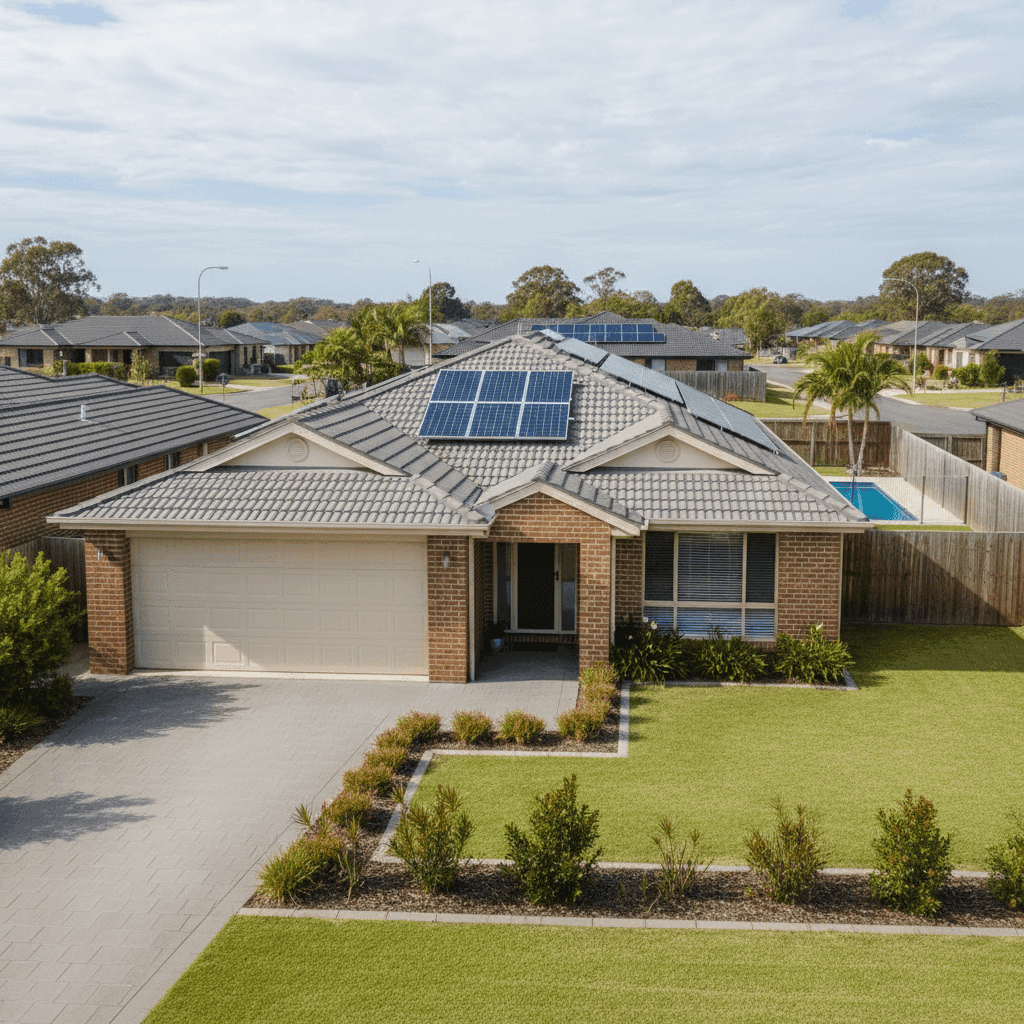
Rothwell is a well-established residential suburb on the northern shores of Moreton Bay, sitting within the rapidly growing Moreton Bay Region of South East Queensland. Known for its family-friendly streets, proximity to the waterfront, and mix of older and newer housing stock, it's a suburb where home insurance is very much a practical necessity. This article takes a close look at a real home and contents insurance quote for a four-bedroom, free-standing home in Rothwell (postcode 4022) — examining whether the price is competitive, how it stacks up against local and national benchmarks, and what homeowners in the area can do to keep their premiums in check.
---
Is This Quote Fair?
The quote in question comes in at $3,076 per year (or $306 per month) for a combined home and contents policy. The building is insured for $1,000,000, with contents covered at $20,000, and both building and contents excesses set at $1,000.
Based on our pricing data, this quote is rated Expensive — above average for the Rothwell area. The suburb average sits at around $1,812 per year, and the median is $2,018 per year. At $3,076, this quote is roughly 70% above the suburb average and more than 50% above the median — a meaningful gap that's worth unpacking.
That said, context matters. The $1,000,000 building sum insured is on the higher end and will naturally push the premium up compared to policies with more modest coverage limits. If the replacement cost of the building were assessed at, say, $600,000–$700,000, the premium would likely look quite different. It's also worth noting that the 75th percentile for Rothwell premiums sits at $2,708 per year — meaning this quote still exceeds what three-quarters of comparable properties in the suburb are paying.
So while the quote isn't wildly out of step with the most expensive tier of local policies, homeowners should absolutely explore alternatives before committing.
---
How Rothwell Compares
To put this quote in proper perspective, here's how Rothwell stacks up against broader benchmarks:
| Benchmark | Average Premium | Median Premium |
|---|---|---|
| Rothwell (postcode 4022) | $1,812/yr | $2,018/yr |
| Moreton Bay LGA | $3,435/yr | — |
| Queensland | $9,129/yr | $3,903/yr |
| National | $5,347/yr | $2,764/yr |
A few things stand out here. First, Rothwell's suburb-level averages are notably lower than both the Queensland state average and the national average — which reflects the suburb's relatively benign risk profile. Rothwell is not classified as a cyclone risk area, which is a significant factor in keeping premiums lower than many other Queensland postcodes, particularly those in North Queensland where cyclone exposure can send premiums soaring.
Second, the Moreton Bay LGA average of $3,435 per year is actually higher than this quote — suggesting that while this policy is expensive for Rothwell specifically, it's not out of place for the broader local government area.
You can explore detailed pricing data for Rothwell and surrounds at the Rothwell suburb stats page, or compare against all Australian postcodes.
---
Property Features That Affect Your Premium
Several characteristics of this property will be influencing the quoted premium — both positively and negatively.
Features That May Increase the Premium
- Swimming pool: Pools add liability exposure and increase the overall insured value of the property. Most insurers factor pool coverage into their risk calculations, which can nudge premiums upward.
- $1,000,000 building sum insured: This is a high coverage amount for a 214 sqm home built in 1999. While it's important to be adequately insured, over-insuring a property can result in unnecessarily high premiums. It may be worth getting a professional building replacement cost assessment.
- Timber/laminate flooring: While not a major risk factor on its own, timber and laminate floors can be more susceptible to water damage than tiles, which some insurers price accordingly.
- Ducted climate control: Ducted systems are expensive to repair or replace, and their presence increases the overall value of the home's fixtures and fittings — which affects the building sum insured.
Features That May Help Keep Premiums Down
- Brick veneer construction: Brick veneer is generally viewed favourably by insurers as it offers solid fire resistance and structural durability compared to lightweight cladding materials.
- Tiled roof: Tiles are a durable, low-maintenance roofing material that insurers typically regard as lower risk than corrugated iron or older materials like fibrous cement.
- Concrete slab foundation: Slab foundations are stable and well-suited to South East Queensland's soil conditions, reducing the risk of subsidence-related claims.
- Solar panels: While solar panels add some replacement value, they can also signal a well-maintained, modern property — and some insurers offer discounts for energy-efficient features.
- No cyclone risk: Being outside a designated cyclone risk zone is a meaningful premium advantage in Queensland, where cyclone loading can dramatically increase costs in northern postcodes.
- 1999 construction: A home built in 1999 benefits from modern building codes while still being established enough to have a known track record — generally a neutral-to-positive factor for insurers.
---
Tips for Homeowners in Rothwell
If you're a homeowner in Rothwell looking to make sure you're getting the best value from your home insurance, here are four practical steps worth taking:
1. Review Your Building Sum Insured
The single biggest lever on your premium is your building sum insured. A $1,000,000 limit for a 214 sqm home built in 1999 may well exceed the actual cost of rebuilding the property. Consider commissioning a professional quantity surveyor's report to determine an accurate replacement value — this can prevent both over-insurance (paying too much) and under-insurance (being caught short at claim time).
2. Compare Multiple Quotes
With a suburb average of $1,812 and a 25th percentile of just $788 per year, there is clearly a wide range of pricing available in Rothwell. Don't settle for the first quote you receive. Compare home insurance quotes at CoverClub to see what multiple insurers would charge for your specific property.
3. Consider a Higher Excess
Both the building and contents excesses on this policy are set at $1,000. Opting for a higher voluntary excess — say, $2,000 or $2,500 — can reduce your annual premium noticeably. This strategy works well if you have a solid emergency fund and are primarily insuring against major, catastrophic losses rather than minor claims.
4. Bundle and Consolidate
If your home and contents are insured separately, or if your car insurance is with a different provider, consolidating policies under one insurer can often unlock multi-policy discounts. It's worth asking any prospective insurer what bundling options are available.
---
Find a Better Deal on CoverClub
Whether you're renewing your existing policy or shopping around for the first time, it pays to compare. CoverClub makes it easy to see how your home insurance quote stacks up against real data from your suburb, your state, and across Australia. Enter your address and get started today — it only takes a few minutes, and the savings could be significant.