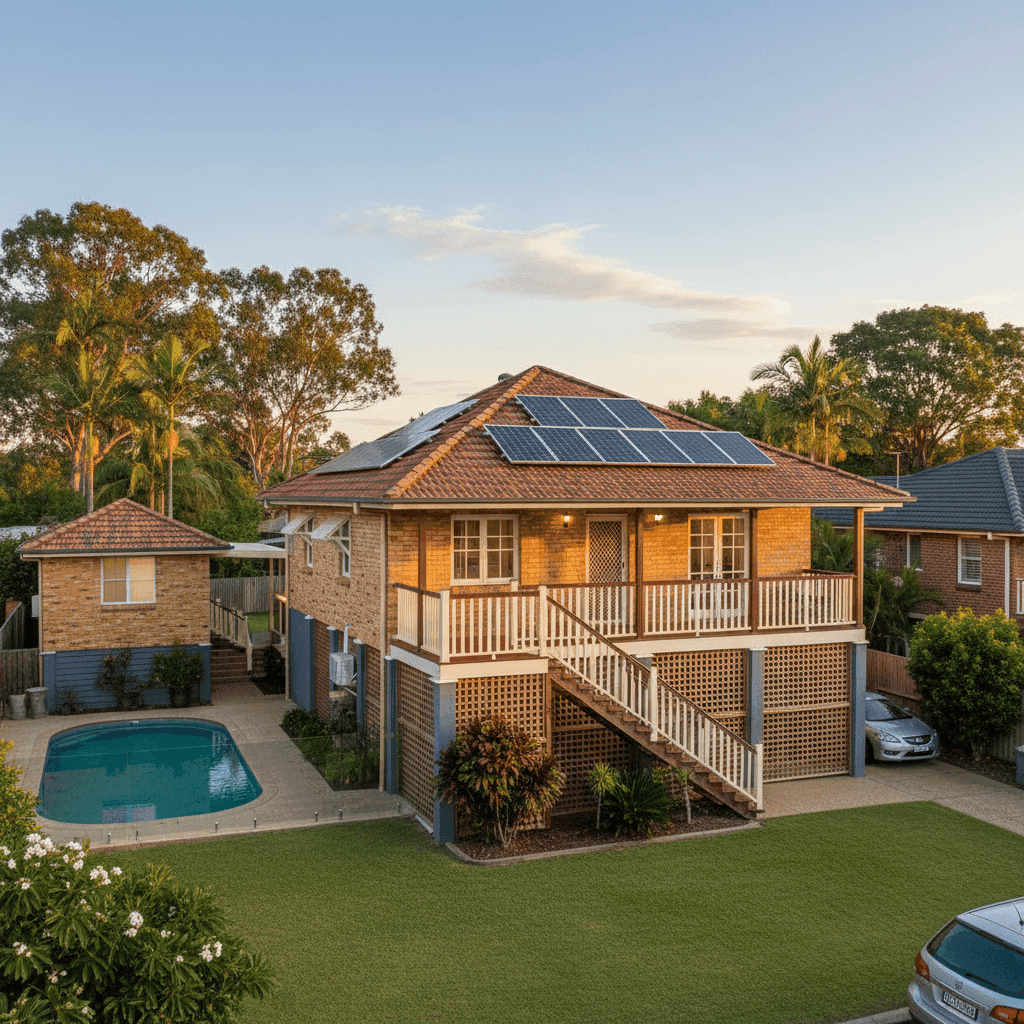
If you own a free standing home in Rothwell, QLD 4022, you've probably wondered whether your home insurance premium is reasonable — or whether you're quietly paying more than you need to. This article breaks down a real home and contents insurance quote for a five-bedroom property in Rothwell, benchmarks it against local, state, and national data, and offers practical tips to help you make the most informed decision possible.
---
Is This Quote Fair?
The annual premium for this quote comes in at $2,539 per year (or $243 per month), covering a building sum insured of $687,000 and contents valued at $89,000, each with a $1,000 excess.
Our price rating for this quote is FAIR — Around Average.
That assessment holds up well under scrutiny. The suburb average premium in Rothwell sits at $1,812/yr, and the median is $2,018/yr — meaning this quote is modestly above the midpoint for the area. However, it's important to consider what's being insured here: a five-bedroom, three-bathroom home with a pool, solar panels, ducted climate control, and a granny flat. These features meaningfully increase both the rebuild cost and the insurer's risk exposure, which naturally pushes the premium higher than a more modest property in the same street.
Crucially, this quote still falls well below the suburb's 75th percentile of $2,708/yr, meaning roughly three-quarters of comparable Rothwell quotes are either at or above this price point. That's a reassuring sign that you're not being overcharged.
---
How Rothwell Compares
To put this premium in proper context, it helps to zoom out and look at the broader picture. You can explore the full data on the Rothwell suburb stats page, the Queensland state overview, and the national insurance stats page.
| Benchmark | Average Premium | Median Premium |
|---|---|---|
| Rothwell (QLD 4022) | $1,812/yr | $2,018/yr |
| Moreton Bay LGA | $3,435/yr | — |
| Queensland | $9,129/yr | $3,903/yr |
| National | $5,347/yr | $2,764/yr |
A few things stand out here. First, Rothwell premiums are dramatically lower than the Queensland state average of $9,129/yr — a figure heavily skewed by high-risk cyclone and flood zones across regional and far-north Queensland. The state median of $3,903/yr is a more useful comparison, and this quote at $2,539 sits comfortably below it.
Compared to the national median of $2,764/yr, this quote is also slightly under — a positive outcome for a well-appointed property of this size. The Moreton Bay LGA average of $3,435/yr further reinforces that this premium is competitive within the broader region.
It's worth noting that the Rothwell suburb sample size is 23 quotes, which is a reasonable dataset but not enormous. Averages can shift as more data comes in, so it's always wise to compare multiple quotes rather than relying on a single benchmark.
---
Property Features That Affect Your Premium
Several characteristics of this property have a direct bearing on what insurers charge — and understanding them helps explain why this premium lands where it does.
Double brick construction is generally viewed favourably by insurers. It's durable, fire-resistant, and less susceptible to wind damage than timber-framed homes. This likely contributes to a more competitive premium compared to lighter construction types.
Tiled roof is another positive signal. Tiles are long-lasting and perform well in Queensland's mix of heat, storms, and heavy rain. They're considered a lower-risk roofing material by most insurers.
Elevated by at least 1 metre is a significant factor. Elevation helps reduce flood risk — one of the most costly perils insurers price into Queensland premiums. This feature alone can meaningfully lower your premium compared to a ground-level home in the same suburb.
Slab foundation with timber/laminate flooring is a common combination in Queensland homes built around 2000. Insurers generally price this as standard risk, though timber flooring can be more costly to repair or replace after a water event than tiles.
The swimming pool, solar panels, and ducted climate control all add to the insured value of the property and increase the complexity of a potential claim. Pools carry liability considerations, solar systems can be expensive to replace, and ducted HVAC systems are a significant asset. These features are likely contributing to a higher sum insured — and therefore a higher premium — compared to a more basic property.
The granny flat is another factor worth flagging. Additional dwellings on the property increase the insurer's exposure and should be explicitly covered in your policy. Always confirm with your insurer that the granny flat is included in your building sum insured.
---
Tips for Homeowners in Rothwell
1. Review your building sum insured carefully. At $687,000, the building sum insured needs to reflect the true cost of rebuilding the entire property — including the granny flat, pool surrounds, and any other structures. Underinsurance is a common problem in Australia, and it can leave you significantly out of pocket after a major claim. Use an independent building calculator or ask your insurer how they've arrived at that figure.
2. Check that your granny flat and pool are explicitly covered. Not all standard home insurance policies automatically extend to secondary dwellings or pool infrastructure. Read your Product Disclosure Statement (PDS) carefully and confirm what's included. If in doubt, ask your insurer directly.
3. Consider a higher excess to reduce your premium. With both building and contents excesses set at $1,000, there may be room to increase these if you're comfortable self-insuring smaller claims. In many cases, raising your excess to $1,500 or $2,000 can noticeably reduce your annual premium without significantly changing your real-world coverage for major events.
4. Compare quotes annually — don't auto-renew. Insurance loyalty rarely pays off in Australia. Insurers often offer better rates to new customers than to existing ones. At renewal time, use a comparison tool like CoverClub to benchmark your renewal quote against the market before accepting it.
---
Find a Better Deal with CoverClub
Whether you're reviewing an existing policy or shopping for the first time, comparing quotes is the single most effective way to ensure you're getting fair value. At CoverClub, you can enter your property details and instantly see how your premium stacks up against real quotes from across Rothwell and beyond. It takes minutes and could save you hundreds.