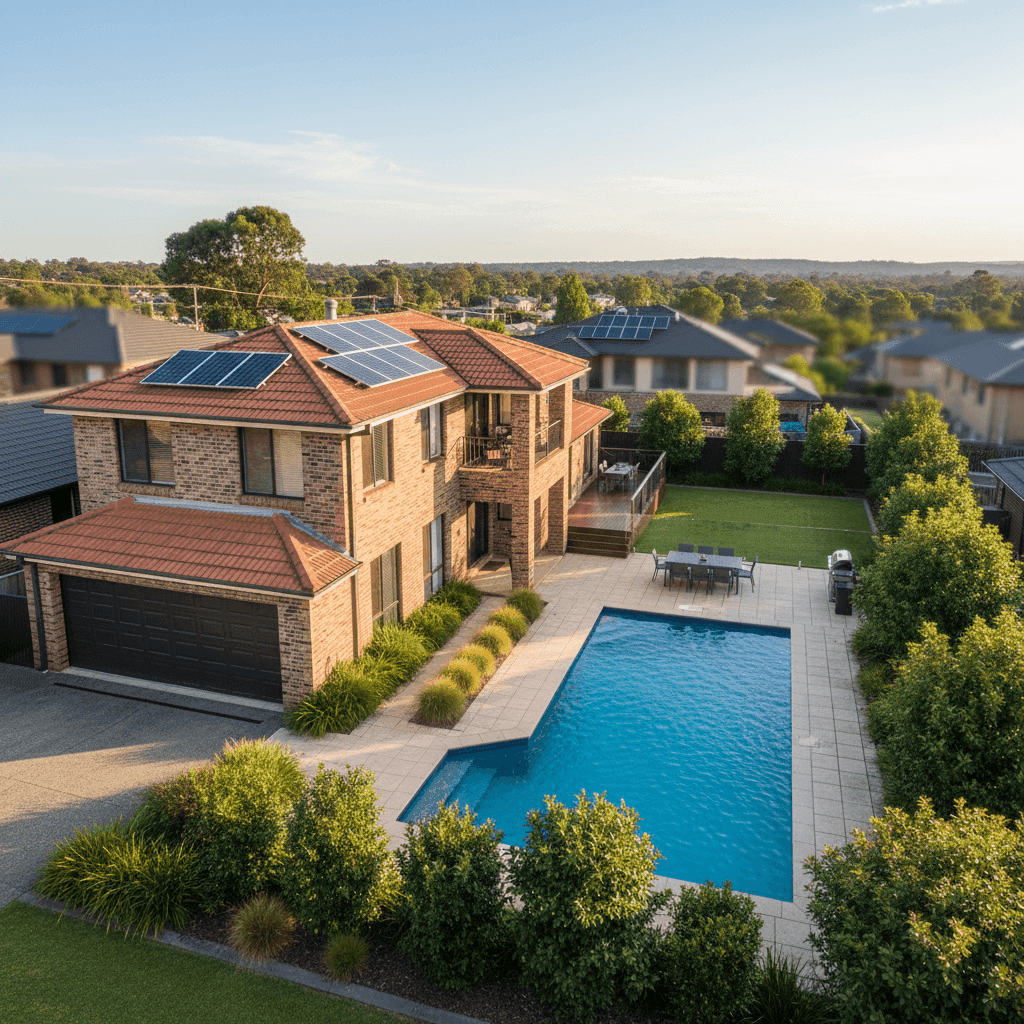
If you own a free standing home in Rouse Hill, NSW 2155, you're living in one of Sydney's fastest-growing north-west suburbs — a family-friendly area known for its modern estates, good schools, and easy access to the Hills District. But with a larger-than-average home comes the responsibility of making sure you're properly protected. This article breaks down a real home and contents insurance quote for a five-bedroom property in Rouse Hill, compares it against local, state, and national benchmarks, and offers practical tips to help you get the best value cover.
---
Is This Quote Fair?
The annual premium for this quote comes in at $2,342 per year (or $218/month), covering both building (sum insured: $695,000) and contents ($50,000), each with a $1,000 excess. Our pricing analysis rates this as CHEAP — below average for the area.
To put that in perspective: the average home and contents premium among quotes we've collected for Rouse Hill sits at $3,279 per year, with a median of $3,238. This quote lands a full $937 below the suburb average — a meaningful saving of roughly 29%. It also sits comfortably below the suburb's 25th percentile of $2,770, meaning it's cheaper than at least three-quarters of comparable quotes in the area.
That's a strong result. For a five-bedroom home with a pool, solar panels, and ducted climate control, achieving a below-average premium suggests either a competitive insurer, favourable property characteristics, or both. It's a reminder that shopping around genuinely pays off.
---
How Rouse Hill Compares
Understanding where your premium sits relative to broader benchmarks helps you judge whether you're getting a fair deal — or overpaying. Here's how this quote stacks up:
| Benchmark | Premium |
|---|---|
| This Quote | $2,342/yr |
| Rouse Hill Suburb Average | $3,279/yr |
| Rouse Hill Suburb Median | $3,238/yr |
| Blacktown LGA Average | $2,242/yr |
| NSW State Average | $9,528/yr |
| NSW State Median | $3,770/yr |
| National Average | $5,347/yr |
| National Median | $2,764/yr |
> Note: Suburb data is based on a sample of 16 quotes collected for the Rouse Hill 2155 area.
A few things stand out here. The NSW state average of $9,528 is dramatically higher than both the suburb average and this quote — but that's largely because NSW includes high-risk coastal and flood-prone regions that push averages up significantly. The state median of $3,770 is a more representative figure, and this quote is still $1,428 below that.
Compared to the national median of $2,764, this quote is only slightly cheaper — suggesting it's broadly in line with what Australians pay at the midpoint, while still beating most local comparisons. The Blacktown LGA average of $2,242 is the one benchmark this quote sits above, though only by $100, which is well within normal variation.
You can explore more data for this postcode at our Rouse Hill suburb stats page, or compare it against NSW state-wide insurance data and national home insurance statistics.
---
Property Features That Affect Your Premium
Insurers don't price all homes the same way — your property's construction, features, and location all play a role. Here's how the specifics of this Rouse Hill home likely influence the premium:
Brick veneer construction with a tiled roof Brick veneer is one of the most common wall types in Australian suburban homes and is generally viewed favourably by insurers. It offers solid fire resistance and durability. Combined with a tiled roof — another widely accepted roofing material — this property sits in a lower-risk construction category compared to, say, a timber-framed home with a metal roof in a bushfire zone.
Concrete slab foundation Slab foundations are standard in newer Australian homes and typically present fewer concerns for insurers than older pier-and-beam or suspended timber floors. They're less susceptible to termite damage and moisture-related issues.
Built in 2003 At around 22 years old, this home is relatively modern. Newer builds generally comply with more recent building codes, which can reduce the likelihood of structural claims. Homes built before the 1980s often attract higher premiums due to ageing wiring, plumbing, or materials.
Swimming pool A pool adds liability exposure — insurers factor in the risk of accidents on your property. It also increases the replacement value of the outdoor area. This typically nudges premiums upward.
Solar panels Solar systems add value to a property and represent a potential claim item if damaged by storms or hail. Some insurers include them automatically under building cover; others require specific endorsement. It's worth confirming your policy explicitly covers the panels.
Ducted climate control Ducted systems are a significant fixed asset and are generally covered under building insurance. Their presence increases the overall sum insured, which can influence the premium — though in this case, the $695,000 building sum insured appears to account for this appropriately.
214 sqm building size At 214 square metres, this is a substantial home. Rebuild costs in NSW have risen sharply in recent years due to labour and material inflation, so ensuring the sum insured accurately reflects current construction costs is critical.
---
Tips for Homeowners in Rouse Hill
1. Review your building sum insured regularly Construction costs in Greater Sydney have increased considerably since the pandemic. A sum insured that was accurate in 2021 may now be underinsured. Use a building cost calculator or ask your insurer to review the figure — being underinsured at claim time can be costly.
2. Confirm your pool and solar panels are explicitly covered Not all standard policies automatically extend to swimming pools and solar systems without conditions. Check your Product Disclosure Statement (PDS) to confirm coverage, and ask whether there are any exclusions around storm damage to panels or pool equipment.
3. Consider increasing your excess to reduce your premium Both the building and contents excess on this policy are set at $1,000. If you have a financial buffer and are comfortable absorbing a slightly higher out-of-pocket cost in a claim scenario, increasing the excess can meaningfully reduce your annual premium.
4. Shop around at renewal time This quote is already competitively priced — but that doesn't mean it will stay that way. Insurers adjust their pricing models regularly, and loyalty doesn't always pay. Set a reminder to compare quotes before your renewal date each year. Even a 10–15% saving on a premium of this size is worth the effort.
---
Compare Your Own Quote
Whether you're reviewing an existing policy or shopping for the first time, CoverClub makes it easy to see how your premium stacks up. We aggregate real quote data from across Australia so you can make an informed decision — not just accept the first number you're given.
Get a home insurance quote and compare your options today — it takes just a few minutes and could save you hundreds.