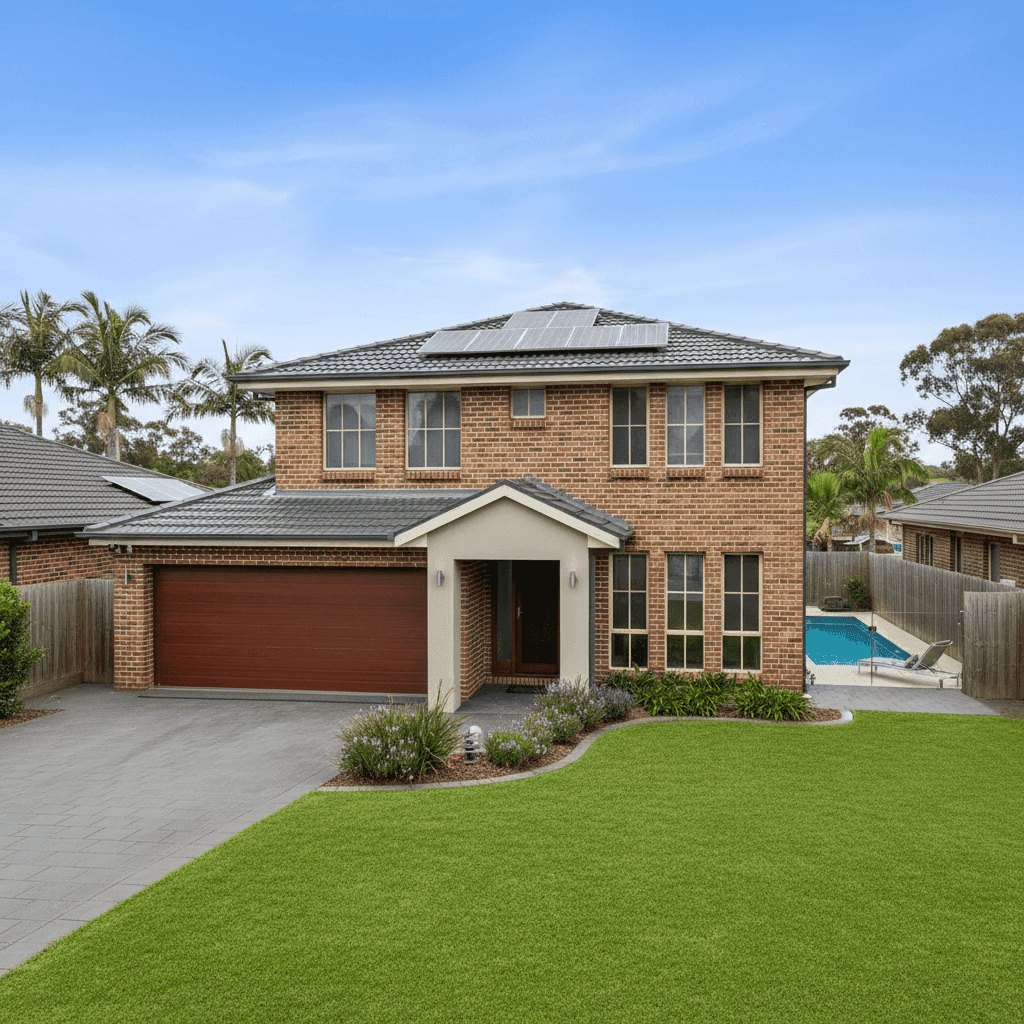
If you own a free standing home in Rouse Hill, NSW 2155, you're likely aware that insurance costs can vary enormously depending on your property's characteristics and the insurer you choose. This article breaks down a real home and contents insurance quote for a four-bedroom brick veneer home in the suburb, benchmarks it against local, state, and national data, and offers practical guidance for homeowners looking to get the best value cover.
---
Is This Quote Fair?
The annual premium for this property came in at $1,728 per year (or $179/month), covering both building (sum insured: $669,000) and contents ($100,000). Our pricing engine has rated this quote as CHEAP — below average for the area.
To put that in perspective: the suburb average for Rouse Hill sits at $3,279/year, meaning this quote is roughly 47% below what most homeowners in the postcode are paying. Even compared to the suburb's 25th percentile — the cheapest quarter of quotes — at $2,770/year, this premium is still significantly lower.
So yes, by any reasonable measure, this is a competitive quote. That said, it's worth understanding why it's cheap before assuming it's the right policy. A lower premium can sometimes reflect narrower cover, higher excesses, or specific exclusions. In this case, the building excess is $3,000 and the contents excess is $1,000, which are on the higher end. Higher excesses are one of the most common levers insurers use to reduce upfront premiums — you pay less each year, but more out of pocket if you ever need to make a claim.
---
How Rouse Hill Compares
Rouse Hill sits within the Blacktown LGA, one of Sydney's largest and most diverse local government areas. Insurance pricing across the LGA averages $2,242/year, which is already more affordable than broader NSW figures — and this quote undercuts even that benchmark.
Here's how the numbers stack up across different comparison points:
| Benchmark | Annual Premium |
|---|---|
| This Quote | $1,728 |
| Rouse Hill Suburb Average | $3,279 |
| Rouse Hill Suburb Median | $3,238 |
| Blacktown LGA Average | $2,242 |
| NSW Average | $9,528 |
| NSW Median | $3,770 |
| National Average | $5,347 |
| National Median | $2,764 |
It's worth noting that the NSW state average of $9,528/year is heavily skewed by high-risk postcodes — think flood-prone areas in regional NSW, bushfire-affected zones, and coastal regions exposed to storm surge. The median of $3,770 is a more realistic representation of what the typical NSW homeowner pays, and this quote still comes in well beneath it.
Nationally, the average home insurance premium is $5,347/year, with a median of $2,764. This quote sits just below the national median, suggesting it's genuinely competitive on a broad scale — not just locally.
(Note: suburb comparison is based on a sample of 16 quotes for Rouse Hill, which provides a useful directional guide.)
---
Property Features That Affect Your Premium
Several characteristics of this property work in its favour from a risk-assessment perspective:
Brick veneer construction is generally viewed favourably by insurers. While not as robust as full double brick, brick veneer offers solid fire resistance and durability compared to timber or fibrous cement cladding. Combined with a tiled roof — which performs well in hail and wind events — the external envelope of this home presents a relatively low-risk profile.
Slab foundation is the standard for homes built in Western Sydney during the late 1990s and is well-suited to the local soil conditions. It also simplifies underwriting, as there's no subfloor space to assess for moisture or pest damage.
The 1999 construction year places this home in a generation of builds that comply with modern electrical and plumbing standards, reducing the likelihood of ageing-infrastructure claims. It's old enough to have settled well, but recent enough to avoid the maintenance headaches of pre-1980s homes.
Vinyl flooring throughout is a practical, low-maintenance choice that's also relatively inexpensive to replace — which can contribute to a lower contents and building repair estimate.
The property does include a swimming pool, which adds a degree of liability exposure. Pools can influence premiums due to the risk of accidental injury on the property, and some insurers factor this into their pricing. It's worth confirming your policy explicitly covers pool-related liability and any associated structures like fencing or pumping equipment.
On the lower-risk side, the absence of solar panels (which can complicate roof claims), ducted climate control systems (which add to building replacement costs), and the location outside any cyclone risk zone all contribute to keeping the premium down.
---
Tips for Homeowners in Rouse Hill
1. Review your sum insured regularly A building sum insured of $669,000 for a 214 sqm home in Rouse Hill is worth revisiting annually. Construction costs in Western Sydney have risen sharply in recent years. Underinsurance is one of the most common and costly mistakes homeowners make — if your rebuild cost exceeds your sum insured, you'll bear the difference yourself.
2. Understand your excess before you claim With a $3,000 building excess on this policy, smaller claims may not be worth lodging. A minor roof repair or fence replacement after a storm could cost less than the excess, meaning you'd pay entirely out of pocket anyway. Factor this into how you think about the policy's real-world value.
3. Secure your pool area properly Pool fencing in NSW must comply with strict safety regulations under the Swimming Pools Act. Beyond the legal obligation, maintaining compliant, well-secured pool barriers can support your liability position under your home insurance policy. Check that your insurer is aware of the pool and that it's explicitly covered.
4. Compare quotes at renewal — every year The home insurance market in Australia is competitive, and loyalty doesn't always pay. Insurers regularly adjust their pricing models, and the cheapest option this year may not be next year. Using a comparison service at renewal is one of the simplest ways to avoid bill creep.
---
Ready to Compare?
Whether you're reviewing your current policy or shopping for the first time, CoverClub makes it easy to see how your premium stacks up. Get a home insurance quote in minutes and compare it against real data from your suburb, LGA, and across Australia. You might be surprised at what you're currently paying — and what you could be saving.