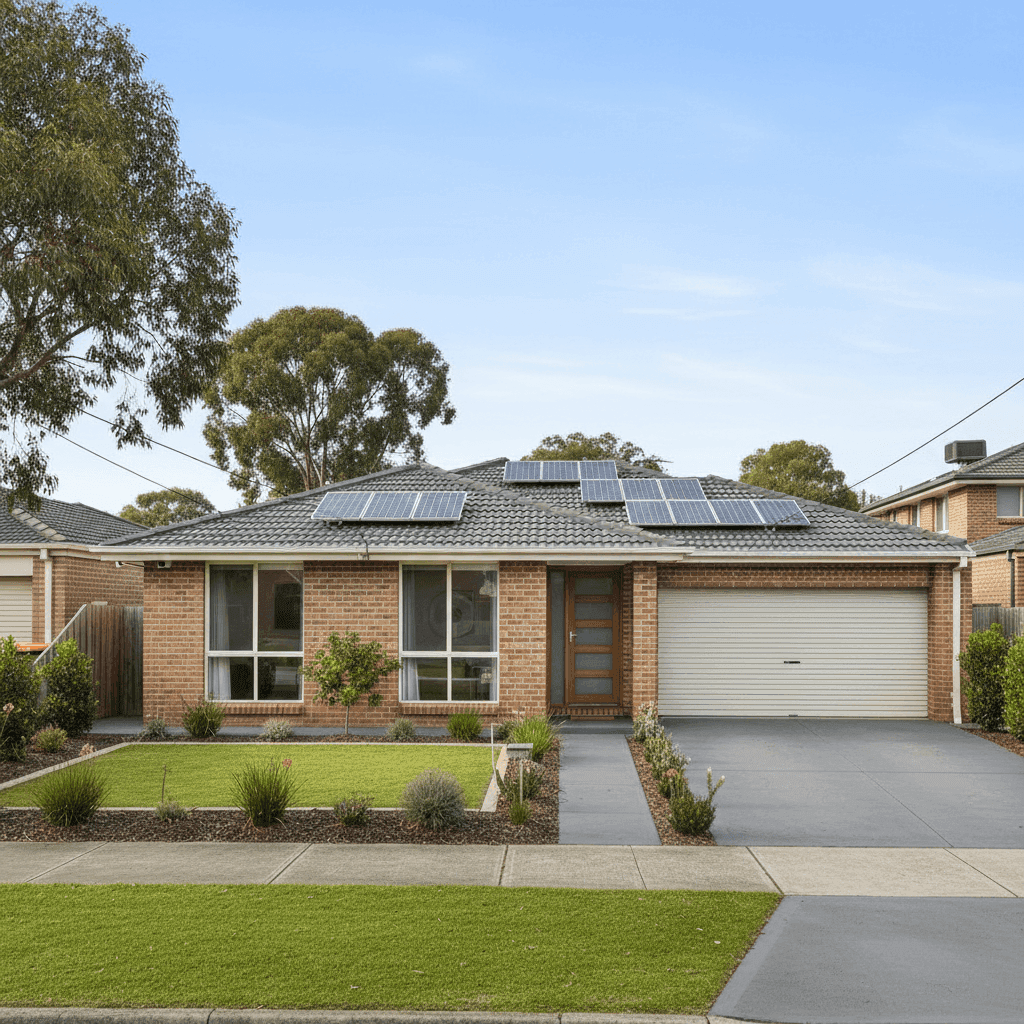
Roxburgh Park is a well-established residential suburb in Melbourne's northern corridor, sitting within the City of Whittlesea. It's a popular choice for families drawn to its quiet streets, good schools, and relative affordability compared to inner-city alternatives. For homeowners here, understanding what a fair home insurance premium looks like — and what drives the cost — can make a meaningful difference at renewal time.
This article breaks down a recent home and contents insurance quote for a three-bedroom, free-standing home in Roxburgh Park, comparing it against local, state, and national benchmarks to help you decide whether you're getting a good deal.
---
Is This Quote Fair?
The annual premium on this quote comes in at $1,010 per year (or about $94 per month), covering a building sum insured of $500,000 and contents valued at $60,000. The building excess is $2,000, and the contents excess is $1,000.
Based on our pricing data, this quote is rated CHEAP — below average for the area. That's a strong result. To put it in perspective, the suburb average for comparable quotes in Roxburgh Park sits at $1,993 per year, meaning this premium is roughly 49% below what most homeowners in the area are paying. Even against the suburb's 25th percentile — the point at which only one in four quotes come in cheaper — the figure of $1,336 per year is still noticeably higher than this quote.
For a home and contents policy with a half-million-dollar building sum insured, landing under $1,100 annually is genuinely competitive. The higher excesses ($2,000 on building, $1,000 on contents) will have contributed to keeping the premium down, so it's worth factoring in that trade-off when assessing overall value. If you'd prefer a lower out-of-pocket cost in the event of a claim, requesting a lower excess will likely push the premium up somewhat.
---
How Roxburgh Park Compares
Roxburgh Park sits in a relatively favourable position when it comes to insurance pricing. Here's how the suburb stacks up against broader benchmarks:
| Benchmark | Average Premium |
|---|---|
| Roxburgh Park (suburb) | $1,993/yr |
| City of Whittlesea (LGA) | $1,850/yr |
| Victoria (state) | $2,921/yr |
| Australia (national) | $2,965/yr |
The suburb average of $1,993 is notably lower than both the Victorian average of $2,921 and the national average of $2,965 — a gap of roughly $900 to $1,000 per year. This reflects Roxburgh Park's relatively low-risk profile: it's not in a cyclone zone, faces limited bushfire exposure compared to Melbourne's outer east or fringe areas, and doesn't carry the flood risk associated with some other parts of Victoria.
For more detailed pricing data, you can explore Roxburgh Park suburb insurance statistics, Victoria-wide home insurance trends, or the national home insurance overview.
---
Property Features That Affect Your Premium
Every property has a unique combination of characteristics that insurers weigh up when calculating risk. Here's how the features of this particular home are likely influencing the quote:
Brick veneer construction with a tiled roof Brick veneer is one of the most common wall types in Australian suburban homes built from the 1980s onwards, and it's generally viewed favourably by insurers. It offers solid fire resistance and structural durability. Combined with a tiled roof — another standard, low-risk material — this home sits in a category that typically attracts competitive premiums.
Slab foundation A concrete slab foundation is straightforward from an insurance perspective. Unlike pier-and-beam or suspended timber floors, slabs carry minimal risk of subsidence-related claims in most suburban Melbourne settings, which helps keep premiums in check.
Timber and laminate flooring The flooring type is relevant primarily to contents and internal damage cover. Timber and laminate floors can be costly to repair or replace if water damage occurs, but this is a standard inclusion in most home and contents policies.
Standard fittings quality With standard (rather than high-end or premium) fittings, the cost to rebuild or repair the interior is more predictable and moderate. Homes with luxury fittings — stone benchtops, custom cabinetry, imported tiles — typically attract higher premiums due to greater rebuild costs.
Solar panels This property has solar panels installed. Insurers treat solar panels as part of the building, and they can add modest cost to a premium due to the replacement value and the risk of storm or hail damage. It's worth confirming with your insurer that your solar system is explicitly covered under your building policy and that the sum insured accounts for its replacement value.
Ducted climate control Ducted heating and cooling systems are a fixed building feature and are generally included in building cover. As with solar panels, ensuring your sum insured reflects the cost of replacing this system is good practice.
No pool, no cyclone risk The absence of a swimming pool removes one source of liability and maintenance-related claims. And as Roxburgh Park falls well outside any designated cyclone risk zone, there's no cyclone-related loading applied to this premium.
---
Tips for Homeowners in Roxburgh Park
1. Review your sum insured regularly Building costs have risen considerably in recent years across Victoria. A sum insured of $500,000 for a 139 sqm home is a reasonable starting point, but it's worth using a building cost calculator — or speaking with a quantity surveyor — to make sure this figure would genuinely cover a full rebuild, including demolition, professional fees, and current labour rates.
2. Understand your excess trade-off The $2,000 building excess on this policy is on the higher side. While it helps keep the annual premium down, it means you'll be out of pocket for $2,000 before the insurer contributes to any building claim. Consider whether that's a comfortable level of financial exposure for your household, particularly for mid-range claims.
3. Check your solar panel coverage If you have solar panels (as this property does), confirm with your insurer that they're covered under the building policy and that their value is included in your sum insured. Some policies cover them automatically; others may require them to be listed as a specified item.
4. Compare at renewal, not just at sign-up Insurance loyalty rarely pays off in Australia. Premiums can shift significantly from year to year, and the market is competitive. Making a habit of comparing quotes at each renewal — even if you're happy with your current insurer — is one of the simplest ways to avoid paying more than you need to.
---
Compare Your Own Quote
Whether you're a homeowner in Roxburgh Park or elsewhere in Victoria, it pays to know where your premium sits relative to the market. CoverClub makes it easy to compare home and contents insurance quotes side by side, so you can see exactly what you're getting — and what you might be overpaying.
Get a home insurance quote at CoverClub and find out how your current premium stacks up.