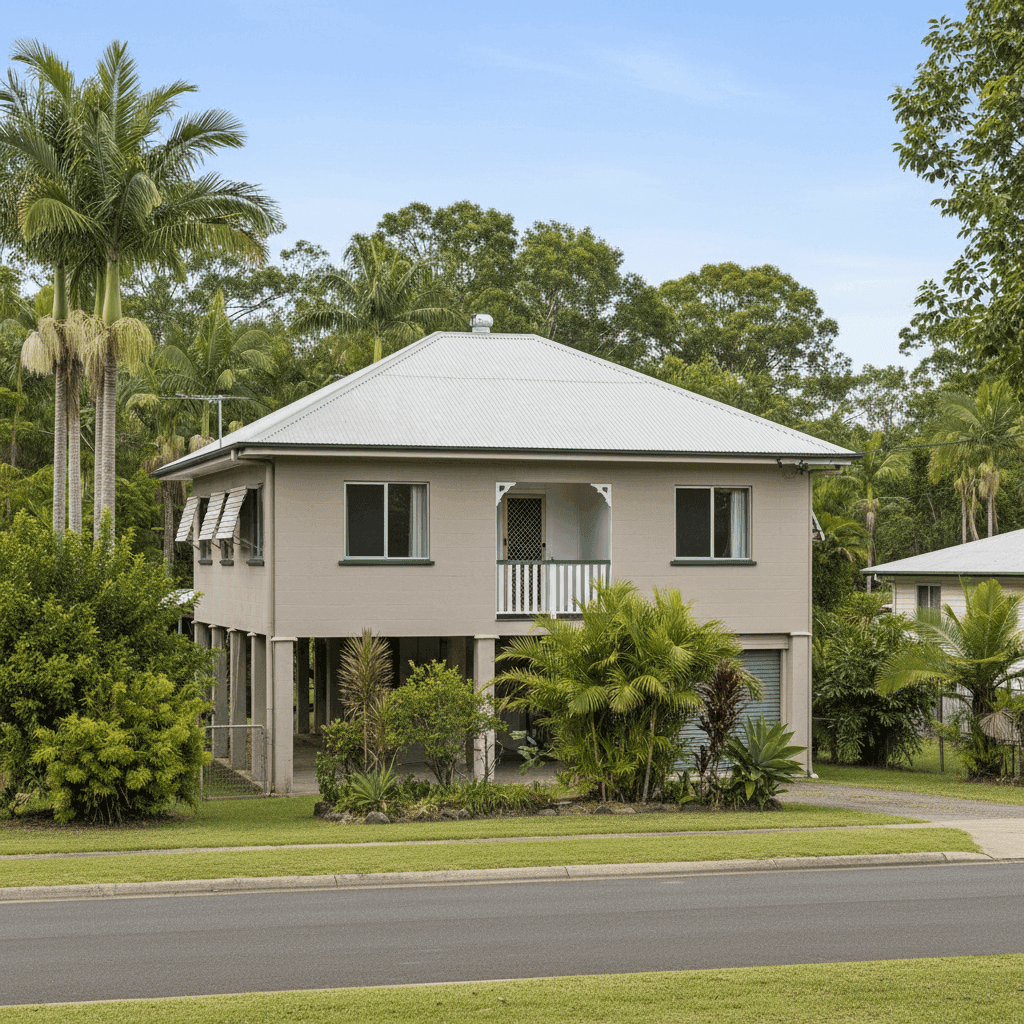
If you own a free standing home in Royston, QLD 4515, you've probably wondered whether you're paying too much — or too little — for home insurance. Located in the Somerset local government area of South East Queensland, Royston sits in a semi-rural pocket that can throw up some interesting results when it comes to insurance pricing. This article breaks down a real building insurance quote for a three-bedroom, two-bathroom home in the suburb, and puts the numbers into context against local, state, and national benchmarks.
---
Is This Quote Fair?
The quote in question comes in at $1,573 per year (or $160 per month) for building-only cover on a free standing home with a sum insured of $492,000 and a building excess of $5,000. Our analysis rates this quote as CHEAP — below average for the area.
That's genuinely good news for this homeowner. In a state where insurance premiums have been climbing steadily due to weather events, flood risk, and the rising cost of rebuilding, landing a sub-$1,600 annual premium for nearly half a million dollars' worth of building cover is a solid outcome.
It's worth understanding why the price is low before assuming it will stay that way. A number of property-specific factors appear to be working in this homeowner's favour — more on those shortly.
---
How Royston Compares
There's no suburb-level pricing data available for Royston specifically, but we can draw meaningful comparisons using QLD state data and national benchmarks.
| Benchmark | Average Premium | Median Premium |
|---|---|---|
| This quote | $1,573/yr | — |
| Somerset LGA average | $3,203/yr | — |
| QLD state average | $9,129/yr | $3,903/yr |
| National average | $5,347/yr | $2,764/yr |
The figures paint a striking picture. This quote sits:
- 51% below the Somerset LGA average of $3,203/yr
- 83% below the QLD state average of $9,129/yr
- 43% below the national median of $2,764/yr
Queensland's sky-high state average is heavily skewed by properties in cyclone-prone coastal regions and flood-affected areas, where premiums can run into the tens of thousands annually. The fact that Royston is not in a designated cyclone risk area goes a long way toward explaining why this quote is so competitive.
You can explore more suburb and postcode-level data on the Royston insurance stats page and compare it against the national picture.
---
Property Features That Affect Your Premium
Insurance underwriters assess dozens of variables when pricing a policy. For this property, several features stand out as likely contributors to the favourable premium.
Construction Materials
The home features concrete external walls and a steel/Colorbond roof — two of the more insurer-friendly combinations you'll find. Concrete is fire-resistant, structurally robust, and less susceptible to termite damage than timber-framed alternatives. Colorbond roofing is durable, lightweight, and performs well in high-wind conditions. Together, these materials typically attract lower rebuild risk assessments.
Elevated Foundation
The property is elevated by at least one metre on a slab foundation. Elevation is a double-edged sword in Queensland — it can signal flood resilience (a positive for insurers), but it also depends heavily on the specific flood mapping for the area. In this case, the elevated position appears to be contributing positively to the pricing outcome, suggesting the property is not flagged as being in a high-risk flood zone.
Timber and Laminate Flooring
The timber and laminate flooring throughout the home is a standard feature for properties of this era and construction type. While flooring itself has a modest impact on building premiums (it's more relevant for contents cover), it does contribute to the overall rebuild cost estimate.
Age and Size
Built in 1996, this home is relatively modern in Queensland terms — old enough to have character, but not so old that it raises concerns about outdated wiring, plumbing, or structural integrity. At 186 square metres, it's a comfortable mid-sized family home, and the sum insured of $492,000 appears proportionate to the build quality and current construction costs in the region.
No High-Risk Add-Ons
The absence of a pool, solar panels, and ducted climate control keeps the risk profile clean. Each of those features adds complexity to a rebuild and can nudge premiums upward. Keeping the property straightforward works in the owner's favour here.
---
Tips for Homeowners in Royston
Whether you're reviewing an existing policy or shopping around for the first time, here are four practical steps worth taking.
1. Don't underinsure to save money With a sum insured of $492,000 on a 186 sqm home, the per-square-metre rebuild cost works out to around $2,645 — broadly in line with current construction costs in Queensland. Resist the temptation to lower your sum insured to cut your premium. If you need to make a total loss claim and your coverage falls short, the shortfall comes entirely out of your pocket.
2. Review your excess settings This policy carries a $5,000 building excess, which is on the higher end. A higher excess typically lowers your premium, but it also means you'll need to cover more out-of-pocket before your insurer steps in. Make sure you have that buffer readily accessible — if a storm causes $6,000 in damage, you're paying $5,000 of it yourself.
3. Check your flood mapping annually Somerset LGA includes a mix of terrain and waterways. Flood mapping can and does change, particularly after significant weather events or council rezoning. Log into the Queensland Government's flood mapping tools each year to confirm your property's status — and let your insurer know if anything changes.
4. Compare at renewal, every time A below-average premium today doesn't guarantee the same result next year. Insurers reprice based on claims data, reinsurance costs, and updated risk models. Set a reminder to compare quotes at CoverClub before your renewal date each year — even a 15-minute comparison could save you hundreds.
---
Compare Your Home Insurance Quote Today
Whether you're a Royston local or own an investment property in the area, it pays to know where your premium sits relative to the market. CoverClub makes it easy to see how your current quote stacks up and find competitive alternatives. Enter your address at CoverClub to get started — no obligation, no jargon, just clear comparisons built for Australian homeowners.