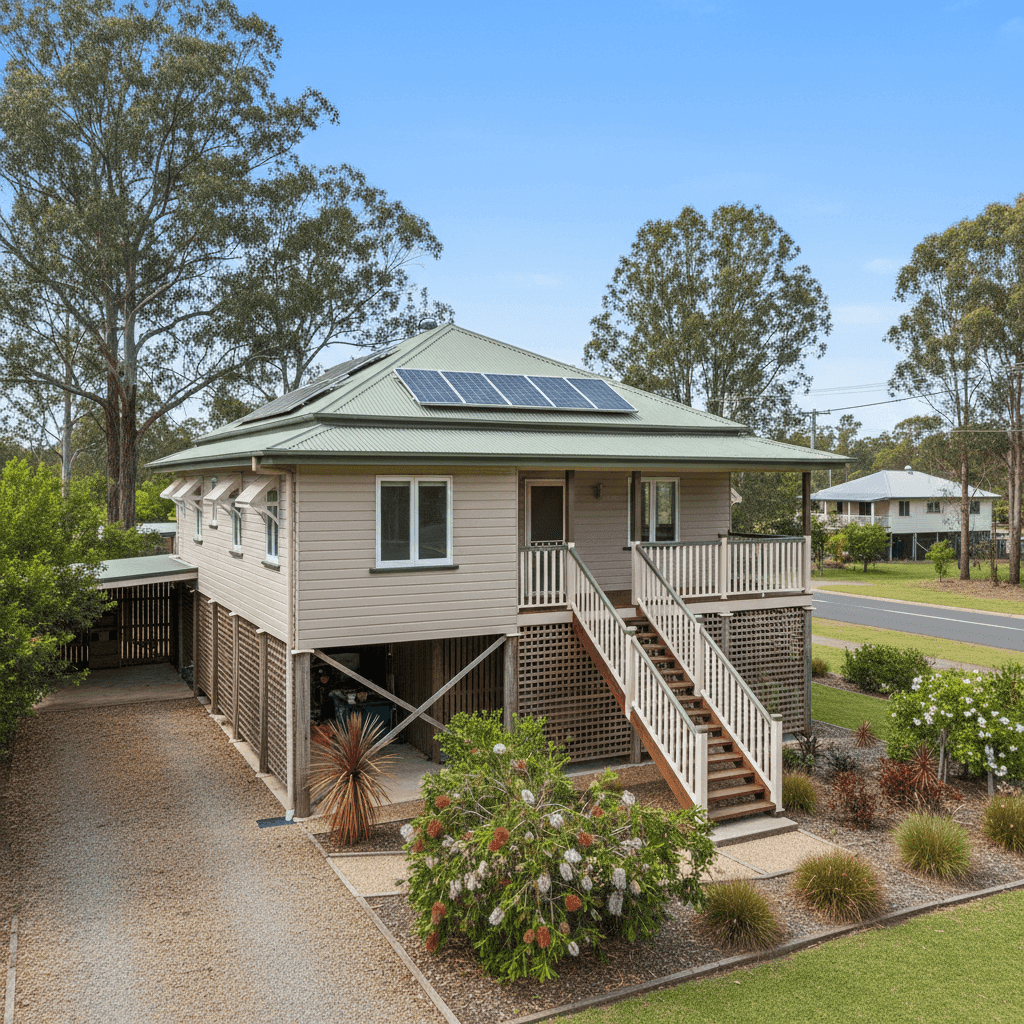
If you own a free standing home in Royston, QLD 4515, you're likely familiar with the mix of rural charm and practical challenges that come with living in the Somerset region. Nestled in South East Queensland, Royston sits in an area where property characteristics — from elevated stumped foundations to weatherboard construction — can play a significant role in what you pay for home and contents insurance. This article breaks down a real insurance quote for a four-bedroom, one-bathroom home in the area, comparing it against local, state, and national benchmarks so you can judge whether your own premium is fair.
---
Is This Quote Fair?
The quote in question comes in at $3,265 per year (or $306/month) for combined home and contents cover, with a building sum insured of $550,000 and contents valued at $125,000. The building excess is $1,000 and the contents excess $500.
Our pricing analysis rates this quote as CHEAP — below average for the area. That's genuinely good news for the homeowner. Given that home insurance costs have been climbing steadily across Australia over the past few years — driven by extreme weather events, rising rebuild costs, and reinsurance pressures — landing a below-average premium is a meaningful outcome.
To put it in perspective: the QLD state average premium sits at $9,129 per year, which is nearly three times this quote. Even the state median (a fairer comparison that strips out extreme outliers) is $3,903/yr — still around $638 more per year than what's been quoted here. At the national level, the average is $5,347/yr and the median is $2,764/yr. This quote sits comfortably between the national median and state median, leaning firmly toward the affordable end of the spectrum.
---
How Royston Compares
Benchmarking your premium against the right reference points matters. Here's how the numbers stack up:
| Benchmark | Annual Premium |
|---|---|
| This Quote | $3,265 |
| LGA (Somerset) Average | $3,203 |
| National Median | $2,764 |
| State (QLD) Median | $3,903 |
| National Average | $5,347 |
| State (QLD) Average | $9,129 |
The quote is almost exactly in line with the Somerset LGA average of $3,203/yr — just $62 above it — which suggests it's very much in the expected range for this council area. The significant gap between QLD's average and median ($9,129 vs $3,903) tells an important story: Queensland's insurance market is heavily skewed by high-risk properties in cyclone-prone coastal and far north regions. For homeowners in Somerset — which is not a designated cyclone risk area — premiums tend to be considerably more reasonable.
For deeper local data, you can explore Royston suburb insurance statistics, compare with the broader QLD insurance landscape, or view national home insurance benchmarks.
---
Property Features That Affect Your Premium
Every property is different, and insurers weigh up a range of characteristics when calculating your premium. Here's how the features of this particular home likely influence the cost:
Weatherboard Timber Walls
Weatherboard construction is common throughout Queensland's older housing stock and carries a moderate risk profile. Timber is more susceptible to fire and pest damage than brick veneer or double brick, which can nudge premiums upward. However, it's also a well-understood material for insurers, and many policies handle it routinely.
Steel/Colorbond Roof
Colorbond roofing is one of the more insurer-friendly options in Australia. It's durable, resistant to corrosion, and performs well in high-wind events compared to older tile or fibrous cement roofs. This is likely a positive factor in keeping the premium competitive.
Stumped Foundation (Elevated Less Than 1m)
The home sits on stumps and is elevated by less than one metre — a classic Queenslander-style setup. While elevated homes can have better flood resilience in minor inundation events, stumped homes also come with considerations around subfloor maintenance and vulnerability in severe storm events. The modest elevation here is unlikely to attract a significant loading.
Construction Year: 1993
Built in 1993, this home falls into a mid-range age bracket. It's old enough that some systems (plumbing, electrical) may be approaching the end of their service life, but modern enough to have been built to reasonable standards. Insurers generally treat homes from this era as standard risk.
Solar Panels
The presence of solar panels adds a small amount of value to the insured asset and is worth confirming is explicitly covered under your policy. Most comprehensive home insurance policies include solar panels as part of the building cover, but it's worth checking the Product Disclosure Statement (PDS) to be sure.
Vinyl Flooring and Standard Fittings
Vinyl flooring and standard-grade fittings keep the replacement cost estimate grounded. High-end finishes like engineered timber floors or stone benchtops can significantly increase the cost to rebuild or repair, so standard fittings help maintain a more predictable sum insured.
No Pool, No Ducted Climate Control
The absence of a pool removes a common liability and maintenance concern. No ducted air conditioning also simplifies the mechanical systems that could be subject to a claim.
---
Tips for Homeowners in Royston
Whether you're reviewing your current policy or shopping around for the first time, here are four practical steps worth taking:
- Review your building sum insured annually. Construction costs have risen sharply in recent years. A sum insured of $550,000 may be appropriate today, but it's worth using an independent building cost calculator — many insurers provide one — to verify your coverage keeps pace with rebuild costs in your area.
- Check that your solar panels are covered. Ask your insurer directly whether your solar system is included under the building definition in your policy. Some policies cover it automatically; others may require it to be listed separately or have exclusions around inverter damage.
- Maintain your stumped foundation. Insurers can reduce or deny claims if damage is attributed to poor maintenance. Regularly inspecting and replacing deteriorating stumps helps protect both your home and your claim eligibility.
- Consider your excess trade-off. This policy carries a $1,000 building excess and $500 contents excess. Opting for a higher excess at renewal can reduce your annual premium — useful if you have a solid emergency fund and want to lower ongoing costs.
---
Compare and Save with CoverClub
A below-average premium is a great starting point, but the insurance market is competitive and prices shift regularly. Even if your current quote looks reasonable, it's worth checking whether another insurer can offer comparable cover for less — or better cover for the same price. Get a home insurance quote at CoverClub to compare options tailored to your property in Royston and make sure you're getting genuine value.