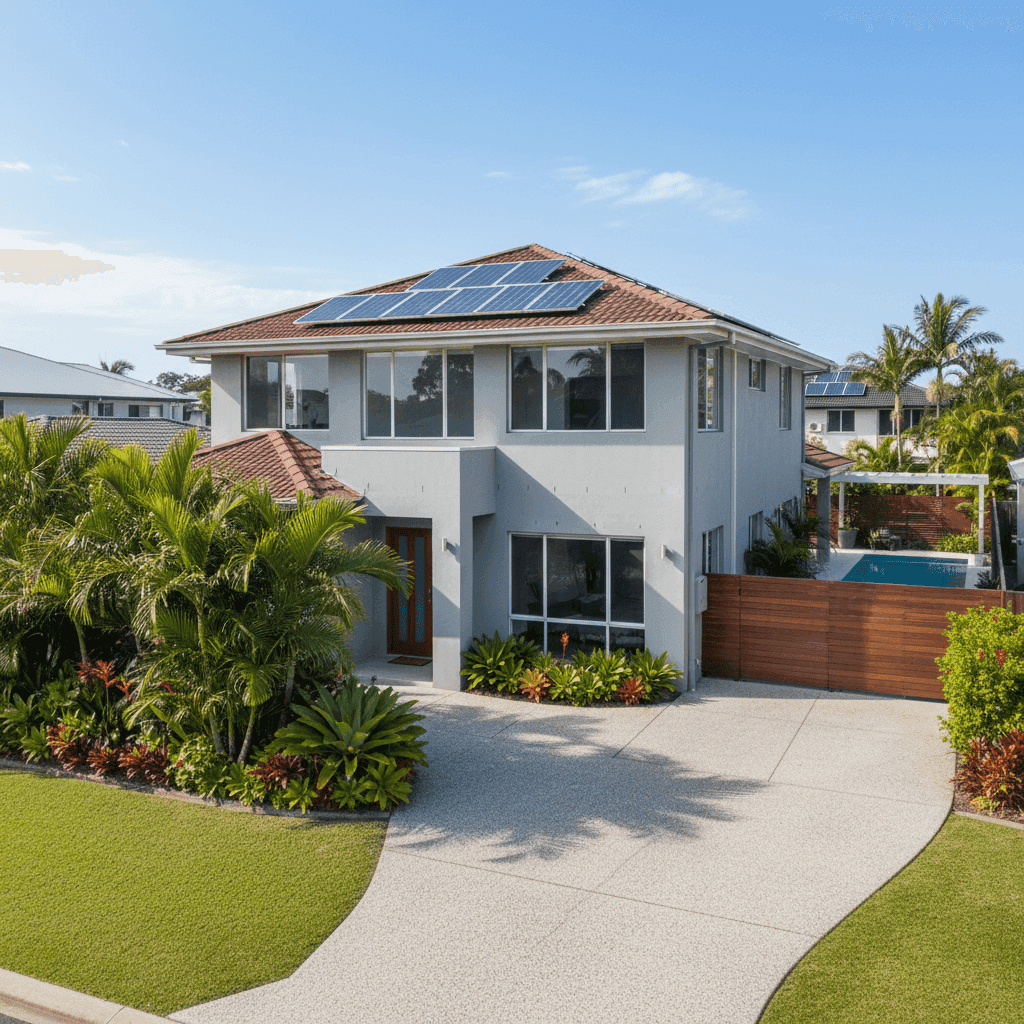
Runaway Bay is one of the Gold Coast's most sought-after residential pockets — a waterfront suburb on the northern end of the Gold Coast that blends relaxed canal living with easy access to beaches, schools, and retail. If you own a free standing home here, you'll know that protecting it properly is non-negotiable. This article breaks down a real home and contents insurance quote for a 4-bedroom, 2-bathroom property in Runaway Bay (postcode 4216), and puts the numbers into context so you can judge whether you're getting a fair deal.
---
Is This Quote Fair?
The quoted annual premium for this property is $4,121 per year (or $388 per month), covering both building (sum insured: $750,000) and contents ($90,000), each with a $2,000 excess.
Our price rating for this quote is FAIR — Around Average, and the data backs that up. Based on 69 quotes collected for Runaway Bay, the suburb average sits at $4,776/yr and the median at $4,474/yr. At $4,121, this quote comes in below both the suburb average and median, landing comfortably in the lower half of the typical price range for the area.
To put it another way: the suburb's middle 50% of quotes range from $3,582/yr (25th percentile) to $5,432/yr (75th percentile). This quote falls within that band, closer to the lower end — meaning it's a reasonable outcome, though not the cheapest available.
So while there's certainly room to find a lower premium, this quote is by no means overpriced for what's on offer.
---
How Runaway Bay Compares
Context is everything when assessing an insurance premium. Here's how Runaway Bay stacks up against broader benchmarks:
| Benchmark | Average Premium | Median Premium |
|---|---|---|
| Runaway Bay (4216) | $4,776/yr | $4,474/yr |
| Gold Coast LGA | $8,161/yr | — |
| Queensland | $9,129/yr | $3,903/yr |
| National | $5,347/yr | $2,764/yr |
A few things stand out here. The Queensland state average of $9,129/yr is strikingly high — driven largely by North Queensland properties in cyclone-prone areas, which push the average up significantly. The state median of $3,903/yr is a more representative figure for most QLD homeowners, and Runaway Bay's median sits just above that.
Compared to the national average of $5,347/yr, Runaway Bay premiums are notably lower — a reflection of the suburb's relatively benign risk profile. It's not in a declared cyclone risk zone, it's not bushfire-prone, and while Gold Coast properties can be exposed to storm and flood events, Runaway Bay's position doesn't attract the extreme loadings seen elsewhere in the LGA (the Gold Coast LGA average of $8,161/yr hints at how varied risk can be across the region).
For this particular property, a quote of $4,121 sits below the national average, which is a solid outcome for a well-appointed 4-bedroom home with a pool and solar panels.
---
Property Features That Affect Your Premium
Several characteristics of this property influence how insurers price the risk:
Construction (Concrete Walls, Tile Roof, Slab Foundation) Concrete external walls and a tile roof are generally viewed favourably by insurers. Both materials are durable, fire-resistant, and less susceptible to storm damage than timber-framed or fibrous cement alternatives. The slab foundation similarly reduces risk compared to older raised foundations, which can be vulnerable to moisture and pest damage. This combination likely contributes to a more competitive premium.
Year Built: 1985 At around 40 years old, this home is mature but not ancient. Insurers pay attention to construction era because homes built before modern building codes may have older plumbing, wiring, or roofing systems. That said, 1985-era concrete construction is generally robust, and any updates made over the decades will help. It's worth ensuring your insurer is aware of any significant renovations.
Above-Average Fittings Above-average fittings — think quality kitchen appliances, stone benchtops, premium fixtures — increase the cost to rebuild or repair, which is reflected in both the building sum insured and the premium. Insurers price based on replacement value, so a well-appointed home naturally attracts a higher premium than a basic equivalent.
Swimming Pool Pools add liability exposure and replacement cost to a policy. If your pool surrounds, pump, or filtration equipment are damaged in a storm or other insured event, those costs fall under your building cover. Some insurers also factor in public liability considerations for pool ownership.
Solar Panels Solar panels are increasingly common on Australian rooftops, but they do add complexity. Panels are typically covered under building insurance, but their replacement cost can be significant. At 244 sqm, this is a substantial home, and a full solar system could represent tens of thousands of dollars in replacement value — worth confirming your sum insured accounts for this.
Building Size: 244 sqm At 244 sqm, this is a larger-than-average home. Rebuild costs scale with floor area, so a higher sum insured of $750,000 is appropriate. Underinsuring a home of this size is a genuine risk — always ensure your sum insured reflects current construction costs, which have risen sharply in recent years.
---
Tips for Homeowners in Runaway Bay
1. Review your sum insured annually Construction costs in South East Queensland have increased significantly in recent years. A sum insured set a few years ago may no longer reflect what it would actually cost to rebuild your home today. Use a building calculator or speak to a quantity surveyor to validate your coverage amount.
2. Compare quotes before renewal Even if your current premium seems reasonable, insurers don't always reward loyalty. Shopping around at renewal time — or using a comparison tool like CoverClub — can reveal meaningfully cheaper options for the same level of cover.
3. Check your contents figure carefully $90,000 in contents cover is a solid starting point, but it's easy to underestimate how much your belongings are actually worth. Do a room-by-room audit, including electronics, jewellery, clothing, furniture, and white goods. Many Australians discover they're underinsured only after making a claim.
4. Understand your excess trade-off Both the building and contents excess on this policy sit at $2,000. Opting for a higher excess is one of the most effective ways to reduce your annual premium — but make sure you could comfortably cover that amount out of pocket if you needed to make a claim. It's a balance worth revisiting as your financial situation evolves.
---
Compare Your Own Quote
Whether you're renewing soon or just curious about how your current premium stacks up, CoverClub makes it easy to see where you stand. Explore Runaway Bay insurance data, browse Queensland-wide trends, or get a personalised quote in minutes. A few minutes of comparison could save you hundreds — or simply give you the confidence that you're already on a good deal.