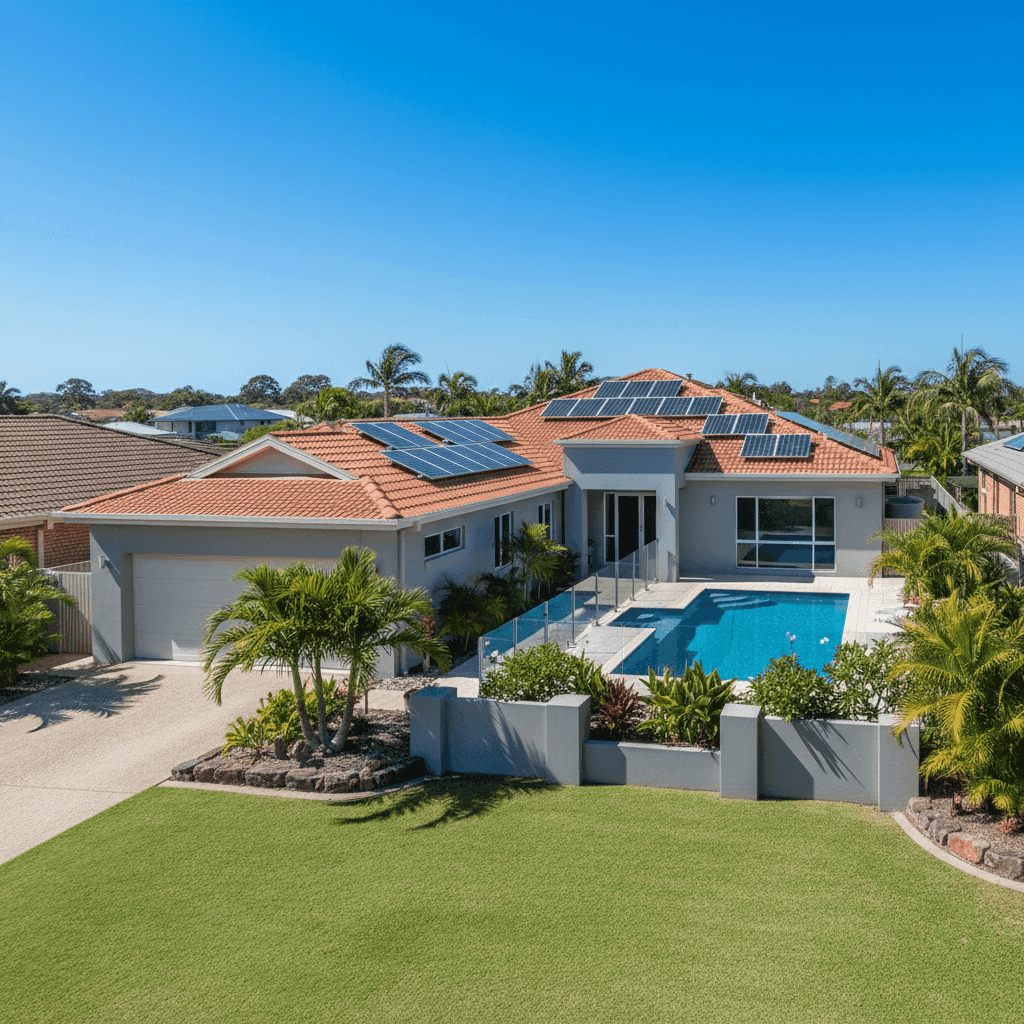
Runaway Bay is one of the Gold Coast's most sought-after waterside suburbs — a leafy, canal-laced community in postcode 4216 that blends laid-back Queensland living with strong property values. For owners of a free standing home here, getting the right home and contents insurance is an important financial decision, and understanding whether your premium is competitive can save you hundreds of dollars a year. This article breaks down a recent quote for a 4-bedroom, 2-bathroom free standing home in Runaway Bay and puts the numbers into context.
---
Is This Quote Fair?
The quote in question comes in at $3,261 per year (or $326/month) for combined home and contents cover, with a building sum insured of $750,000 and contents valued at $80,000. Both the building and contents excess are set at $5,000.
Our price rating for this quote is FAIR — Around Average, which is a reasonable outcome for a property of this size and specification in the current market. It's not the cheapest quote you'll find in the suburb, but it's meaningfully below both the suburb average and the broader Queensland average — which is a positive sign.
To put it plainly: you're not being gouged, but there may still be room to do better depending on your insurer, your claims history, and how your policy is structured.
---
How Runaway Bay Compares
Looking at data drawn from 70 quotes across Runaway Bay (QLD 4216), the pricing landscape tells an interesting story:
| Benchmark | Annual Premium |
|---|---|
| This Quote | $3,261 |
| Suburb 25th Percentile | $2,624 |
| Suburb Median | $3,687 |
| Suburb Average | $4,090 |
| Suburb 75th Percentile | $4,554 |
| QLD State Average | $4,547 |
| QLD State Median | $3,931 |
| Gold Coast LGA Average | $5,494 |
| National Average | $2,965 |
| National Median | $2,716 |
This quote sits below the suburb median of $3,687 and well below the suburb average of $4,090 — a meaningful saving. Compared to the Queensland state average of $4,547, this homeowner is paying roughly $1,286 less per year, which is a significant difference.
The Gold Coast LGA average of $5,494 is particularly striking — it highlights just how much variability exists across the region, and how properties in certain pockets of the Gold Coast attract considerably higher premiums due to flood, storm surge, and other localised risks.
Against the national average of $2,965, this quote is about $296 higher — which is not surprising given that Queensland consistently records above-average home insurance premiums due to its exposure to severe weather events, including tropical storms and flooding.
The takeaway: this quote is genuinely competitive within its local context, even if Queensland premiums broadly run hotter than the national average.
---
Property Features That Affect Your Premium
Several characteristics of this property will have influenced the quoted premium — some working in the homeowner's favour, others adding to the cost.
Concrete Walls & Tile Roof
Concrete external walls and a tiled roof are generally viewed favourably by insurers. Concrete is highly resistant to fire and impact damage, while tiles offer solid protection against wind and hail compared to materials like Colorbond or fibrous cement sheeting. This combination typically supports more competitive premiums.
Slab Foundation
A concrete slab foundation is standard for Queensland homes of this era and is considered a neutral to positive factor by most insurers. It reduces the risk of subsidence and is less susceptible to moisture-related structural issues than older pier-and-beam foundations.
Built in 1985
At roughly 40 years old, this home sits in a middle ground. It's old enough that some insurers may factor in the age of plumbing, electrical systems, and roofing materials — but not so old that it attracts significant age-related loading. Homes built before modern building codes (pre-1980s) tend to attract higher premiums; a 1985 build is generally well-regarded.
Swimming Pool
A pool adds to the replacement cost of the property and introduces additional liability considerations, both of which can nudge premiums upward. Pools also require specific safety compliance under Queensland law, which insurers may factor into their risk assessment.
Solar Panels
Solar panels are an increasingly common inclusion in Queensland homes, and most insurers now cover them as part of the building sum insured. However, they do add to the overall replacement value of the home, which can influence the premium — particularly if the system is a larger or newer installation.
Above-Average Fittings
The above-average fittings quality noted for this property — think stone benchtops, quality appliances, and premium fixtures — contributes to a higher building sum insured and reflects the true cost of rebuilding to the same standard. This is appropriate and important: underinsurance is a significant risk for homeowners with quality finishes.
No Cyclone Risk
Runaway Bay falls outside designated cyclone risk zones, which is a meaningful premium advantage compared to properties further north in Queensland. Cyclone-rated areas can attract substantial additional loadings.
---
Tips for Homeowners in Runaway Bay
1. Review your sum insured annually Building costs have risen sharply in recent years. With a 244 sqm home featuring above-average fittings, it's worth checking that your $750,000 building sum insured still reflects the actual cost of rebuilding — not just the market value of the property. Use a building cost calculator or speak to a quantity surveyor if you're unsure.
2. Consider your excess carefully Both the building and contents excess on this policy are set at $5,000. A higher excess typically reduces your premium, but make sure it's an amount you could genuinely afford to pay out of pocket in the event of a claim. For some households, a $2,500 excess might be a smarter balance between affordability and premium savings.
3. Shop around at renewal time Even a FAIR-rated quote can often be improved. Insurers frequently offer better pricing to new customers than they do to existing ones, so it's worth comparing at least two or three alternatives before renewing. Platforms like CoverClub make this straightforward.
4. Maintain your pool and solar system Insurers can decline or reduce claims if damage is linked to poor maintenance. Keep your pool equipment serviced and ensure your solar panels are regularly inspected — particularly after storm events. Document any maintenance work you carry out.
---
Compare Your Home Insurance Today
Whether you're a first-time buyer in Runaway Bay or a long-term homeowner wondering if your current policy still stacks up, it pays to compare. CoverClub makes it easy to get a tailored quote based on your property's specific features and coverage needs — so you can see exactly where you sit in the market.