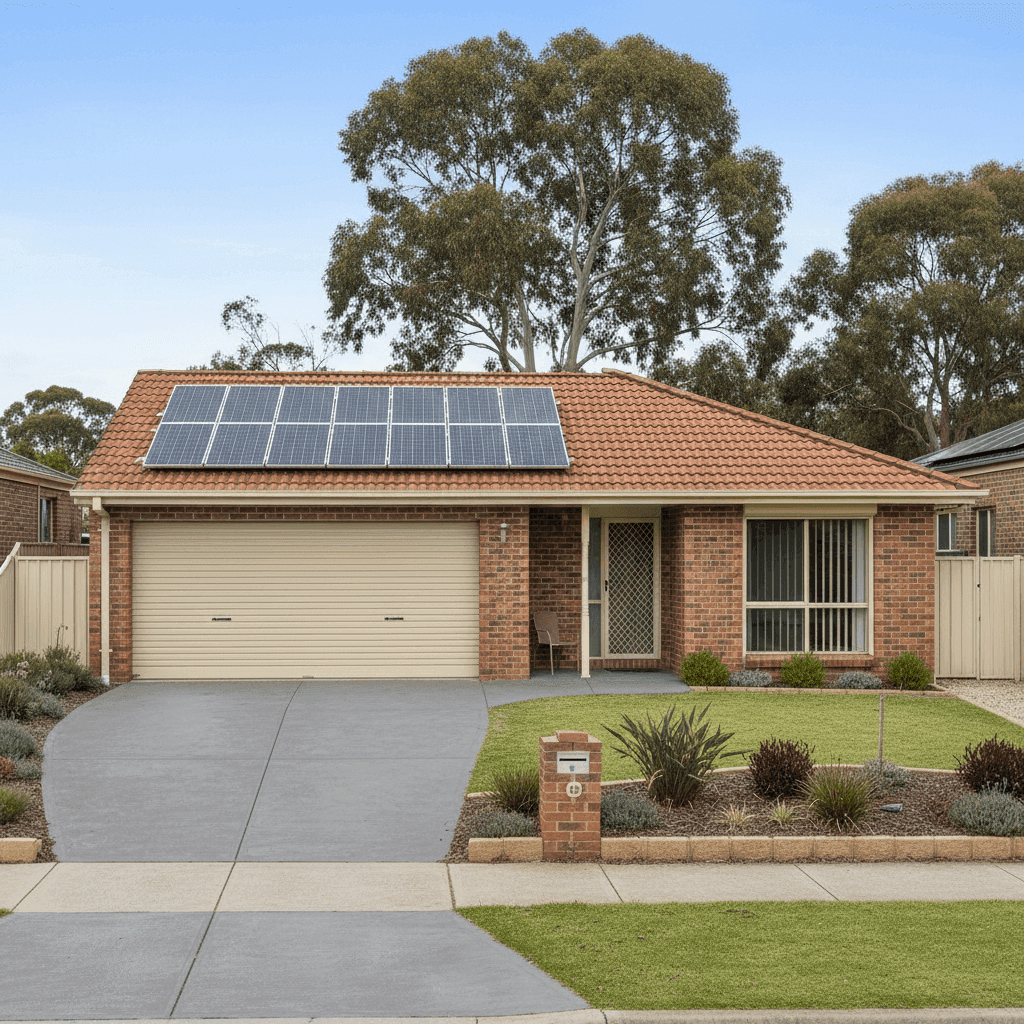
If you own a free standing home in Ruse, NSW 2560, you're probably curious about what a fair home insurance premium looks like — and whether the quote sitting in your inbox is worth accepting. This article breaks down a real building insurance quote for a five-bedroom, double brick home in Ruse, compares it against state and national benchmarks, and offers practical tips to help you get the most out of your cover.
---
Is This Quote Fair?
The short answer: yes — and then some.
The quote in question comes in at $2,286 per year (or $224/month) for building-only cover on a five-bedroom free standing home insured for $708,000, with a $3,000 building excess. CoverClub's pricing engine rates this as CHEAP — meaning it sits meaningfully below average for comparable properties.
To put that in perspective:
- The NSW state average for home building insurance is $3,801/year
- The NSW state median is $3,410/year
- The national average across Australia is $2,965/year
- The national median is $2,716/year
This quote beats every one of those benchmarks. Compared to the NSW average alone, the homeowner is saving roughly $1,515 per year — that's real money back in your pocket. Even against the national median, this quote comes in about $430 cheaper annually.
For a property of this size and sum insured, a sub-$2,300 annual premium is genuinely competitive. That said, "cheap" doesn't always mean "right" — it's still worth checking what's included in the policy, particularly around events like storm damage, accidental damage, and what's excluded under the fine print.
---
How Ruse Compares
While there isn't enough suburb-specific data to calculate a precise Ruse insurance average, we can benchmark against the broader LGA of Wollongong, which records an average premium of $2,751/year. This quote sits $465 below even that local average — a strong result.
Zooming out to the NSW state level, premiums have been trending upward in recent years, driven by increased weather-related claims, rising construction costs, and reinsurance pressures. NSW homeowners are paying some of the highest premiums in the country, largely due to the state's exposure to flooding, bushfire, and severe storms.
At the national level, the picture is similarly elevated — insurers across Australia have been repricing risk upward since the 2022 flood events. That makes a below-average quote like this one all the more noteworthy.
| Benchmark | Annual Premium |
|---|---|
| This Quote | $2,286 |
| LGA (Wollongong) Average | $2,751 |
| National Median | $2,716 |
| National Average | $2,965 |
| NSW Median | $3,410 |
| NSW Average | $3,801 |
---
Property Features That Affect Your Premium
Several characteristics of this particular property likely contribute to its favourable premium. Here's how each feature plays a role:
Double Brick Construction
Double brick is one of the most insurer-friendly wall types in Australia. It's fire-resistant, structurally robust, and holds up well against wind and impact. Homes with double brick exteriors often attract lower premiums compared to those with timber or clad construction, because the rebuild risk profile is more predictable.
Tiled Roof
Terracotta or concrete tile roofs are generally viewed positively by insurers. They're durable, non-combustible, and perform well in most weather conditions. While they can be heavier and more expensive to repair than Colorbond, they have a long service life — particularly relevant for a home built in 1981.
Stump Foundation
A home on stumps (also known as a pier or post foundation) can be a double-edged sword. On one hand, it allows for airflow beneath the property and can reduce moisture-related damage. On the other, stumps can deteriorate over time — particularly older timber stumps — and may require periodic inspection. Insurers typically factor foundation type into their risk assessment, though it's rarely a dominant pricing variable.
Construction Year: 1981
A home built in the early 1980s is well past its initial construction phase, which means any early structural issues have likely already surfaced and been addressed. However, older homes can carry higher rebuild complexity — particularly around plumbing, wiring, and materials that may no longer meet modern building codes. The $708,000 sum insured appears to account for this appropriately.
Solar Panels
This property has solar panels installed. It's worth noting that solar panels are not automatically covered under all building insurance policies. Some insurers include them as part of the building sum insured; others treat them as a separate item or exclude them entirely. Homeowners should confirm explicitly that their solar system is covered — including inverters and mounting hardware — and that the sum insured reflects the replacement cost.
No Pool, No Ducted Climate Control
The absence of a pool removes a meaningful liability and maintenance risk from the insurer's perspective. Similarly, no ducted climate control system means fewer mechanical components that could fail and cause water or electrical damage. Both factors contribute to a cleaner risk profile.
Tile Flooring
Internal tile flooring is low-maintenance and resistant to water damage, which is a mild positive from an insurer's standpoint compared to timber or carpet in flood or leak scenarios.
---
Tips for Homeowners in Ruse
1. Confirm your solar panels are covered Before renewing or accepting any policy, check the product disclosure statement (PDS) to confirm solar panels — including the inverter and racking system — are explicitly included in your building cover. If not, ask your insurer to add them or factor them into your sum insured.
2. Review your sum insured annually Construction costs in NSW have risen sharply in recent years. A sum insured of $708,000 for a 153 sqm home may be appropriate today, but it's worth reassessing each year using a building cost calculator. Being underinsured at claim time can leave you significantly out of pocket.
3. Consider your excess trade-off This policy carries a $3,000 building excess, which is on the higher end. A higher excess typically lowers your premium, but it also means a larger out-of-pocket cost at claim time. If your financial buffer is comfortable, this is a reasonable trade-off — but it's worth modelling both options when comparing quotes.
4. Don't set and forget Even a competitively priced policy can drift over time. Insurers often offer their best rates to new customers, and loyalty doesn't always pay. Make a habit of comparing quotes at renewal — even if you're happy with your current insurer, having a competing quote gives you negotiating power.
---
Ready to Compare?
Whether you're reviewing your current policy or shopping for the first time, CoverClub makes it easy to compare home insurance quotes across Australia's leading insurers. Get a quote today and see how your premium stacks up — you might be surprised at what you could save.