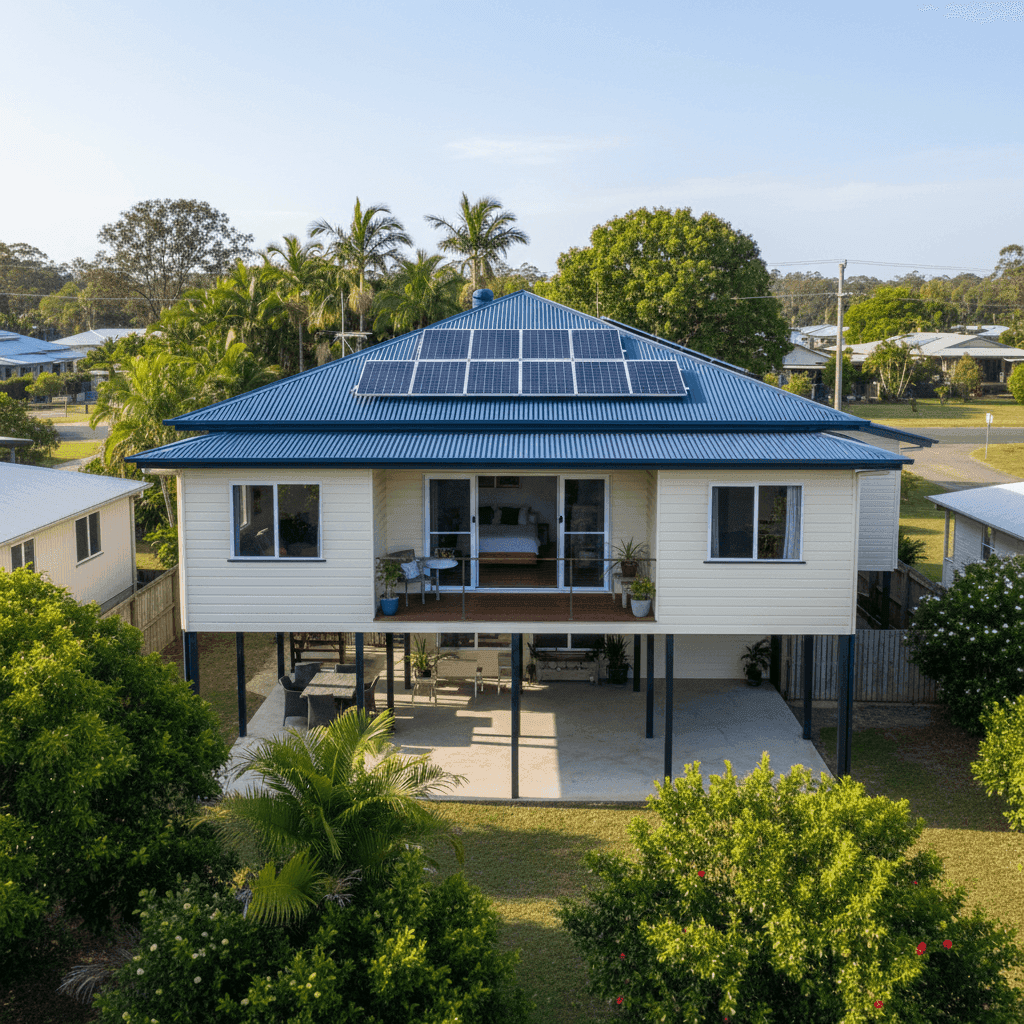
Getting a home insurance quote can feel like a shot in the dark — especially in a unique location like Russell Island, Queensland. Sitting in Moreton Bay as part of the Southern Moreton Bay Islands, Russell Island has its own distinct risk profile that sets it apart from mainland suburbs. This article breaks down a real building-only insurance quote for a 3-bedroom, 2-bathroom free standing home in Russell Island (QLD 4184), and puts the numbers in context so you can judge whether you're paying a fair price.
---
Is This Quote Fair?
The short answer: yes — this is a genuinely competitive quote.
At $2,701 per year (or roughly $259 per month), this building-only policy for a $350,000 sum insured earns a "Cheap" price rating on CoverClub — meaning it sits below the average for comparable properties in the suburb. That's a meaningful result in an area where premiums can vary dramatically depending on the insurer.
To put it in perspective, the suburb average for Russell Island sits at $4,219 per year, and the median is $3,948. This quote comes in roughly $1,500 below the suburb average — a saving of around 36%. Even compared to the cheapest quarter of quotes in the area (the 25th percentile at $3,151/yr), this policy is still noticeably cheaper.
For a property insured at $350,000 with a standard $1,000 building excess, that kind of saving is well worth paying attention to. Of course, price isn't everything — policy inclusions, claim handling, and exclusions all matter — but starting from a below-average premium is a solid foundation.
---
How Russell Island Compares
Russell Island sits in an interesting position when you zoom out to state-level data for Queensland and national benchmarks.
| Benchmark | Annual Premium |
|---|---|
| This Quote | $2,701 |
| Russell Island Suburb Average | $4,219 |
| Russell Island Suburb Median | $3,948 |
| Redland LGA Average | $3,178 |
| QLD State Average | $9,129 |
| QLD State Median | $3,903 |
| National Average | $5,347 |
| National Median | $2,764 |
A few things stand out here. Queensland's state average of $9,129 is extraordinarily high — but this is heavily skewed by Far North Queensland postcodes with severe cyclone exposure. The QLD median of $3,903 is a more representative figure for most Queenslanders, and Russell Island's suburb median of $3,948 tracks closely with that.
What's notable is that this quote also sits below the national median of $2,764 — wait, actually it sits just above it at $2,701... making it competitive not just locally but by national standards too. The suburb stats page for Russell Island shows a sample of 28 quotes, which gives a reasonably reliable picture of the local market. With premiums ranging from around $3,151 at the 25th percentile up to $4,804 at the 75th, the spread is wide — underscoring how much insurer choice matters in this postcode.
---
Property Features That Affect Your Premium
Several characteristics of this particular property likely contribute to its competitive premium. Here's what's working in its favour — and what insurers will be paying close attention to.
Construction Materials
The home features Hardiplank/Hardiflex external walls and a steel/Colorbond roof — both of which are generally viewed favourably by insurers. Fibre cement cladding like Hardieplank is durable, fire-resistant, and low-maintenance. Colorbond steel roofing is similarly robust and performs well in Queensland's variable climate. These materials can translate to lower replacement costs and reduced claims risk compared to older timber or fibrous cement homes.
Elevated Foundation on Poles
The property sits on a pole foundation and is elevated by at least one metre. On Russell Island — which, like many bay islands, has areas prone to storm surge and localised flooding — elevation is a significant factor. Raised homes are less susceptible to inundation damage, and many insurers will price this in. It's one of the most impactful structural features for flood-adjacent locations.
Year of Construction
Built in 2014, this is a relatively modern home. Newer builds typically comply with more stringent building codes, including wind-load and water-ingress standards that have been progressively tightened in Queensland. This generally means fewer claims and lower premiums.
Solar Panels
The property has solar panels, which adds a small amount of insurable value to the building. Most building policies cover fixed solar installations as part of the structure, so it's worth confirming this is included in your policy wording — and that your sum insured accounts for the replacement cost of the system.
No Pool, No Ducted Climate Control
The absence of a swimming pool and ducted air conditioning keeps things straightforward from an underwriting perspective. Both features can add to the insurable value of a home and, in some cases, increase risk exposure.
Not in a Cyclone Risk Zone
While much of Queensland carries cyclone risk, this property is not classified as being in a cyclone risk area — a meaningful factor given the premium impact cyclone cover can have in affected postcodes.
---
Tips for Homeowners in Russell Island
Whether you're renewing your policy or shopping around for the first time, here are four practical tips tailored to homeowners in this area.
1. Review your sum insured carefully. A $350,000 sum insured for a 139 sqm home on poles is a reasonable starting point, but construction costs have risen significantly in recent years. Make sure your sum insured reflects the actual cost to rebuild — not just the market value of the property. Underinsurance is one of the most common and costly mistakes homeowners make.
2. Check your flood and storm surge cover. Russell Island is a bay island environment. Even if your home is elevated, it's worth scrutinising your policy's definitions of "flood," "storm surge," and "rainwater runoff" — these are often treated differently, and some policies exclude certain types of water damage. Don't assume you're covered; read the Product Disclosure Statement (PDS).
3. Compare quotes across multiple insurers. The data from Russell Island's suburb stats shows a wide premium range — from under $3,200 to over $4,800 in the middle 50% of quotes alone. The insurer you choose makes a real difference. Use a comparison tool to see multiple quotes side by side before committing.
4. Ask about discounts for building features. If your home is elevated, has a modern roof, or uses fire-resistant materials, some insurers will apply discounts. It's worth calling your insurer directly to confirm these features are recorded correctly on your policy — incorrect details can affect both your premium and any future claims.
---
Compare Home Insurance Quotes for Russell Island
Whether you're a long-time Russell Island resident or a new property owner on the island, getting the right building cover at the right price starts with comparing your options. CoverClub makes it easy to see real quotes from multiple insurers side by side — so you can make an informed decision, not just a hopeful one.
Get a home insurance quote for your Russell Island property →