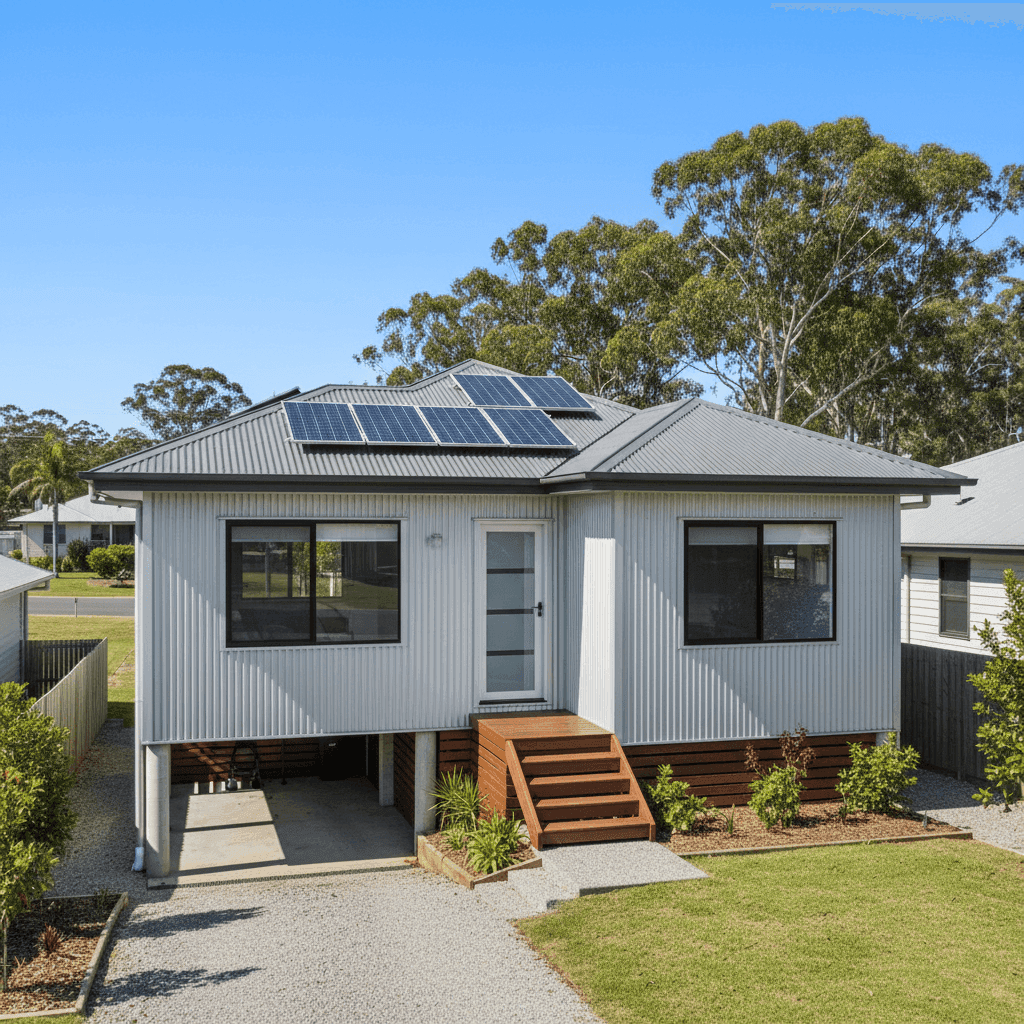
Russell Island, nestled in Moreton Bay just off the coast of Brisbane, is one of Queensland's more distinctive places to call home. As part of the Southern Moreton Bay Islands, it attracts owner-occupiers and sea-changers alike who are drawn to its relaxed lifestyle and affordable land prices. But what does home insurance actually cost for a free standing home out here — and how does a recent quote stack up? Let's break it down.
---
Is This Quote Fair?
The quote in question covers a 1-bedroom, 1-bathroom free standing home in Russell Island (QLD 4184) with a building sum insured of $280,000 and contents cover of $55,000. The annual premium comes in at $2,815 per year (or $270/month), with a $1,000 excess on both building and contents.
CoverClub rates this quote as CHEAP — below average for the area, and the numbers back that up convincingly.
Based on a sample of 28 quotes collected for this suburb, the average premium in Russell Island sits at $4,219/yr, with a median of $3,948/yr. Even the 25th percentile — meaning 75% of quotes are more expensive — comes in at $3,151/yr. This quote at $2,815/yr sits below the cheapest quartile of the local market, making it genuinely competitive by any measure.
Put simply: if you're paying around $2,815 a year for home and contents cover on a property like this in Russell Island, you're doing better than most of your neighbours.
---
How Russell Island Compares
To put this quote in broader context, it helps to zoom out and look at what homeowners are paying across Queensland and nationally.
| Benchmark | Premium |
|---|---|
| This quote | $2,815/yr |
| Russell Island suburb average | $4,219/yr |
| Russell Island suburb median | $3,948/yr |
| Redland LGA average | $3,178/yr |
| QLD state average | $9,129/yr |
| QLD state median | $3,903/yr |
| National average | $5,347/yr |
| National median | $2,764/yr |
A few things stand out here. First, the Queensland state average of $9,129/yr is dramatically higher than the median of $3,903/yr — a sign that a relatively small number of very high-risk or high-value properties are pulling the average upward significantly. North Queensland cyclone zones, flood-prone areas, and luxury coastal properties all contribute to that skew.
Second, the national average of $5,347/yr is similarly elevated compared to the national median of $2,764/yr. This quote at $2,815/yr sits just above the national median — respectable for an island property in Queensland, where premiums can be notoriously steep.
Within the Redland City Council LGA, the average premium is $3,178/yr. This quote still beats that benchmark, which is encouraging given that island properties sometimes attract loading due to access and supply chain considerations for repairs.
---
Property Features That Affect Your Premium
Several characteristics of this property are worth examining, as they each play a role in how insurers price the risk.
Aluminium external walls and Colorbond steel roof are generally viewed favourably by insurers. Both materials are durable, low-maintenance, and highly resistant to corrosion — a key consideration in coastal and island environments where salt air can degrade lesser materials quickly. Colorbond roofing in particular is a popular choice in Queensland for its heat reflectivity and wind resistance.
Construction year of 2020 is a significant positive. Modern homes built after updated building codes were introduced tend to have better structural integrity, improved waterproofing, and more resilient connections between the roof and wall frames. Insurers typically reward newer builds with more competitive premiums.
Stumped (elevated) foundation is common in Queensland and can be a double-edged sword. On one hand, elevating a home reduces flood inundation risk and improves airflow. On the other, it can mean higher repair costs if structural work is needed underneath. At less than 1 metre of elevation, this property sits in a relatively modest category — high enough to offer some protection, but not so elevated that it raises significant concerns for insurers.
Timber and laminate flooring is standard for this style of home and doesn't dramatically affect premiums either way, though it's worth noting that timber floors can be more susceptible to water damage than tiles — something to keep in mind when reviewing your contents cover.
Solar panels are present on this property. Most standard home insurance policies cover solar panels as a fixture of the building, but it's worth confirming this with your insurer. Some policies treat panels as a separate item or exclude damage caused by specific events. Given the replacement cost of a modern solar system, clarity here matters.
No pool and no ducted climate control simplifies the risk profile. Pools and complex HVAC systems are both potential sources of liability and maintenance-related claims, so their absence can help keep premiums lean.
Finally, this property is not located in a designated cyclone risk area — a notable factor in Queensland, where cyclone-prone regions in the north can see premiums multiply several times over.
---
Tips for Homeowners in Russell Island
1. Review your building sum insured regularly. At $280,000 for a 130 sqm home, the sum insured equates to roughly $2,154/sqm — broadly in line with current construction costs for a standard build. However, building costs have risen sharply in recent years. It's worth reassessing this figure annually to avoid being underinsured in the event of a total loss.
2. Confirm solar panel coverage with your insurer. Ask your insurer directly whether your solar panels are covered under the building section, what events are included (e.g., storm, fire, accidental damage), and whether there's a sub-limit that applies. Don't assume — get it in writing.
3. Consider the island's access factor when assessing claims. Russell Island is accessible only by ferry, which can affect how quickly tradespeople and assessors can reach your property after a claim. Ask your insurer about their claims process for island properties and whether any delays are factored into their service commitments.
4. Compare quotes at renewal, not just when you first take out cover. The insurance market shifts constantly. The fact that this quote is rated CHEAP today doesn't mean the same insurer will offer the best deal at renewal. Set a reminder to compare at least 30 days before your policy expires — it takes just a few minutes and could save you hundreds.
---
Ready to See What You Could Pay?
Whether you're already insured or shopping for the first time, it pays to know where you stand. CoverClub makes it easy to compare home and contents quotes for properties across Australia, including island and coastal locations that other comparison tools sometimes struggle with. Get a quote today and see how your current premium stacks up — you might be pleasantly surprised.
For more data on insurance costs in this area, visit the Russell Island suburb stats page or explore Queensland-wide premium trends.