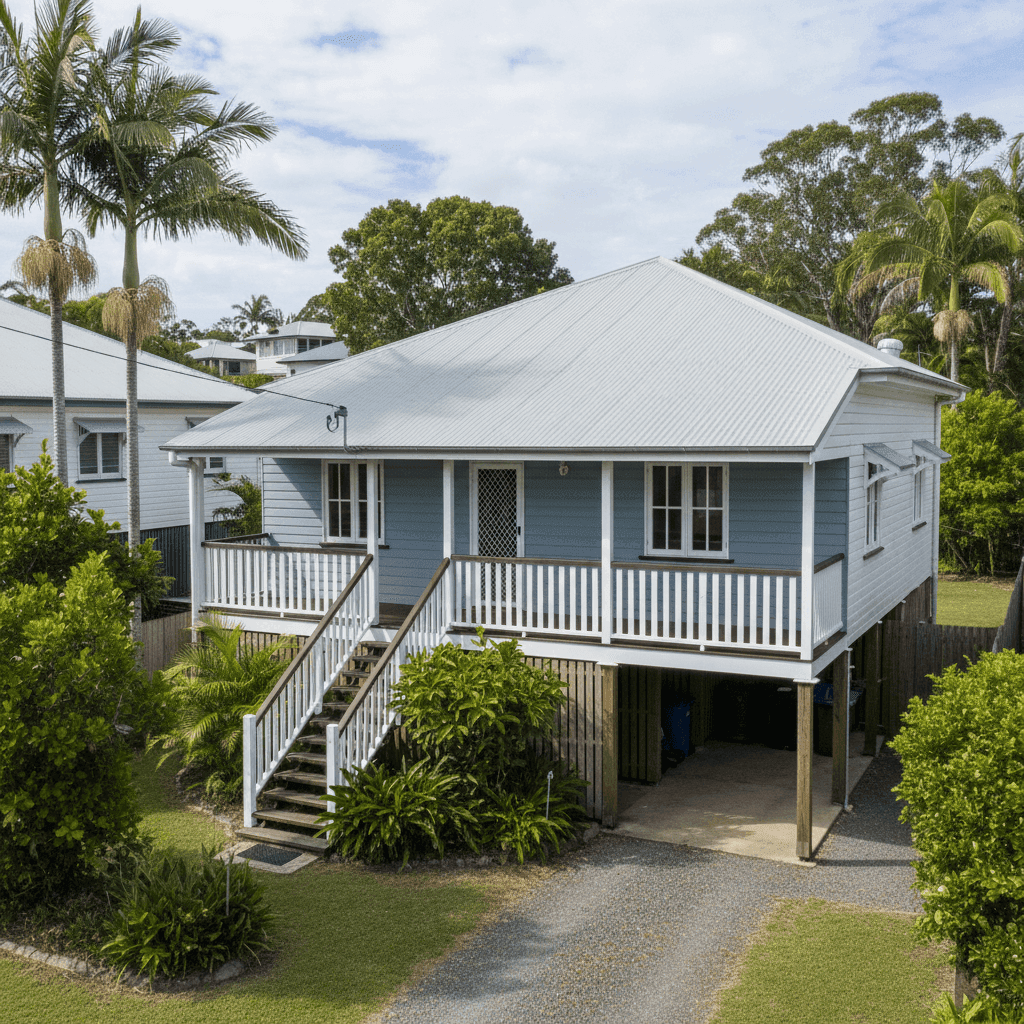
Russell Island, nestled in Moreton Bay just a short ferry ride from the mainland, is a popular destination for owner-occupiers and sea-changers drawn to its relaxed lifestyle and affordable land prices. But what does it actually cost to insure a free standing home out here? This article breaks down a real building insurance quote for a 3-bedroom property on Russell Island (postcode 4184), and puts the numbers in context against suburb, state, and national benchmarks.
---
Is This Quote Fair?
The short answer: yes — and then some. This quote came in at $2,969 per year (or $285 per month) for building-only cover with a $1,000 excess on a home insured for $500,000. CoverClub rates this as CHEAP, meaning it sits below the average for the area.
To put that in perspective, the suburb average for Russell Island sits at $4,219 per year, with a median of $3,948. That means this quote is roughly $1,250 cheaper than the average and comes in below even the 25th percentile benchmark of $3,151 — placing it among the most competitively priced quotes seen in the area.
For homeowners who've been stung by rising premiums in recent years, a result like this is genuinely worth paying attention to. It suggests the insurer has assessed the specific risk profile of this property favourably, and that shopping around can yield meaningfully different outcomes — even within the same suburb.
---
How Russell Island Compares
Insurance pricing in Queensland is notoriously variable, and Russell Island is no exception. Here's how the numbers stack up across different geographies:
| Benchmark | Annual Premium |
|---|---|
| This Quote | $2,969 |
| Russell Island Suburb Average | $4,219 |
| Russell Island Suburb Median | $3,948 |
| Russell Island 25th Percentile | $3,151 |
| Russell Island 75th Percentile | $4,804 |
| LGA (Redland City) Average | $3,178 |
| QLD State Average | $9,129 |
| QLD State Median | $3,903 |
| National Average | $5,347 |
| National Median | $2,764 |
A few things stand out here. First, the Queensland state average of $9,129 is dramatically higher than what most Russell Island homeowners are paying — this is largely driven by high-risk cyclone and flood zones in Far North Queensland pulling the average upward. The state median of $3,903 is a far more representative figure for South East Queensland properties.
Second, the national average of $5,347 reflects the wide spread of insurance costs across Australia, from bushfire-prone regions in Victoria and NSW to cyclone corridors in tropical Queensland. Russell Island, sitting in Moreton Bay, benefits from a relatively moderate risk profile compared to many of these areas.
The Redland City LGA average of $3,178 is also a useful reference point — and this quote comfortably undercuts even that figure, which covers a broad range of properties across the bay islands and mainland suburbs.
(Based on 28 quotes collected for the Russell Island area — a solid sample for a smaller island community.)
---
Property Features That Affect Your Premium
Insurance pricing isn't arbitrary. Underwriters assess a range of property-specific factors when calculating risk, and this home has several characteristics worth understanding.
Weatherboard timber walls are a key consideration. Timber-framed homes can be more susceptible to fire and moisture damage than brick or rendered construction, which some insurers price accordingly. That said, a well-maintained weatherboard home built to the standards of the mid-1990s can still attract competitive premiums.
Steel/Colorbond roofing is generally viewed favourably by insurers. It's durable, resistant to ember attack, and performs well in high-wind conditions — all relevant factors in a coastal island environment like Russell Island.
Stumped foundations are common on Russell Island and throughout the bay islands, where properties are often elevated to manage tidal flooding risk and air circulation. While this construction style is well-suited to the local environment, it does introduce some unique risk factors around subfloor maintenance and potential storm damage.
Construction year (1996) places this home in a relatively modern bracket for the island, where older homes from the 1970s and 1980s are common. Homes built in the 1990s generally meet more contemporary building standards, which can work in the owner's favour at premium time.
Building size of 105 sqm is modest, which directly influences the sum insured and, by extension, the premium calculation. A smaller footprint means less material to replace in the event of a total loss.
No pool, solar panels, or ducted climate control keeps the risk profile straightforward. Each of these additions can introduce incremental cost to a premium, so their absence contributes to a cleaner, lower-cost assessment.
---
Tips for Homeowners in Russell Island
Whether you're renewing your policy or shopping around for the first time, here are some practical steps to make sure you're getting the best deal.
1. Don't set and forget your sum insured. Building costs have risen significantly in recent years, and the cost to rebuild a home today is likely higher than it was when you first took out your policy. Review your sum insured annually and use a building cost calculator to ensure you're not underinsured — especially with a weatherboard home where labour and materials can add up quickly.
2. Shop around at every renewal. This quote demonstrates that premiums for the same property can vary enormously between insurers. The difference between the cheapest and most expensive quotes in Russell Island spans well over $1,600 per year. Comparing multiple quotes before renewing could save you hundreds — start a comparison at CoverClub to see what's available for your address.
3. Maintain your stumped foundation. Insurers and building inspectors alike flag subfloor maintenance as a common issue on bay island properties. Regularly checking for pest damage, rot, and stump deterioration not only protects your home structurally but can help you avoid claim complications down the track.
4. Understand what's not covered. Building-only policies cover the structure of your home but not your belongings. If you have contents worth protecting — furniture, appliances, clothing, and valuables — consider whether a combined building and contents policy makes sense. It's also worth reviewing your policy's flood and storm surge definitions carefully, given Russell Island's coastal location.
---
Compare Your Options with CoverClub
Whether you're a long-time Russell Island local or you've recently made the move to bay island life, making sure your home is properly protected at a fair price matters. CoverClub makes it easy to compare building and contents insurance quotes from multiple insurers in one place. Enter your address and get started today — you might be surprised how much you could save.