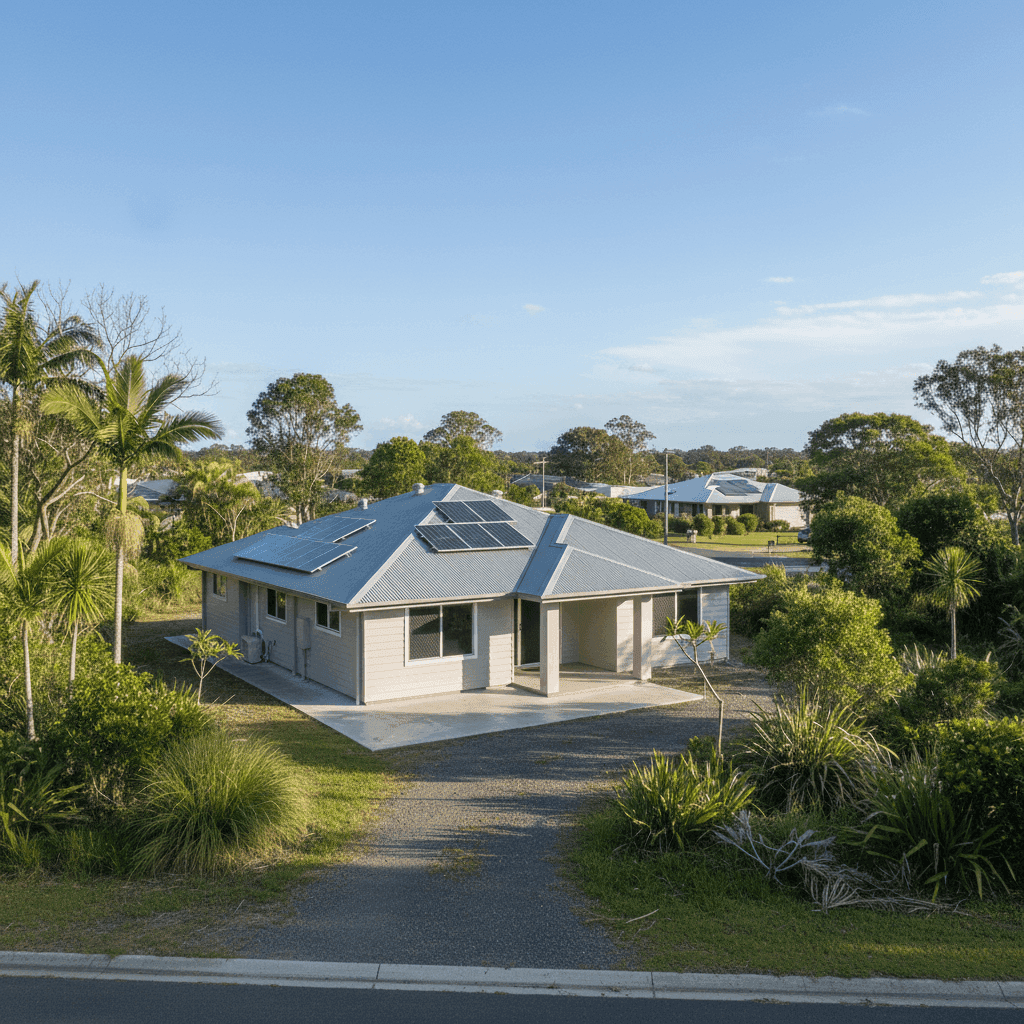
Russell Island, nestled in Moreton Bay just off the southern tip of the Redland Coast, is a popular destination for sea-changers and retirees drawn by its relaxed pace and affordable property prices. For owners of free-standing homes on the island, understanding the true cost of building insurance is essential — particularly given the area's island setting and the unique risk factors that come with it. This article breaks down a recent building-only insurance quote for a 3-bedroom, 2-bathroom free-standing home in Russell Island (QLD 4184) and puts the numbers in context so you can make a confident decision about your own cover.
---
Is This Quote Fair?
The quote in question comes in at $3,511 per year (or $337 per month) for building-only cover on a home insured for $550,000, with a building excess of $2,000. Our independent price rating for this quote is FAIR — Around Average.
That "fair" rating isn't a consolation prize — it actually reflects a reasonably competitive position in a suburb where premiums can vary quite significantly. The suburb average for Russell Island sits at $4,219 per year, meaning this quote comes in roughly $708 below the local average. It also sits comfortably below the suburb's 75th percentile of $4,804/yr, suggesting the homeowner is not being overcharged relative to their neighbours.
That said, there is room to do better. The suburb's 25th percentile is $3,151/yr, which means around a quarter of comparable properties in the area are attracting premiums below that mark. If you're looking to benchmark your own quote, Russell Island's suburb stats page provides a useful reference point based on real quotes collected in the area.
---
How Russell Island Compares
One of the most striking aspects of this quote is how it stacks up against broader benchmarks:
| Benchmark | Premium |
|---|---|
| This Quote | $3,511/yr |
| Russell Island suburb average | $4,219/yr |
| Russell Island suburb median | $3,948/yr |
| Redland LGA average | $3,178/yr |
| QLD state average | $9,129/yr |
| QLD state median | $3,903/yr |
| National average | $5,347/yr |
| National median | $2,764/yr |
The Queensland state average of $9,129/yr looks alarming at first glance, but it's heavily skewed by high-risk postcodes in cyclone-prone regions of Far North Queensland. The state median of $3,903/yr is a much more representative figure — and this quote sits just below it, which is a positive sign.
Compared to the national average of $5,347/yr, this quote is well below the mark, though the national median of $2,764/yr reminds us that cheaper options do exist in lower-risk parts of the country. The Redland LGA average of $3,178/yr is also worth noting — it's lower than the Russell Island suburb average, likely reflecting the mix of mainland and island properties within the LGA. Island locations can carry additional logistical costs for insurers when it comes to claims and repairs, which tends to push premiums slightly higher than mainland equivalents.
---
Property Features That Affect Your Premium
Several characteristics of this property play a meaningful role in shaping the premium:
Hardiplank/Hardiflex External Walls Fibre cement cladding such as Hardiplank and Hardiflex is generally viewed favourably by insurers. It's non-combustible, resistant to rot and termites, and holds up well in humid coastal environments — all of which reduce the likelihood of costly claims.
Steel/Colorbond Roof A Colorbond steel roof is one of the most insurer-friendly roofing materials available in Australia. It's durable, fire-resistant, and performs well in high-wind events. For a property on a bay island, this is a particularly relevant advantage.
Concrete Slab Foundation Slab construction is generally considered low-risk by insurers compared to elevated or timber subfloor foundations. It reduces exposure to flooding underneath the home and limits pest-related damage pathways.
2023 Construction Year As a recently built home, this property benefits from modern building codes and construction standards. Newer homes are typically cheaper to insure than older ones because they're less likely to have ageing materials, outdated wiring, or deferred maintenance issues.
Solar Panels The presence of rooftop solar panels adds a modest layer of complexity for insurers — panels need to be covered under the building policy, and damage to them (from hail, storms, or fire) can be a significant replacement cost. It's worth confirming explicitly with your insurer that solar panels are included in your sum insured.
Ducted Climate Control Ducted air conditioning systems are considered part of the building and should be reflected in the sum insured. These systems can be expensive to repair or replace, so it's important they're accounted for when calculating your building's replacement value.
No Pool, Vinyl Flooring, Standard Fittings The absence of a pool removes a liability and maintenance risk that can sometimes nudge premiums upward. Vinyl flooring and standard-grade fittings keep the overall replacement cost more predictable and contained.
---
Tips for Homeowners in Russell Island
1. Verify your sum insured reflects true rebuilding costs At $550,000, the sum insured on this policy is substantial — but on an island location, rebuilding costs can be higher than the mainland due to transport logistics for materials and tradespeople. Make sure your sum insured accounts for these additional costs, not just the standard per-square-metre build rate.
2. Confirm solar panels are explicitly covered Not all policies automatically extend full cover to rooftop solar systems. Ask your insurer directly whether your panels, inverter, and associated wiring are included in your building cover — and for how much.
3. Shop around at renewal time A "fair" rating means this quote is competitive, but the gap between the 25th and 75th percentile in Russell Island ($3,151/yr vs $4,804/yr) shows there's meaningful variation in the market. Even if you're happy with your current insurer, it costs nothing to compare at renewal. Get a fresh quote at CoverClub to see where you stand.
4. Review your excess settings This policy carries a $2,000 building excess. Opting for a higher excess can reduce your annual premium, which may suit homeowners who are confident in their ability to cover smaller claims out of pocket. Conversely, if cash flow is a concern, a lower excess (at a higher premium) might offer better peace of mind.
---
Compare Your Home Insurance Today
Whether you're a long-time Russell Island local or a recent arrival, it pays to know what the market looks like. CoverClub aggregates real quote data from across Australia so you can see exactly how your premium stacks up — no guesswork, no jargon. Start your free comparison at CoverClub and find out if you're getting the best deal on your building insurance.