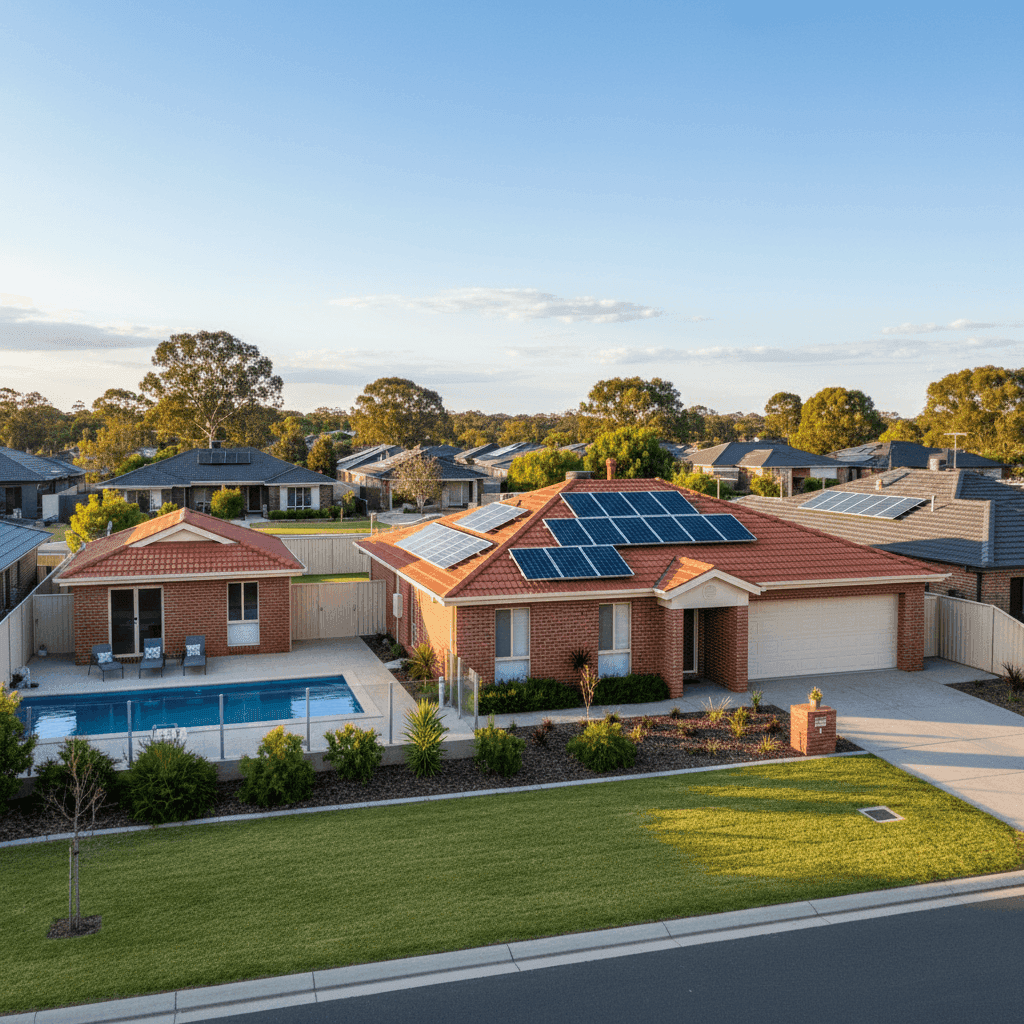
Rutherford is a well-established suburb in the Hunter Valley region of New South Wales, sitting within the Maitland local government area. It's a popular choice for families thanks to its proximity to Maitland's CBD, good schools, and relatively affordable housing. This article takes a close look at a real home and contents insurance quote for a four-bedroom, free-standing home in Rutherford (postcode 2320), breaking down whether the price stacks up — and what homeowners in the area can do to make sure they're getting a fair deal.
---
Is This Quote Fair?
The quote in question comes in at $4,035 per year (or $380/month) for combined home and contents cover, with a building sum insured of $1,087,000 and contents valued at $140,000. Both the building and contents excess are set at $2,000.
Our pricing analysis rates this quote as Expensive — above average for the Rutherford area. Based on a sample of 40 quotes collected for postcode 2320, the suburb average sits at $2,799/year and the median at $2,551/year. This quote is roughly 44% above the suburb average and nearly 58% above the median — a meaningful gap that's worth investigating before simply accepting the premium at face value.
That said, context matters. This is a larger-than-average home at 277 sqm, built in 1958, with a number of features — including a swimming pool, solar panels, ducted climate control, and a granny flat — that all contribute to a higher insured value and, in turn, a higher premium. The building sum insured of $1,087,000 is also on the higher end, which will naturally push the cost up compared to properties with more modest rebuild values.
Still, even accounting for these factors, it's worth shopping around. A quote that sits well above the local median deserves scrutiny.
---
How Rutherford Compares
To put this quote in perspective, here's how Rutherford's pricing landscape compares to broader benchmarks:
| Benchmark | Average Premium | Median Premium |
|---|---|---|
| Rutherford (2320) | $2,799/yr | $2,551/yr |
| Maitland LGA | $4,832/yr | — |
| NSW | $9,528/yr (avg) | $3,770/yr |
| National | $5,347/yr (avg) | $2,764/yr |
A few things stand out here. The NSW state average of $9,528/year is heavily skewed by high-risk and high-value properties across the state — the median of $3,770/year is a far more representative figure for typical NSW homeowners. Similarly, the national average of $5,347/year is pulled upward by cyclone-prone regions in Queensland and Western Australia.
Rutherford's suburb median of $2,551/year is actually slightly below the national median of $2,764/year, suggesting it's a relatively affordable area to insure — at least for a standard property. The Maitland LGA average of $4,832/year, however, is notably higher than the suburb figure, which may reflect a wider mix of property types and risk profiles across the broader council area.
You can explore detailed pricing data for this postcode at our Rutherford suburb stats page, or compare it against all NSW suburbs and national benchmarks.
---
Property Features That Affect Your Premium
Several characteristics of this property have a direct bearing on the premium:
Age of construction (1958) Homes built in the late 1950s often have older plumbing, wiring, and structural elements that can be more expensive to repair or replace. Insurers typically apply a loading to older homes, particularly those approaching or exceeding 70 years of age. Brick veneer construction and a tiled roof are generally viewed favourably — both are durable materials — but the stump foundation may attract additional scrutiny, as subfloor spaces can be prone to moisture, pest activity, and movement over time.
Timber and laminate flooring While aesthetically popular, timber and laminate floors can be costly to replace following water damage or fire. This contributes to a higher contents and building replacement estimate.
Swimming pool A pool adds both liability exposure and replacement cost to a policy. Insurers factor in the cost of pool equipment, fencing compliance, and the potential for third-party injury when calculating premiums.
Solar panels Rooftop solar systems are increasingly common, but they add to the rebuild cost of a home. Many insurers now include solar panels under building cover, though it's worth confirming this with your provider and ensuring the sum insured reflects their replacement value.
Granny flat A secondary dwelling on the property increases the overall insured value and can complicate claims if the flat is tenanted or used commercially. Make sure your policy explicitly covers the granny flat as part of the building sum insured.
Ducted climate control Ducted systems are expensive to install and repair, and they're typically covered under building insurance. Their presence justifies a higher sum insured, which flows through to the premium.
No cyclone risk Rutherford is not in a designated cyclone risk zone, which is a meaningful saving compared to properties in northern Queensland or parts of Western Australia. This keeps the base risk profile relatively contained.
---
Tips for Homeowners in Rutherford
1. Review your sum insured carefully A building sum insured of $1,087,000 is substantial. Make sure this figure reflects the actual cost to rebuild — not the market value of the property. Overinsuring can mean you're paying more in premiums than necessary, while underinsuring leaves you exposed at claim time. Use a reputable building cost calculator or consult a quantity surveyor to validate the figure.
2. Compare multiple quotes before renewing Given this quote is rated above average for the suburb, it's well worth comparing alternatives. Premiums for the same property can vary by hundreds — sometimes thousands — of dollars between insurers. Get a comparison quote at CoverClub to see what other providers are offering for your specific address and property profile.
3. Consider your excess settings Both the building and contents excess are set at $2,000. Opting for a higher voluntary excess can meaningfully reduce your annual premium. If you have a solid emergency fund and are unlikely to make small claims, a higher excess is often a cost-effective trade-off.
4. Check your granny flat and solar panel coverage Confirm in writing that your policy covers both the granny flat (as a permanent structure) and the solar panel system. These are sometimes excluded or capped under standard policies, and the cost of replacing either can be significant. If they're not adequately covered, it may be worth seeking a specialist policy or endorsement.
---
Ready to Compare?
Whether you're reviewing an existing policy or shopping for cover for the first time, comparing quotes is the single most effective way to make sure you're not overpaying. CoverClub makes it easy to benchmark your premium against real data from properties in your suburb. Start your comparison today at CoverClub and find out if your current insurer is giving you a fair deal.