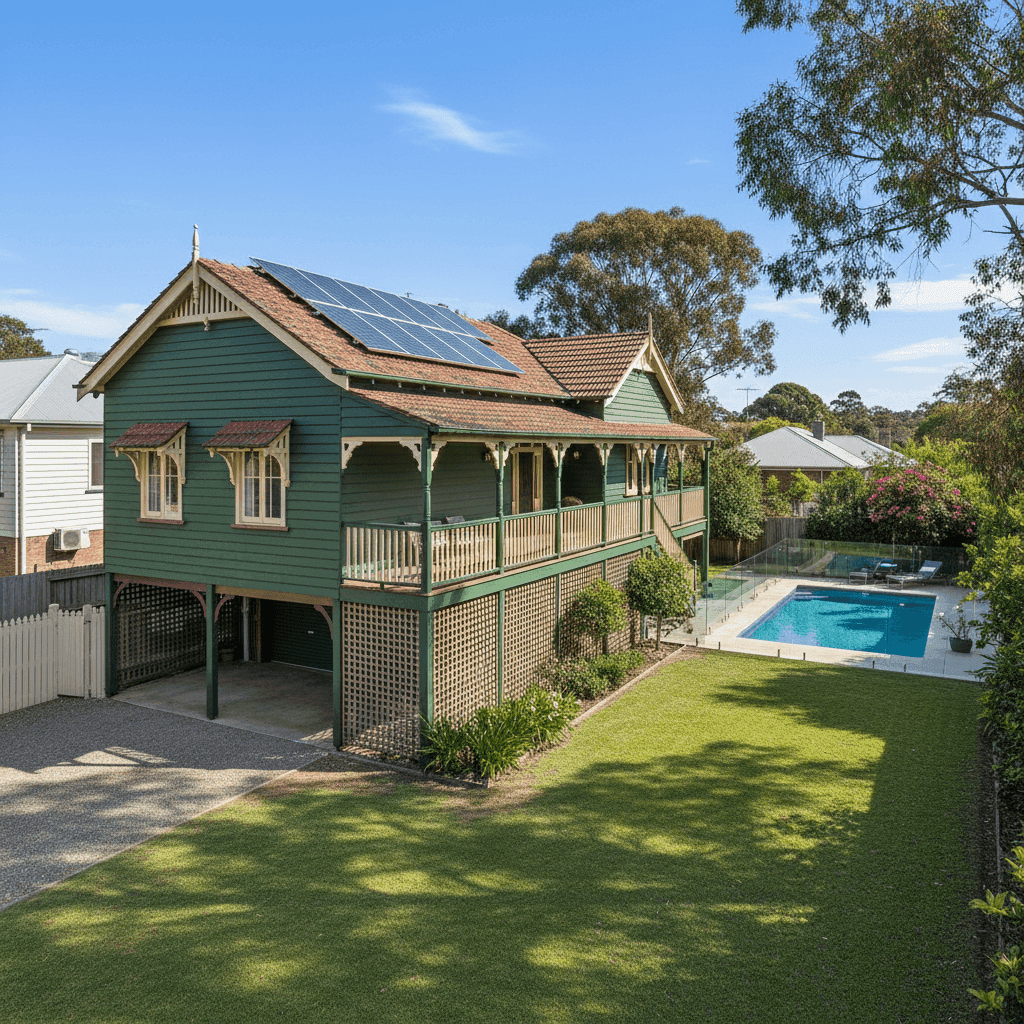
If you own a free standing home in Rutherford, NSW 2320, you're likely aware that insurance costs can vary enormously depending on your property's age, construction, and location. This article breaks down a real home and contents insurance quote for a 3-bedroom, 2-bathroom weatherboard home in Rutherford — and puts it into context against suburb, state, and national benchmarks — so you can judge whether your own premium stacks up.
---
Is This Quote Fair?
The annual premium for this property came in at $1,955 per year (or $192/month), covering $550,000 in building sum insured and $50,000 in contents. Our price rating for this quote is CHEAP — below average for the area.
To put that in perspective: the suburb average for Rutherford sits at $5,159/year, with a median of $4,052/year. That means this quote is coming in at roughly 38% of the suburb average — a substantial saving. Even compared to the 25th percentile (the cheapest quarter of quotes in the area, at $2,254/year), this premium still undercuts the field.
For a property with several characteristics that typically push premiums higher — including a heritage-era build, timber construction, and stump foundations — landing a quote this far below the local average is genuinely notable. It suggests the insurer has assessed the specific risk profile favourably, possibly due to the relatively modest contents value, the elevated construction style, or competitive pricing at the time of quoting.
That said, both excess amounts are set at $5,000 for building and contents respectively. A higher excess is one of the most common levers used to reduce premiums, so it's worth considering whether you'd be comfortable covering that amount out of pocket in the event of a claim.
---
How Rutherford Compares
Rutherford sits within the Maitland region of the Hunter Valley, and insurance pricing in this part of NSW reflects a range of local risk factors — from storm and flood exposure to the prevalence of older housing stock.
Here's how the numbers line up:
| Benchmark | Annual Premium |
|---|---|
| This Quote | $1,955 |
| Rutherford 25th Percentile | $2,254 |
| Rutherford Median | $4,052 |
| Rutherford Average | $5,159 |
| Rutherford 75th Percentile | $5,600 |
| LGA (Dungog) Average | $4,832 |
| NSW State Average | $3,801 |
| NSW State Median | $3,410 |
| National Average | $2,965 |
| National Median | $2,716 |
A few things stand out here. First, Rutherford's average premium of $5,159 is significantly above both the NSW state average ($3,801) and the national average ($2,965). This tells us that insurers generally view homes in this postcode as carrying above-average risk — likely driven by the older housing stock, flood-prone areas within the broader Hunter Valley region, and the concentration of timber-framed construction.
The LGA average for Dungog ($4,832) is similarly elevated, reinforcing that this is a region where insurers price risk carefully. Against that backdrop, securing a quote under $2,000 represents real value — though it's always worth checking that the policy terms and coverage limits actually meet your needs before focusing solely on the price.
---
Property Features That Affect Your Premium
Several characteristics of this property are worth understanding from an insurance perspective:
Weatherboard timber construction (1926) Older weatherboard homes are among the most expensive to insure in Australia. Timber is more susceptible to fire, termite damage, and general wear, and sourcing period-appropriate materials for repairs can be costly. A home built in 1926 is nearly a century old, which means insurers factor in both the replacement cost complexity and the potential for hidden structural issues.
Stump foundations Homes on stumps — common in older Australian residential architecture — are elevated off the ground, which can actually be a positive in flood-prone areas by reducing inundation risk to the main living areas. However, the subfloor space also introduces risks around pest ingress, timber rot, and structural movement over time.
Tiled roof Terracotta or concrete tile roofs are generally viewed favourably by insurers compared to older iron or asbestos-cement alternatives. Tiles are durable and fire-resistant, which can have a moderating effect on premiums.
Timber and laminate flooring Timber floors are susceptible to water damage and can be expensive to repair or replace. This is a factor insurers consider when pricing contents and building cover, particularly in areas with storm or flood risk.
Swimming pool A pool adds to the insured value of the property and introduces liability considerations. It's worth confirming your policy explicitly covers pool-related structures and any associated liability.
Solar panels Solar panels are increasingly common in Australian homes, but they need to be specifically covered under your building policy. Confirm that your sum insured accounts for the replacement cost of the panels and inverter, as these can add tens of thousands of dollars to a rebuild.
Elevated construction (less than 1m) The slight elevation of this home may offer modest protection against surface water intrusion during heavy rainfall events — a relevant consideration given the Hunter Valley's history with flooding.
---
Tips for Homeowners in Rutherford
1. Review your sum insured regularly Construction costs have risen sharply in recent years. A $550,000 building sum insured may have been appropriate at the time of quoting, but it's worth cross-checking against a current building cost estimator — particularly for a heritage-era home where like-for-like replacement can be significantly more expensive than a standard modern build.
2. Confirm solar panels and pool are explicitly covered Don't assume these are automatically included. Ask your insurer specifically whether the solar system (panels, inverter, mounting hardware) and pool structure are covered under the building sum insured, and whether any exclusions apply.
3. Understand your flood cover status Parts of the Hunter Valley — including areas around Maitland and the broader 2320 postcode — have experienced significant flooding. Check whether your policy includes flood cover as standard or as an optional add-on, and whether your specific property is classified as flood-affected by your insurer.
4. Weigh up the $5,000 excess carefully A $5,000 excess keeps the premium low, but it also means smaller claims may not be worth making. Think about whether you'd prefer a lower excess (which would increase the premium) or whether you're comfortable self-insuring for minor incidents up to that threshold.
---
Compare Your Options at CoverClub
Home insurance pricing in Rutherford varies widely — as the data above shows, the gap between the cheapest and most expensive quotes in this suburb can be thousands of dollars per year. The best way to know if you're getting a fair deal is to compare. Get a home insurance quote at CoverClub and see how your premium stacks up against real data from your suburb, your state, and across Australia.