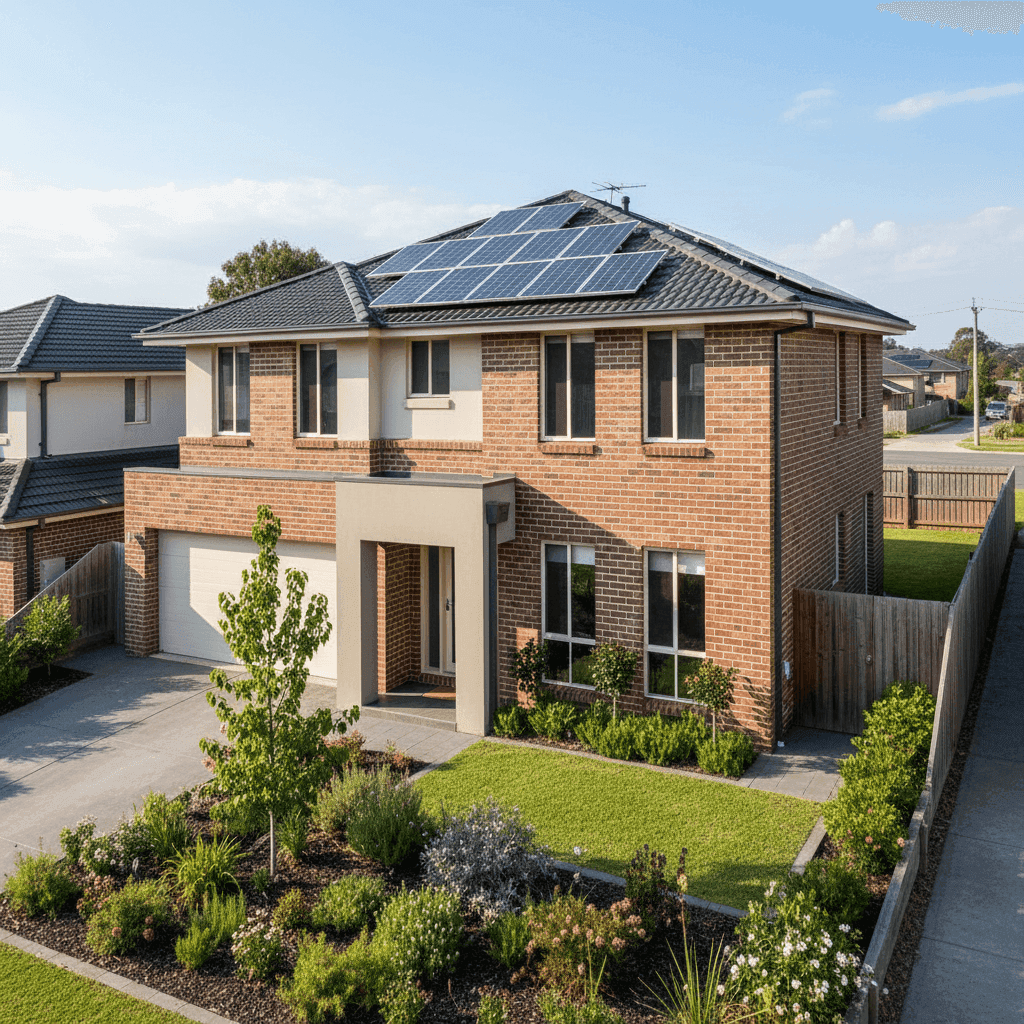
If you own a free standing home in Rutherford, NSW 2320, you've probably wondered whether your home insurance premium is competitive — or whether you're quietly paying more than you need to. This article breaks down a real home and contents insurance quote for a five-bedroom, brick veneer property in Rutherford, compares it against suburb, state, and national benchmarks, and offers practical tips to help you get better value on your cover.
---
Is This Quote Fair?
The quote in question comes in at $3,210 per year (or $301 per month) for a combined home and contents policy, covering a building sum insured of $637,000 and contents valued at $200,000. Both the building and contents excess are set at $1,000.
Our price rating for this quote is FAIR — Around Average, and the data backs that up. Within the Rutherford suburb, the average annual premium sits at $5,159 and the median at $4,052. This quote lands below both of those figures, which is a solid result. It also falls comfortably below the NSW state average of $3,801 per year and is only modestly above the national average of $2,965.
In short, this isn't a bargain-bin premium, but it's meaningfully cheaper than what many Rutherford homeowners are paying — and that's worth acknowledging. For a five-bedroom home with a sizeable building sum insured, sitting below the suburb median by over $800 per year is a genuine saving.
---
How Rutherford Compares
To put this quote in proper context, here's how Rutherford stacks up against broader benchmarks:
| Benchmark | Average Premium | Median Premium |
|---|---|---|
| Rutherford (2320) | $5,159/yr | $4,052/yr |
| NSW State | $3,801/yr | $3,410/yr |
| National | $2,965/yr | $2,716/yr |
| Dungog LGA | $4,832/yr | — |
(Based on 39 quotes collected for the Rutherford suburb.)
A few things stand out here. Rutherford's average premium is notably higher than both the NSW state average and the national average — by $1,358 and $2,194 respectively. This suggests that local risk factors, property values, and the mix of homes in the area push premiums upward compared to the broader market.
The Dungog LGA average of $4,832 per year also reflects elevated pricing across the region, likely influenced by factors such as weather exposure, proximity to bushland, and the general cost of rebuilding in regional NSW.
You can explore the full breakdown of Rutherford suburb insurance statistics, compare against NSW state averages, or take a look at national home insurance benchmarks to see where your own quote sits.
---
Property Features That Affect Your Premium
Every insurer prices risk differently, but the characteristics of a property play a significant role in determining what you'll pay. Here's how the features of this particular home are likely influencing the premium.
Brick Veneer Walls & Tiled Roof
Brick veneer construction is generally viewed favourably by insurers. It offers solid fire resistance and structural durability, which can help keep premiums lower compared to timber-framed or clad homes. A tiled roof complements this — tiles are durable, weather-resistant, and widely regarded as a lower-risk roofing material than alternatives like corrugated iron in some contexts.
Concrete Slab Foundation
A slab foundation is standard for homes built in this era and region. It's generally considered low-risk from an insurance perspective, as there are no subfloor spaces that can harbour moisture or pest damage.
Construction Year: 2008
A home built in 2008 benefits from relatively modern building standards, including improved fire safety requirements and structural codes introduced in the 2000s. Insurers typically view homes from this period more favourably than older stock, which may have outdated wiring, plumbing, or materials.
Solar Panels
This property has solar panels installed, which is increasingly common across Australian homes. Solar panels can add a modest amount to your premium, as they increase the insured replacement value of the roof and can present additional risks during storm or hail events. It's important to confirm that your policy explicitly covers solar panels — not all standard policies do by default.
Building Size: 214 sqm
At 214 square metres, this is a generously sized home. A larger floor area means higher rebuild costs, which directly influences the building sum insured of $637,000. Ensuring this figure accurately reflects current construction costs in regional NSW is critical — underinsurance remains a significant risk for Australian homeowners.
Standard Fittings
The property features standard-quality fittings rather than premium or luxury finishes. This keeps the contents and building replacement costs more predictable, and generally results in a more straightforward claims process.
---
Tips for Homeowners in Rutherford
Whether you're reviewing your existing policy or shopping for new cover, these practical steps can help you get better value.
1. Review your sum insured annually Construction costs in NSW have risen significantly in recent years. A building sum insured set even two or three years ago may no longer reflect the true cost of rebuilding your home. Use a building cost calculator or speak to a local builder to sense-check your figure — and remember that underinsurance can leave you seriously out of pocket after a major claim.
2. Confirm solar panel coverage Given that this property has solar panels, it's worth reading the fine print of any policy carefully. Some insurers include solar panels as part of the building cover automatically; others require a specific endorsement or list them as an optional extra. Make sure you're not left with an uncovered asset worth thousands of dollars.
3. Compare quotes across multiple insurers Rutherford's suburb average of $5,159 per year shows there's a wide spread of pricing in this market — the 25th percentile sits at $2,254 and the 75th at $5,600. That's a significant range, and it means shopping around can make a real difference. Don't assume your renewal price is competitive just because it feels familiar.
4. Consider your excess strategically Both the building and contents excess on this quote are set at $1,000. Opting for a higher excess can reduce your annual premium, but only makes sense if you're confident you could comfortably cover that amount out of pocket in the event of a claim. Review your financial position and adjust accordingly.
---
Ready to Compare?
Whether this quote matches your situation or you're simply curious about what's available, comparing multiple policies side by side is the smartest way to make sure you're getting the right cover at the right price. Get a home insurance quote at CoverClub and see how your premium stacks up against the market in seconds.