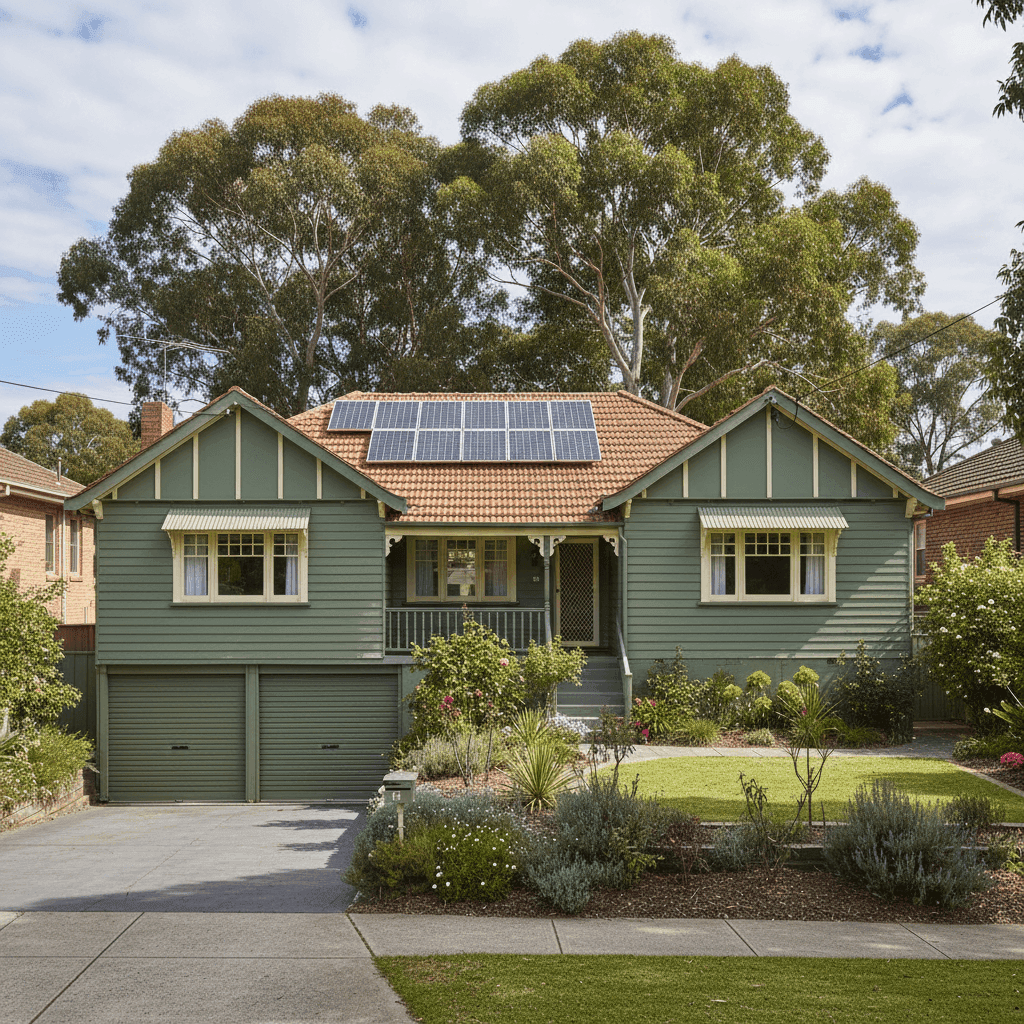
Rutherford is a well-established suburb in the Hunter Valley region of New South Wales, sitting within the Maitland local government area. It's a predominantly residential area with a mix of older character homes and newer developments — exactly the kind of suburb where understanding your home insurance costs can make a real difference to your household budget. This article breaks down a real home and contents insurance quote for a four-bedroom, two-bathroom free-standing home in Rutherford (postcode 2320), and puts the numbers into context against suburb, state and national benchmarks.
---
Is This Quote Fair?
The annual premium for this property came in at $2,031 per year (or $195/month), covering both building (sum insured: $400,000) and contents ($50,000), each with a $1,000 excess. Our price rating for this quote is FAIR — Around Average.
That rating holds up well under scrutiny. Based on 40 quotes collected for the Rutherford area, the suburb average sits at $2,799/yr and the median at $2,551/yr. This quote lands below both figures, which is a positive sign. It also sits comfortably between the 25th percentile ($1,913/yr) and the 75th percentile ($3,448/yr), placing it squarely in the middle of the market — not a bargain, but certainly not overpriced either.
In practical terms, this homeowner is paying roughly $520 less per year than the suburb average, which is meaningful savings without having to sacrifice meaningful cover. The "Fair" rating reflects that there's still room to potentially do better, but this quote is competitive for the property type and location.
---
How Rutherford Compares
To properly appreciate this quote, it helps to zoom out and look at the broader picture.
| Benchmark | Average Premium | Median Premium |
|---|---|---|
| Rutherford (2320) | $2,799/yr | $2,551/yr |
| NSW State | $9,528/yr | $3,770/yr |
| National | $5,347/yr | $2,764/yr |
| Maitland LGA | $4,832/yr | — |
The NSW state average of $9,528/yr looks alarming at first glance, but it's heavily skewed by high-risk and high-value properties across the state — coastal flood zones, bushfire-prone areas, and premium Sydney real estate all pull that figure upward. The state median of $3,770/yr is a more useful comparison point, and this quote sits well below it.
Against national figures, the story is similarly encouraging. The national average of $5,347/yr is inflated by cyclone-prone Queensland and Northern Territory properties, while the national median of $2,764/yr is a closer reflection of typical Australian home insurance costs. At $2,031/yr, this Rutherford quote comes in below the national median — a solid result.
Perhaps most telling is the comparison to the broader Maitland LGA average of $4,832/yr. Rutherford's suburb median of $2,551/yr is significantly lower, suggesting that insurers view this particular pocket of the Hunter Valley as relatively lower risk compared to other parts of the same council area.
---
Property Features That Affect Your Premium
Several characteristics of this property will have influenced the final premium, for better and for worse.
Weatherboard timber construction is one of the more significant rating factors. Built in 1957, this home's external walls are weatherboard wood — a material that insurers treat with caution due to its susceptibility to fire, rot, and pest damage compared to brick veneer or full brick. Older timber homes can attract higher premiums, so achieving a "Fair" rating despite this is noteworthy.
Stump foundations are common in homes of this era across regional NSW, and they introduce some unique considerations. Subfloor ventilation issues, timber decay, and the potential for movement over time are all factors insurers weigh up. Combined with timber and laminate flooring throughout, the home has a consistent profile of older-style construction materials.
Tiled roof is generally viewed favourably by insurers — tiles are durable and perform well in most weather conditions, which likely helps offset some of the premium loading from the timber walls and stumps.
Solar panels are an increasingly common feature and worth noting. Most standard home insurance policies cover rooftop solar as part of the building sum insured, but it's worth confirming this with your insurer and ensuring the $400,000 building sum insured adequately accounts for the replacement cost of the panels.
Ducted climate control adds to the overall replacement value of the home and is typically covered under the building policy. Again, it's worth verifying this is captured correctly in the sum insured.
The absence of a pool removes one common source of premium loading and liability exposure, which works in the homeowner's favour.
---
Tips for Homeowners in Rutherford
1. Review your building sum insured regularly. At $400,000 for a 130 sqm home built in 1957, the sum insured needs to reflect the true cost of rebuilding — not the market value of the property. Construction costs in regional NSW have risen sharply in recent years. Factor in the solar panels, ducted air conditioning, and the cost of demolition and site clearance when reviewing this figure.
2. Understand what "weatherboard" means for your cover. Timber-framed and weatherboard homes can have specific exclusions or conditions in some policies, particularly around gradual deterioration, pest damage, or subfloor issues. Read your Product Disclosure Statement (PDS) carefully to understand what is and isn't covered for your style of construction.
3. Consider a higher excess to reduce your premium. Both the building and contents excess are set at $1,000 each. If you have the financial buffer to absorb a higher out-of-pocket cost in the event of a claim, increasing your excess to $2,000 or more can meaningfully reduce your annual premium. This is a worthwhile lever to explore when comparing quotes.
4. Don't set-and-forget your contents cover. $50,000 in contents cover is a starting point, but it's easy to underestimate the true replacement value of everything inside a four-bedroom home. Do a room-by-room audit periodically — electronics, appliances, clothing, furniture, and jewellery all add up quickly. Underinsurance is one of the most common issues Australian homeowners face at claim time.
---
Compare Your Options with CoverClub
Whether you're renewing your existing policy or shopping around for the first time, comparing quotes is the single most effective way to make sure you're not overpaying. CoverClub makes it easy to see how your premium stacks up against real data from your suburb and beyond. Get a home insurance quote today and find out if you could be paying less for the same level of cover.