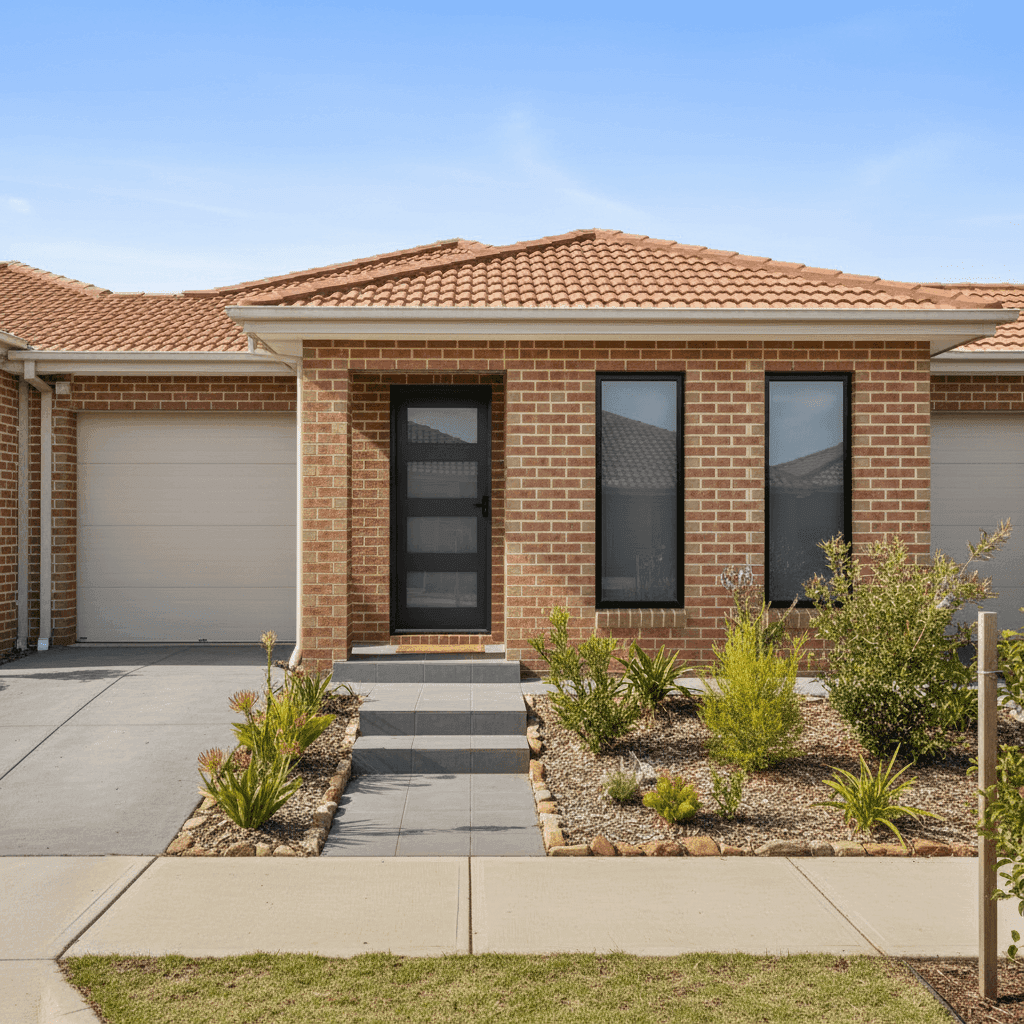
If you own a semi detached home in Rutherford, NSW 2320, you already know it's one of the Hunter Region's more established and growing residential pockets. But when your home insurance renewal lands in the letterbox, it can be hard to know whether you're getting a fair deal — or quietly overpaying. This article breaks down a real home and contents insurance quote for a five-bedroom semi detached in Rutherford, comparing it against local, state, and national benchmarks to help you make a more informed decision.
---
Is This Quote Fair?
The quote in question comes in at $3,485 per year (or $334/month) for combined home and contents cover, with a building sum insured of $1,100,000 and contents valued at $34,000. Both the building and contents excess are set at $1,000.
Our pricing analysis rates this quote as Expensive — above average for the area.
To put that in context: the suburb average annual premium in Rutherford sits at $2,799, while the median is a lower $2,551. This quote lands roughly 25% above the suburb average and about 37% above the suburb median. It does, however, fall just under the 75th percentile for the area ($3,448), meaning it's not quite the most expensive quote we've seen locally — but it's firmly in the upper range.
That said, "expensive" doesn't automatically mean "wrong." A high sum insured of $1.1 million on a large, recently built home with above-average fittings quality will naturally push premiums upward. The question is whether the price reflects the risk and coverage accurately, or whether there's room to shop around.
---
How Rutherford Compares
Understanding where Rutherford sits relative to broader benchmarks is useful context for any homeowner reviewing their policy.
| Benchmark | Average Premium | Median Premium |
|---|---|---|
| Rutherford (NSW 2320) | $2,799/yr | $2,551/yr |
| LGA (Dungog) | $4,832/yr | — |
| NSW State | $9,528/yr | $3,770/yr |
| National | $5,347/yr | $2,764/yr |
A few things stand out here. The NSW state average of $9,528 is dramatically higher than the Rutherford suburb average — this is largely driven by high-value coastal and flood-prone properties across the state skewing the mean. The state median of $3,770 is a more useful comparison, and the quote of $3,485 actually sits below that figure.
Nationally, the picture is similar: the national average of $5,347 is pulled up by expensive markets, while the national median of $2,764 is closer to what typical Australian homeowners pay.
Rutherford itself is relatively affordable compared to its LGA average. The Dungog LGA average of $4,832 is notably higher than the suburb average, suggesting that rural and semi-rural properties in the broader local government area carry more risk (and cost) than Rutherford's suburban streets.
You can explore more localised data on the Rutherford suburb stats page, or compare across all of NSW and nationally.
> Note: Our suburb comparison is based on a sample of 40 quotes for the Rutherford area, which provides a reasonable benchmark but may not capture every insurer or property type.
---
Property Features That Affect Your Premium
Several characteristics of this particular property will be influencing the premium — some pushing it higher, others keeping it in check.
Size and Age
At 286 sqm, this is a sizeable home — considerably larger than the typical Australian dwelling. Bigger homes cost more to rebuild, which directly lifts the building sum insured and, in turn, the premium. Built in 2023, the property is brand new, which is generally a positive signal for insurers: modern construction standards, compliant electrical and plumbing systems, and no ageing materials to worry about.
Construction: Brick Veneer Walls and Tiled Roof
Brick veneer is one of the most common and well-regarded wall types in Australian residential construction. Insurers tend to view it favourably — it offers solid fire resistance and durability without the full weight (and rebuild cost) of double brick. A tiled roof is similarly well-regarded, offering longevity and resistance to everyday weather events. Together, these construction materials are unlikely to be adding significant loading to the premium.
Slab Foundation and Tiled Flooring
A concrete slab foundation is standard for modern builds and generally considered low-risk by insurers. Tile flooring throughout is durable and less susceptible to water damage than timber or carpet, which can be a modest positive factor.
Above-Average Fittings Quality
This is one area that will be nudging the premium upward. Above-average fittings — think stone benchtops, quality cabinetry, premium tapware, and high-end appliances — cost significantly more to repair or replace after a claim. Insurers factor this into their rebuild cost estimates, which is reflected in both the high sum insured and the overall premium.
Ducted Climate Control
The presence of ducted climate control adds to the replacement value of the home. These systems can cost tens of thousands of dollars to install, and their inclusion in the building sum insured is appropriate — but it does contribute to a higher premium.
No Pool, No Solar
The absence of a pool and solar panels removes two common sources of additional premium loading, which is a minor saving in the overall picture.
---
Tips for Homeowners in Rutherford
If you're reviewing your home insurance in Rutherford and wondering how to get better value, here are a few practical steps worth considering.
1. Check your sum insured carefully A building sum insured of $1.1 million is substantial. Make sure it reflects the actual rebuild cost — not the market value — of your home. Overinsuring is a common and costly mistake. Use an independent building cost calculator or speak with a quantity surveyor to validate the figure.
2. Shop around before renewing Loyalty doesn't always pay in insurance. With a quote sitting above the suburb average, it's worth getting at least two or three competing quotes before renewing. Premiums for the same property can vary by hundreds of dollars between insurers. Compare quotes at CoverClub to see what else is available.
3. Consider your excess level Both the building and contents excess are set at $1,000. Increasing your excess — say, to $1,500 or $2,000 — can meaningfully reduce your annual premium. Just make sure the excess is an amount you could comfortably cover out of pocket if a claim arose.
4. Review your contents value annually The contents sum insured of $34,000 may be appropriate, but it's worth revisiting each year. Underinsuring your contents means you may not be fully covered after a burglary or fire, while overinsuring means you're paying for cover you don't need.
---
Ready to Compare?
Whether this quote is the right one for your home or not, the best way to find out is to compare. At CoverClub, we make it easy to benchmark your premium against real quotes in your area and find cover that actually fits your situation. Get a home insurance quote today and see how much you could save.