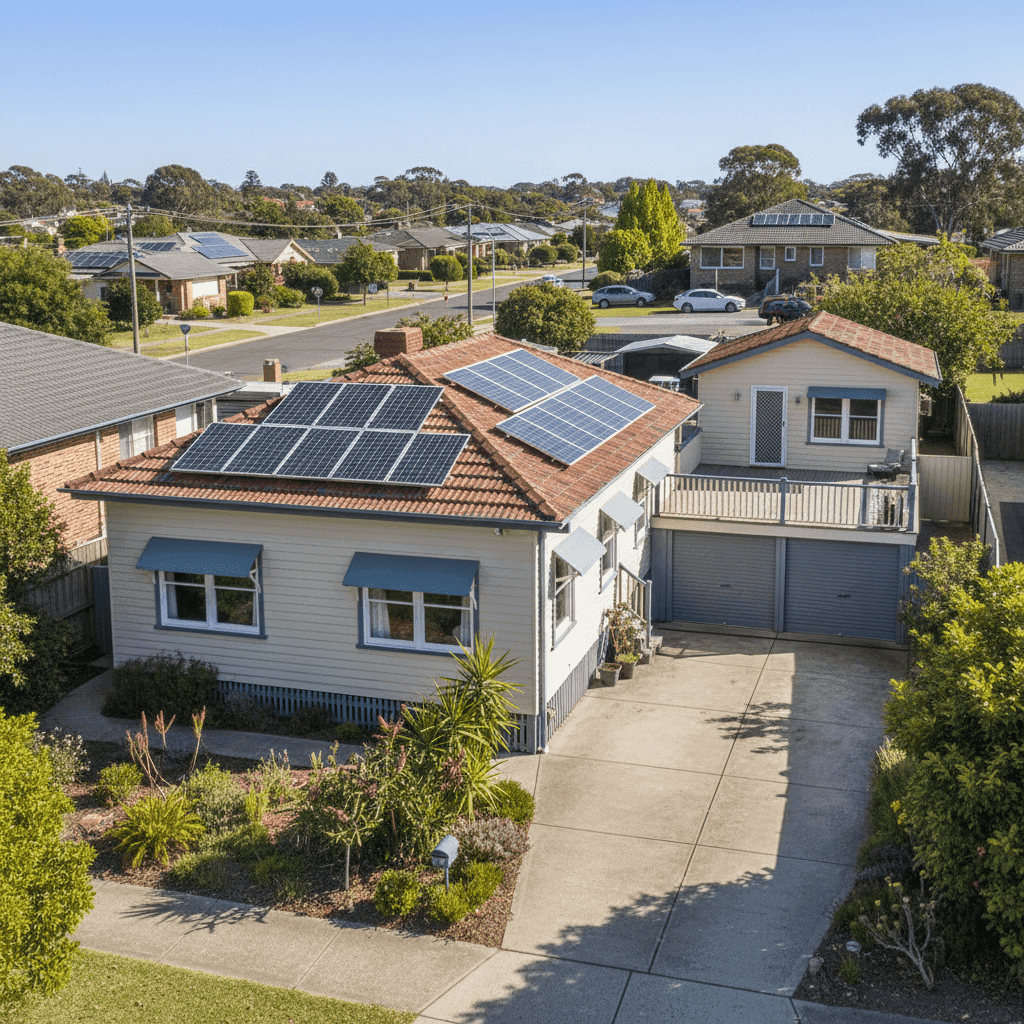
Rutherford is a well-established residential suburb in the Hunter Valley, sitting within the Maitland local government area of New South Wales. It's a popular choice for families thanks to its proximity to Maitland's amenities, good schools, and relatively affordable housing. But for homeowners with a free standing property in the area, understanding what drives your insurance premium — and whether you're getting a fair deal — is just as important as finding the right home in the first place.
This article breaks down a recent home and contents insurance quote for a four-bedroom, weatherboard free standing home in Rutherford (postcode 2320), comparing it against local, state, and national benchmarks to help you make a more informed decision.
---
Is This Quote Fair?
The quote in question comes in at $3,026 per year (or $283/month) for combined home and contents cover, with a building sum insured of $600,000 and contents valued at $50,000. Both the building and contents excess are set at $1,000.
Our price rating for this quote is FAIR — Around Average, which is a reasonable outcome for a property of this type and age. Here's why:
The suburb average for Rutherford sits at $2,799/year, with a median of $2,551/year. At $3,026, this quote lands above both the average and median, but comfortably within the 75th percentile of $3,448/year. In other words, roughly three-quarters of comparable quotes in the area come in at or below this price — so while you're not getting the cheapest deal on the market, you're also not being overcharged.
It's worth noting that the building sum insured of $600,000 is on the higher end for a suburb like Rutherford, which will naturally push the premium upward. A lower (but still adequate) sum insured could bring the annual cost down meaningfully.
---
How Rutherford Compares
To put this quote in proper context, it helps to zoom out and look at the broader picture.
| Benchmark | Average Premium | Median Premium |
|---|---|---|
| Rutherford (2320) | $2,799/yr | $2,551/yr |
| Dungog LGA | $4,832/yr | — |
| NSW | $9,528/yr | $3,770/yr |
| National | $5,347/yr | $2,764/yr |
A few things stand out here. The NSW state average of $9,528/year is dramatically higher than the Rutherford suburb average — largely because NSW includes high-risk coastal and flood-prone areas that significantly inflate the state mean. The median of $3,770/year is a more useful comparison, and Rutherford sits well below it.
Looking at the national picture, the average of $5,347/year is again skewed by high-risk regions in Queensland and northern Australia. The national median of $2,764/year is actually slightly above Rutherford's own median, which suggests Rutherford is a relatively affordable suburb to insure compared to much of the country.
Interestingly, the Dungog LGA average of $4,832/year is notably higher than Rutherford's suburb average, which may reflect flood risk and rural property characteristics in the broader local government area. Rutherford's urban location within the LGA appears to work in homeowners' favour.
Based on a sample of 40 quotes from the Rutherford area, this quote sits in a reasonable position — not the cheapest available, but well within normal range for the property profile.
---
Property Features That Affect Your Premium
Several characteristics of this property have a direct bearing on what insurers charge. Understanding them can help you anticipate costs and potentially reduce them.
Weatherboard timber construction is one of the most significant factors here. Timber-framed homes with weatherboard cladding are considered higher risk by most insurers due to their susceptibility to fire and, over time, rot or termite damage. Compared to brick veneer or double brick homes, weatherboard properties typically attract higher premiums.
Age of construction (1965) adds another layer of complexity. A home built in the mid-1960s is over 60 years old, meaning the electrical wiring, plumbing, and structural elements may not meet modern building standards. Insurers price this risk accordingly. It's worth having an older home inspected regularly to ensure it remains in good condition — this can also support your case if you ever need to make a claim.
Stump foundations are common in older Australian homes, particularly in regions like the Hunter Valley. While stumps can be re-levelled and maintained, they can also be a liability if left unattended. Insurers may view this foundation type as a moderate risk factor, particularly in areas with expansive soils.
Solar panels are a positive feature from a sustainability standpoint, but they do add to the replacement cost of the home, which is reflected in a higher building sum insured. Make sure your policy explicitly covers solar panel damage — not all policies include this as standard.
Ducted climate control is another high-value fixture that contributes to the overall rebuild cost. Systems like these can cost tens of thousands of dollars to replace, so it's important they're factored into your sum insured calculation.
The granny flat is a significant consideration. A secondary dwelling on the property increases the overall rebuild cost and may require specific coverage under your policy. Some standard home insurance policies don't automatically extend to a granny flat — always check the product disclosure statement (PDS) carefully.
Tiled roof is generally viewed favourably by insurers compared to Colorbond or older fibrous cement roofing. Tiles are durable and widely used across NSW, and this roof type is unlikely to be a negative pricing factor.
---
Tips for Homeowners in Rutherford
1. Review your sum insured carefully A building sum insured of $600,000 may be appropriate depending on the cost to fully rebuild the property, but it's worth getting an independent building valuation to confirm. Over-insuring adds unnecessary cost, while under-insuring can leave you exposed at claim time. Use a professional quantity surveyor or your insurer's rebuild cost calculator.
2. Ask about granny flat coverage Not all policies automatically cover a secondary dwelling. Speak directly with your insurer to confirm whether the granny flat is included under your building cover and whether any additional premium applies. This is a commonly overlooked gap.
3. Maintain your weatherboard and stumps Insurers may reduce or deny claims if damage results from poor maintenance. Regularly inspect your weatherboard cladding for rot, peeling paint, or gaps, and have your stumps checked by a licensed builder every few years. Keeping maintenance records is also useful if a claim arises.
4. Compare quotes annually The insurance market shifts from year to year, and loyalty doesn't always pay. With 40 quotes sampled in the Rutherford area alone, there's genuine competition among providers. Set a reminder to compare quotes at renewal time — even a modest saving of $200–$400 per year adds up significantly over time.
---
Compare Home Insurance Quotes for Your Rutherford Property
Whether you're renewing your existing policy or shopping for the first time, comparing quotes is the single most effective way to ensure you're not overpaying. CoverClub makes it easy to see how your premium stacks up against real data from your suburb and beyond. Get a home insurance quote today and find out if you could be paying less for the same level of cover.