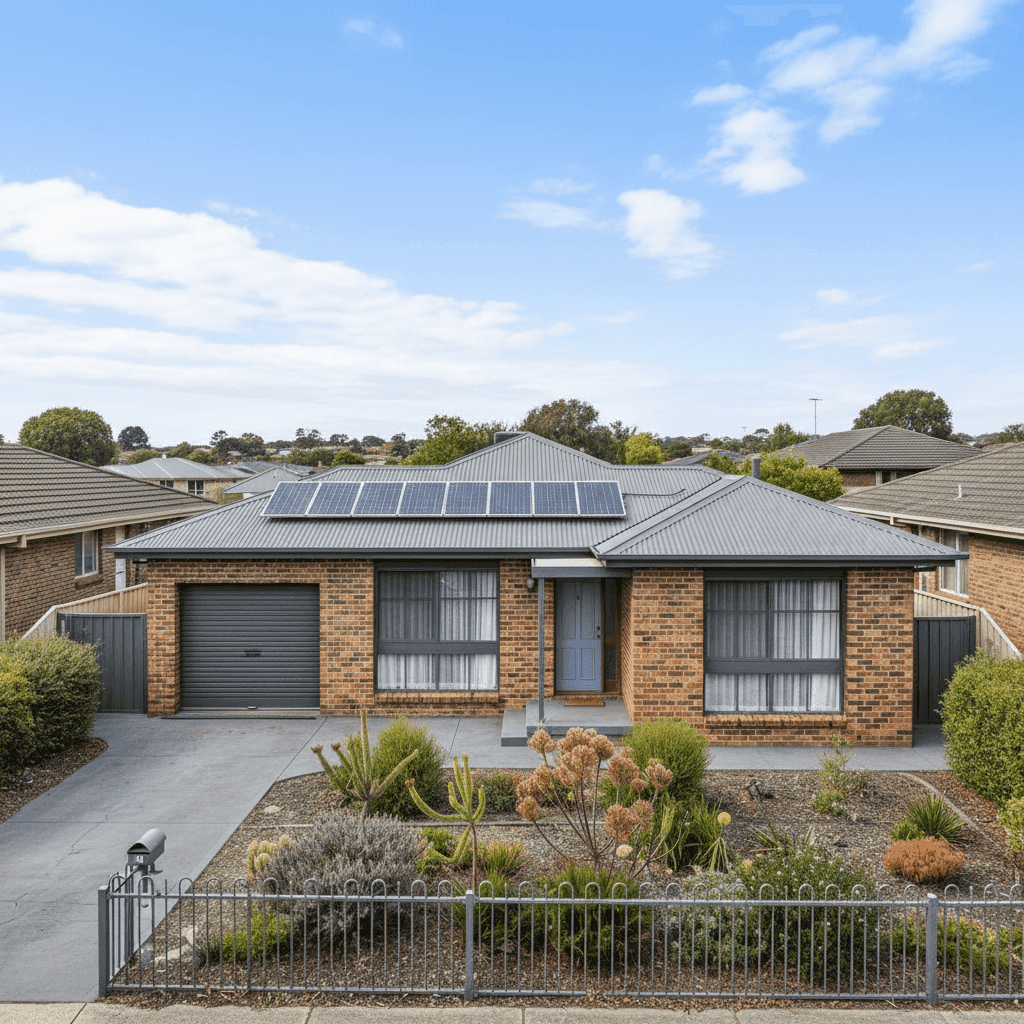
Rye is a relaxed coastal town on the southern tip of the Mornington Peninsula, popular with holidaymakers, retirees, and families drawn to its beaches and laid-back lifestyle. But living near the water and in a semi-rural fringe suburb comes with its own insurance considerations. In this article, we take a close look at a real home and contents insurance quote for a three-bedroom, free-standing home in Rye (VIC 3941) — and unpack exactly what's driving the price.
---
Is This Quote Fair?
The short answer: yes — and then some. This quote came in at $1,430 per year (or roughly $142 per month), which CoverClub's pricing engine rates as Cheap — below average for this type of property and location.
To put that in perspective, the suburb average for home insurance in Rye sits at $2,994 per year, meaning this quote is more than 52% below what most local homeowners are paying. Even when compared to the suburb median of $1,983, this quote undercuts it by over $550 annually — placing it well below the 25th percentile threshold of $1,628.
That's a meaningful saving. On a $630,000 building sum insured with $90,000 in contents cover, securing this level of protection for $1,430 represents genuine value — particularly given the property's features and the coastal context of Rye.
Of course, it's worth noting the excess structure. The building excess is set at $2,000, which is on the higher side and is likely one of the levers keeping the premium low. The contents excess of $600 is more standard. Homeowners comfortable with a higher out-of-pocket cost in the event of a claim will find this trade-off worthwhile; others may prefer a lower excess at a slightly higher premium.
---
How Rye Compares
Zooming out to a broader view, this quote looks even more competitive. Here's how it stacks up across different benchmarks, based on data from CoverClub's Rye suburb stats:
| Benchmark | Annual Premium |
|---|---|
| This Quote | $1,430 |
| Rye Suburb Average | $2,994 |
| Rye Suburb Median | $1,983 |
| Rye 25th Percentile | $1,628 |
| Mornington Peninsula LGA Average | $2,819 |
| VIC State Average | $2,921 |
| VIC State Median | $2,694 |
| National Average | $2,965 |
| National Median | $2,716 |
Across every single benchmark — suburb, LGA, state, and national — this quote comes in lower. Compared to the Victorian state average of $2,921, the saving is over $1,490 per year. Against the national average of $2,965, it's even more pronounced.
The Mornington Peninsula LGA average of $2,819 reflects the broader coastal and semi-rural risk profile of the region, which typically pushes premiums higher than metropolitan Melbourne. This makes the quote's competitiveness all the more noteworthy.
It's worth keeping in mind that the suburb sample size here is 66 quotes — a reasonable dataset that gives us solid confidence in these comparisons, though individual results will always vary based on insurer, policy terms, and property specifics.
---
Property Features That Affect Your Premium
Several characteristics of this property work in favour of a lower premium, while a couple of others add nuance.
Brick veneer construction is one of the most insurer-friendly wall types in Australia. It's durable, fire-resistant, and widely understood by underwriters — all of which typically translate to more competitive pricing compared to weatherboard or timber-clad homes.
Colorbond steel roofing is similarly well-regarded. It's lightweight, low-maintenance, and performs well in a range of weather conditions. Insurers generally view it favourably, particularly compared to older tile roofs that may be more susceptible to storm damage.
Slab foundation is another tick in the right column. Concrete slabs are structurally stable and don't carry the subsidence or pest-related risks sometimes associated with raised timber stumps — a common foundation type in older Victorian homes.
Construction year of 1985 places the home in a period where building standards were reasonably robust, though not as modern as post-2000 builds. At 40 years old, some insurers may factor in the age of plumbing, electrical, and roofing systems, which can influence risk assessments.
Solar panels are an increasingly common feature on Australian homes, but they do add to the replacement cost in the event of damage — which is reflected in the building sum insured. It's important to ensure your policy explicitly covers solar panels as part of the building, which most modern policies do.
Ducted climate control is another above-average fitting that contributes to the overall contents and building value. Combined with the above-average fittings quality noted for this property, these features justify a higher sum insured and add to the overall rebuild cost estimate.
At 235 square metres, this is a comfortably sized home. The $630,000 building sum insured works out to approximately $2,681 per square metre — broadly in line with current Victorian construction costs for a well-appointed brick veneer home.
---
Tips for Homeowners in Rye
Whether you're renewing your policy or shopping around for the first time, here are some practical steps to make the most of your home insurance in Rye.
1. Review your sum insured annually Construction costs have risen significantly across Victoria in recent years. What was an accurate rebuild estimate two or three years ago may now be understated. Use a building cost calculator or speak with a local builder to ensure your sum insured keeps pace — underinsurance is one of the most common and costly mistakes homeowners make.
2. Check your solar panel coverage If you have solar panels (as this property does), confirm with your insurer that they're covered under the building section of your policy. Some older policies or budget products may exclude or limit cover for solar systems, inverters, and associated wiring.
3. Consider your excess carefully A $2,000 building excess is a meaningful commitment. If you'd struggle to cover that cost out of pocket in the event of a claim, it may be worth requesting quotes with a lower excess — even if it bumps the annual premium up slightly. Finding the right balance between excess and premium is key to a policy that actually works when you need it.
4. Don't overlook contents cover At $90,000, the contents sum insured here is moderate. It's worth doing a room-by-room audit of your belongings — furniture, appliances, clothing, electronics, and valuables — to make sure you're not underinsured. Many homeowners are surprised by how quickly the total adds up.
---
Ready to Compare?
If you own a home in Rye or anywhere on the Mornington Peninsula, it pays to see what's available in the market. Premiums can vary dramatically between insurers for the same property — as this quote clearly demonstrates. Get a home insurance quote through CoverClub and find out where your current policy stands. You might be paying significantly more than you need to.